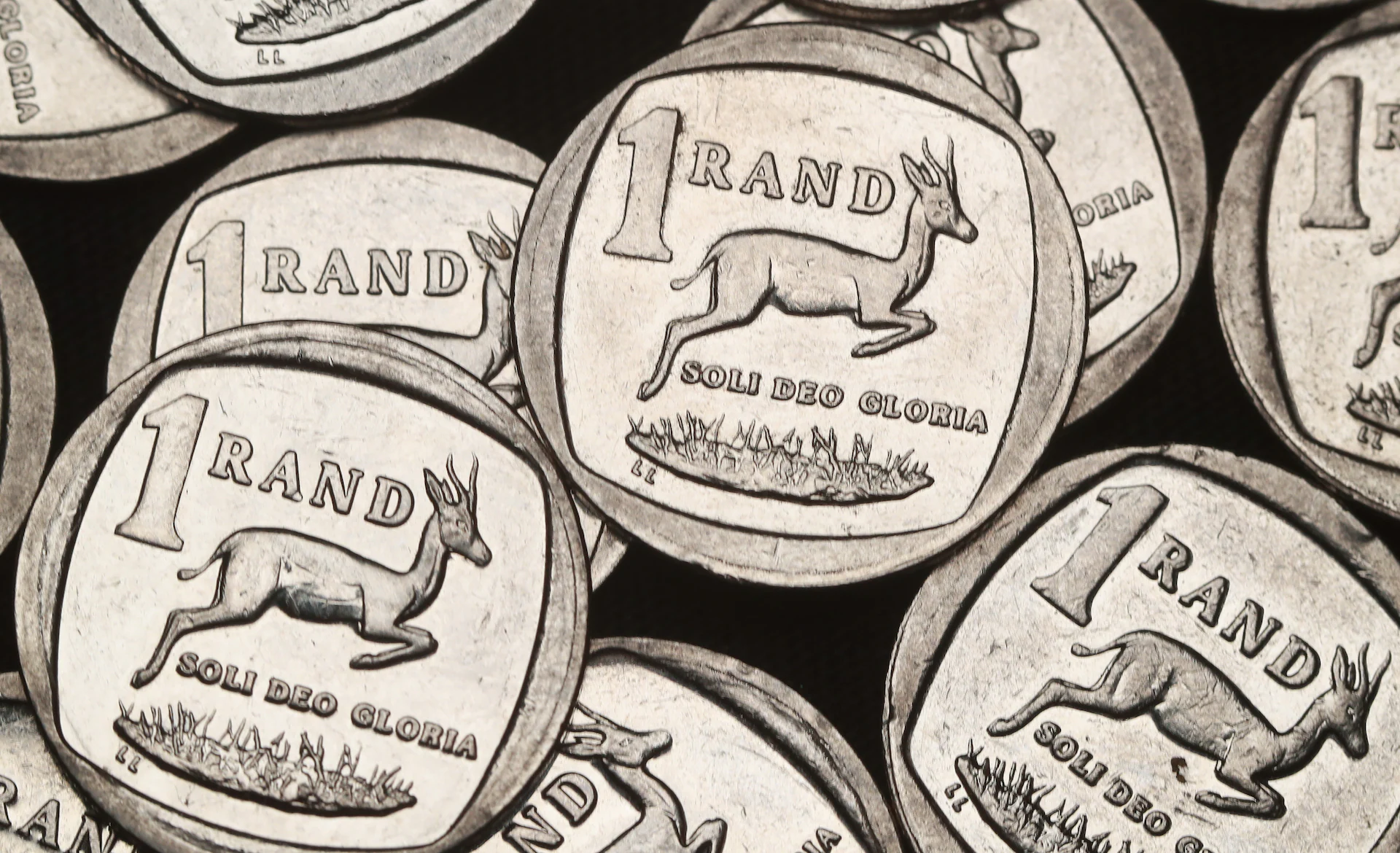
The South African rand remained steady in early trading on Tuesday, October 20, as currency markets adopted a cautious stance ahead of key economic announcements scheduled for Wednesday. Investors were preparing for Finance Minister Enoch Godongwana’s medium-term budget policy statement and the release of consumer inflation and retail sales data.
At 0600 GMT, the rand traded at 16.4150 against the US dollar, little changed from its previous closing level. Market participants appeared reluctant to take significant positions before assessing the potential implications of the upcoming announcements for South Africa’s public finances and economic outlook.
The combination of fiscal policy signals and fresh economic indicators is particularly important for investors assessing the rand. The budget statement could provide greater clarity on the government’s finances, while inflation and retail sales figures will help indicate whether price pressures are strengthening and how consumer demand is performing.
With the Middle East conflict keeping fuel costs elevated, the inflation outlook is also attracting attention. Higher energy costs can influence domestic prices, complicate monetary policy decisions and affect household spending, making the forthcoming data relevant to both currency and bond markets.
Rand Trades Near Previous Close as Investors Await Key Announcements
The rand’s limited movement in early trading reflected a wait-and-see approach ahead of Wednesday’s announcements. Rather than making large bets on the currency’s direction, investors were preparing to assess the new information before adjusting their positions.
Adam Phillips of Umkhulu Treasury said local market participants could choose to keep their positions as flat as possible before the medium-term budget presentation. He expected the rand to trade within a narrow range.
Such caution is common before major economic releases. When important fiscal and inflation figures are due within a short period, traders may prefer to reduce exposure to unexpected developments rather than commit to a strong directional view.
The rand’s exchange rate against the dollar is influenced by several factors, including expectations for South Africa’s economic performance, investor appetite for risk, domestic policy developments and movements in international markets. The forthcoming announcements could influence how investors evaluate those factors.
However, a stable exchange rate before the releases does not necessarily indicate that uncertainty has disappeared. It may simply reflect the market’s decision to wait for more information before determining whether the rand should strengthen or weaken.
Medium-Term Budget Statement in Focus
Finance Minister Enoch Godongwana is scheduled to present South Africa’s medium-term budget policy statement on Wednesday. The announcement is expected to provide investors with fresh information about the government’s fiscal trajectory and the outlook for public finances.
Fiscal policy matters to currency investors because it can influence government borrowing requirements, debt sustainability, economic confidence and the country’s ability to manage financial pressures. A budget outlook that reassures markets may support investor sentiment, while concerns about public finances can create additional uncertainty.
Expectations of an improving budget balance and a more favourable sovereign ratings outlook have added importance to the upcoming statement. Investors will be looking for information that helps them assess whether South Africa’s fiscal position is moving in a more sustainable direction.
An improving budget balance can indicate that the gap between government revenue and expenditure is narrowing. Depending on the underlying figures and the measures responsible for the improvement, this may reduce concerns about borrowing needs and help strengthen confidence in the government’s financial management.
Nevertheless, the direction of the budget balance alone does not provide a complete picture. Investors also need to understand the assumptions behind fiscal projections, the risks to government revenue and expenditure, and whether the expected improvement can be sustained.
The medium-term budget statement is therefore important not only for the immediate figures it presents but also for the signals it sends about the government’s plans over the coming years.
Why the Fiscal Outlook Matters for the Rand
Currency markets respond to changes in how investors assess a country’s financial stability and investment prospects. If the budget statement strengthens confidence in South Africa’s fiscal outlook, it could improve sentiment toward local assets and provide support for the rand.
Conversely, if the statement reveals greater-than-expected fiscal pressures or raises questions about the sustainability of projected improvements, investors could reassess their exposure to South African markets.
These are potential market responses rather than guaranteed outcomes. Exchange rates are affected by domestic and international developments simultaneously, so even a broadly positive budget announcement may not lead to rand appreciation if other market forces move in the opposite direction.
The sovereign ratings outlook is another factor investors may consider. Credit ratings and outlook assessments help market participants evaluate a government’s ability to meet its financial obligations. Expectations of a more favourable outlook can improve confidence, although any actual change depends on the relevant rating agencies’ assessments and decisions.
For traders, the key question will be whether Wednesday’s statement provides credible evidence of an improving fiscal position and reduces uncertainty about South Africa’s medium-term financial outlook.
September Inflation Expected to Accelerate to 4.7%
Statistics South Africa is also scheduled to release September consumer inflation data on Wednesday. Economists polled by Reuters expect annual headline inflation to rise to 4.7% in September, compared with 4.4% in August.
If the forecast is confirmed, the increase would indicate that consumer price growth accelerated over the period. The size and composition of that increase will matter to investors seeking to understand whether inflationary pressures are broadening or are being driven by particular costs.
Headline inflation measures the change in the overall price level for a basket of consumer goods and services. It provides an important indication of how the cost of living is changing, although the headline figure alone does not reveal which categories are contributing most to the movement.
The expected rise comes as the Middle East conflict keeps fuel costs elevated. Energy prices can affect inflation directly through fuel and transport expenses and indirectly through the costs businesses face when producing and distributing goods and services.
If higher fuel costs persist, businesses may face pressure to pass some of their additional expenses on to consumers. The extent of that pass-through depends on factors such as demand, competition, operating costs and businesses’ ability to absorb higher expenses.
Higher inflation can also affect household purchasing power. When prices rise faster than incomes, consumers may have less money available for discretionary spending, potentially influencing retail activity and broader economic momentum.
Why Inflation Data Matters to Currency Investors
Inflation figures can influence currency markets by changing expectations about the direction of monetary policy and the likely returns available on domestic assets. A stronger-than-expected reading may prompt investors to reconsider their assumptions about future interest rates, while a softer figure may reinforce expectations that price pressures are contained.
However, an increase in inflation does not automatically imply that interest rates will rise. Policymakers typically assess whether price pressures are temporary or persistent, how inflation expectations are evolving and whether broader economic conditions justify a change in policy.
For South Africa, the September reading will provide another data point for assessing the balance between inflation risks and domestic economic conditions. Investors will need to compare the actual result with the 4.7% forecast and examine any available detail on the sources of price changes.
The distinction between an expected increase and a surprise is important for Financial Markets. If inflation matches economists’ forecasts, the result may already be reflected in investor positioning. A substantial deviation from expectations could have a more noticeable effect on market sentiment.
The rand’s response will also depend on the budget statement and developments in international markets. Inflation data is only one part of the broader picture facing investors.
Retail Sales Data to Provide Clues About Consumer Demand
Alongside inflation, Statistics South Africa is expected to release retail sales figures on Wednesday. Economists surveyed by Reuters forecast annual retail sales growth to slow to 3.0% in August from 3.4% in July.
The forecast points to a moderation in the pace of annual retail sales growth. If confirmed, it would suggest that sales were increasing at a slower rate than in the previous month, although the figure alone would not establish whether consumer spending was weakening across the economy.
Retail sales data provides a useful indication of household demand because it tracks activity in the retail sector. The figures can help investors assess whether consumers are continuing to spend and how the domestic economy is performing amid changes in prices and other economic conditions.
The expected slowdown will be considered alongside the inflation report. Higher consumer prices can reduce the purchasing power of household incomes, while elevated fuel costs can leave consumers with less money for other purchases.
However, the relationship between inflation and retail sales is not straightforward. Sales growth can be influenced by income trends, credit conditions, employment, consumer confidence and changes in spending patterns. The headline figures should therefore be interpreted in the context of other economic indicators.
What Slower Retail Sales Growth Could Mean
If annual retail sales growth slows as forecast, investors may look for evidence about the strength of domestic demand. A moderation could indicate that consumers are becoming more cautious or that spending is growing at a slower pace, but further information would be needed to establish the reasons.
Consumer demand is an important component of economic activity. When households spend more, retailers and their suppliers may benefit. When spending loses momentum, businesses can face weaker sales growth, potentially affecting hiring, investment and future economic performance.
The data may also help investors assess the economic implications of higher living costs. If inflation accelerates while retail sales growth slows, markets could pay closer attention to the pressure on household budgets.
Even so, the figures cover different periods: the inflation report concerns September, while the retail sales forecast refers to August. They provide complementary but not perfectly simultaneous views of price pressures and consumer activity.
Investors will therefore need to avoid treating the two releases as a direct, one-to-one measure of how consumers responded to September’s price changes. Instead, the reports will contribute separate pieces of evidence about the broader economic outlook.
South African Government Bond Yield Remains Unchanged
The South African government bond market was also steady in early trading on Tuesday. The benchmark 2035 government bond was flat, with its yield at 8.735%.
Government bond yields are closely watched because they reflect the return investors demand to hold government debt at prevailing market prices. They can be influenced by expectations for inflation, interest rates, government borrowing and the perceived risks associated with the issuer.
A stable yield before a major budget announcement suggests that the benchmark bond had not registered a significant move in early trading. As with the rand, however, this does not establish how the market will react once the new information becomes available.
The medium-term budget statement could be particularly relevant to bond investors because fiscal projections can affect expectations about government financing needs and debt management. Inflation data may also influence views on the future path of monetary policy and the real return offered by fixed-income assets.
If investors interpret the budget as evidence of stronger fiscal management, sentiment toward government debt could improve. If the figures raise concerns about borrowing requirements or the sustainability of public finances, yields could face upward pressure. The eventual response will depend on the details released and how they compare with market expectations.
These possible outcomes are not predetermined. Global bond-market movements, changes in international risk appetite and other domestic developments can also influence South African government securities.
Middle East Conflict Adds Uncertainty to the Inflation Outlook
The continuing Middle East conflict is an additional consideration for South African markets because it has kept fuel costs elevated. Energy-price movements can influence both the inflation outlook and the financial pressures facing households and businesses.
Fuel is an important input for transport and distribution. When fuel costs increase, businesses may face higher expenses for moving goods, operating vehicles and delivering services. Depending on market conditions, some of those costs may eventually be reflected in the prices consumers pay.
Higher fuel expenses can also affect household budgets directly. Consumers who spend more on transport and energy may have less available for other purchases, potentially affecting demand in parts of the retail sector.
For investors, the uncertainty lies partly in how long elevated energy costs persist and how extensively they feed into domestic prices. A temporary increase may have a different economic impact from a sustained rise that influences broader pricing decisions.
The September inflation report will provide a fresh snapshot of domestic price pressures, but it will not by itself determine the future path of inflation. Subsequent energy-price movements and changes in domestic costs will remain relevant to the outlook.
The external environment also means South African markets cannot be assessed solely through domestic policy announcements. Even if the budget statement reassures investors, changes in global risk sentiment or energy prices could influence the rand and local bonds.
What Investors Will Watch on Wednesday
Wednesday’s announcements will give investors several important indicators to assess together. The budget statement will focus attention on government finances, while the inflation and retail sales figures will provide information about prices and consumer demand.
- Fiscal projections: Investors will assess whether the medium-term budget statement supports expectations of an improving budget balance and a more favourable sovereign ratings outlook.
- Headline inflation: The September figure will be compared with the Reuters economists’ forecast of 4.7%, following 4.4% in August.
- Retail sales growth: The August result will be assessed against the forecast for annual growth to slow to 3.0% from 3.4% in July.
- Rand performance: Currency traders will watch whether the releases change expectations for South Africa’s economic and policy outlook.
- Government bond yields: Investors will assess whether the fiscal and inflation information changes the returns they demand on South African government debt.
- Energy-price risks: Developments in the Middle East and their implications for fuel costs will remain relevant to inflation expectations and market sentiment.
The combined effect of the releases could matter more than any single headline number. For example, an improvement in the fiscal outlook could support confidence, while a sharper-than-expected rise in inflation might create a different set of concerns about domestic prices and monetary policy.
Likewise, a moderation in retail sales growth could lead investors to consider whether households are facing greater pressure, particularly if fuel and other living costs remain elevated. The implications would depend on the scale of the slowdown and the wider economic context.
Markets may also react differently to information that is already anticipated and developments that come as a surprise. The extent to which the actual results differ from forecasts will therefore be important in determining the immediate response.
South African Rand Outlook: Caution Before the Data
The rand’s steady performance on Tuesday reflects a market waiting for greater clarity before making a decisive move. At 16.4150 per dollar at 0600 GMT, the currency was little changed from its previous close, while the benchmark 2035 government bond yield remained at 8.735%.
The immediate focus is now on the medium-term budget policy statement, September inflation data and August retail sales figures. Together, these releases will provide investors with a clearer view of the government’s fiscal plans, the direction of consumer prices and the pace of retail activity.
Expectations of an improving budget balance and a more favourable sovereign ratings outlook could help support confidence if the budget statement provides evidence consistent with those expectations. At the same time, the forecast increase in headline inflation and the projected slowdown in retail sales growth highlight the importance of assessing price pressures alongside domestic demand.
The outlook remains sensitive to developments beyond South Africa, particularly the effect of the Middle East conflict on fuel costs and broader international market conditions. These external influences could affect the rand even if domestic announcements are broadly in line with expectations.
For now, investors appear inclined to keep positions limited ahead of Wednesday’s releases, consistent with the expectation of range-bound trading cited by Umkhulu Treasury’s Adam Phillips. The next direction for the rand will depend on the information delivered by the budget and economic data, how that information compares with forecasts, and how investors balance domestic developments against global risks.
Until those details are available, the currency’s relatively stable trading suggests caution rather than a clear market conviction about its next move.
For breaking news and live news updates, like us on Facebook or follow us on Twitter and Instagram. Read more on Latest World on thefoxdaily.com.






COMMENTS 0