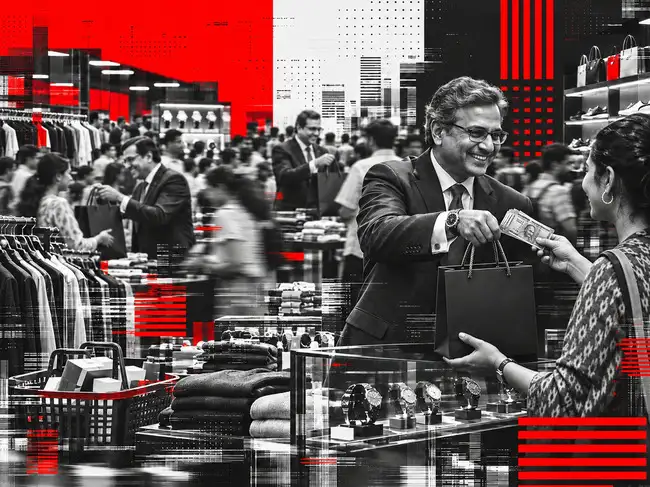
Black Friday is emerging as an increasingly important shopping event for Indian retailers, creating a valuable opportunity to generate additional revenue during November. Once largely associated with major Western markets, the annual discount season has gained traction in India as E-commerce platforms, consumer brands and organised retailers expand their promotional activities.
For Indian companies, the timing is particularly significant. Black Friday falls after the Diwali shopping season and before the winter sales period, creating a commercial window that retailers can use to attract customers, move inventory and maintain sales momentum. Instead of relying entirely on festive demand, businesses are beginning to treat November as a separate opportunity to increase order volumes and gross merchandise value (GMV).
The changing shopping pattern also offers insight into consumer behaviour. Unlike Diwali, when purchases are often influenced by family celebrations and gifting, Black Friday shopping is more closely associated with personal consumption. Customers are looking for deals on products they want for themselves, giving retailers another reason to engage shoppers after the traditional festive rush.
Black Friday Creates a New Sales Window Between Diwali and Winter Promotions
India’s retail calendar has traditionally been shaped by major festivals, seasonal demand and end-of-year promotions. Diwali is one of the most important periods for Consumer Spending, with shoppers purchasing electronics, clothing, home appliances, jewellery and other products. However, demand can become less predictable once the festival season ends.
Black Friday is helping retailers address this gap. Its growing popularity provides companies with another promotional opportunity before winter sales begin in earnest. Businesses can use the period to maintain customer engagement rather than waiting for the next major shopping occasion.
The timing matters because retailers often face a challenging transition after Diwali. Promotional activity may decline, while customers who have already completed their festive purchases can become more selective about spending. Black Friday campaigns give companies a reason to bring these consumers back to shopping platforms and physical stores.
For e-commerce businesses, the event also creates an opportunity to run time-limited offers, highlight selected product categories and attract customers through digital advertising. Retailers can coordinate discounts across websites, mobile applications and other sales channels to increase visibility.
As participation expands, November could become a more important month in India’s organised retail market. The event does not need to replace Diwali or other established shopping periods to become commercially relevant. It can generate additional activity by encouraging purchases during a period that might otherwise experience weaker demand.
Consumers Are Buying for Different Reasons
One of the important differences between Diwali shopping and Black Friday is the motivation behind consumer purchases. Festive shopping is often connected to celebrations, family requirements, gifting and traditional buying habits. Black Friday, by contrast, is more strongly associated with individual needs and attractive prices.
Consumers may use the discount period to purchase products they have been considering for several weeks. A lower price can encourage them to replace an existing device, buy clothing, upgrade household products or make a discretionary purchase that they had previously postponed.
This creates a different opportunity for retailers. During festive campaigns, companies may focus heavily on products suitable for gifting or household celebrations. Black Friday promotions can be designed around personal preferences, product upgrades and value-conscious shopping.
The distinction also affects how businesses communicate with customers. Retailers can promote discounts on specific products, limited-period deals and category-based offers rather than relying exclusively on festive messaging. Personalised recommendations and targeted digital campaigns may help companies reach shoppers whose interests are different from those of Diwali buyers.
For online marketplaces, the event can also encourage customers to explore categories beyond their usual purchases. A shopper visiting a platform for an electronics discount may also consider accessories, home products or other items when presented with relevant offers.
However, the increase in orders does not automatically mean that every purchase represents entirely new consumption. Some customers may simply bring forward purchases they would otherwise have made in December or January. Understanding this distinction is important when retailers assess the real commercial value of Black Friday.
Retailers Can Use the Period for an Inventory Reset Before January
Inventory management is another reason Black Friday has become relevant to Indian businesses. Retailers need to balance product availability with the risk of holding unsold stock for too long. When demand changes after the festive season, companies may be left with inventory that needs to be sold before new products and seasonal collections arrive.
November promotions provide an opportunity to accelerate the movement of selected products. Businesses can use discounts to clear older models, seasonal merchandise and stock that has not sold as quickly as expected. This can create additional warehouse and retail space for incoming inventory.
The timing is particularly useful for companies preparing for the next calendar year. Retailers often need to review their product mix, purchasing plans and stock levels before entering January. Selling existing inventory during November can help reduce the amount of unsold merchandise carried into the next selling cycle.
For electronics sellers, promotional campaigns may support the sale of older product models as newer versions become available. Fashion retailers can use discounts to move seasonal collections, while home and lifestyle businesses may focus on products that need to be cleared before new merchandise arrives.
Nevertheless, an inventory reset requires careful planning. Excessive discounting can reduce profitability, particularly when retailers sell products that would have generated stronger margins at regular prices. Companies therefore need to identify which products require promotional support and which can continue selling without substantial price reductions.
Effective inventory management also depends on forecasting. Retailers must estimate how much demand their campaigns can generate and ensure that popular products remain available. Poor planning can lead to stock shortages, delayed deliveries and dissatisfied customers, reducing the benefits of higher promotional traffic.
The Key Question Is Whether Black Friday Generates Incremental Demand
For Indian companies, the most important question is not simply whether Black Friday produces more orders. It is whether those orders represent additional demand or merely shift purchases from other periods of the year.
Retailers can record higher sales during a discount campaign without necessarily increasing their total annual revenue. If consumers purchase a product in November instead of December, the promotional event may have changed the timing of the transaction rather than created a completely new sale.
This distinction is important when companies evaluate the performance of their campaigns. A rise in order volumes and gross merchandise value can indicate strong consumer participation, but these measures do not independently establish how much additional business has been generated.
To understand the real impact, companies need to examine sales across a longer period. They can compare November performance with previous months, the same period in earlier years and subsequent sales activity. If higher November orders are followed by weaker demand in December, some of the growth may reflect purchases being brought forward.
Retailers also need to distinguish between higher transaction volumes and higher revenue per customer. A campaign may attract a large number of shoppers while encouraging them to purchase lower-priced products or items carrying substantial discounts. In such cases, order growth may be stronger than the improvement in overall financial performance.
Customer acquisition is another factor. If Black Friday attracts shoppers who had not previously purchased from a retailer, the campaign could create value beyond the immediate transaction. These customers may return for future purchases, subscribe to services or explore additional product categories.
However, measuring this benefit requires companies to track repeat purchases and customer retention rather than focusing only on the initial promotional period. A campaign that attracts customers who never return may deliver a different long-term outcome from one that builds a lasting customer relationship.
For this reason, retailers are likely to assess Black Friday through several measures, including incremental sales, average order value, new customer acquisition, repeat purchases and the cost of promotional activity.
The Margin Trade-Off: More Sales Do Not Always Mean More Profit
Black Friday can increase business activity, but discounts create a direct trade-off between sales volume and profit margins. Companies may sell more products during the event while earning less on each transaction because of reduced prices and promotional costs.
Retailers need to consider whether the additional volume is sufficient to compensate for the lower margin. A discount campaign may be commercially useful when it helps clear slow-moving inventory, attracts new customers or increases sales of complementary products. However, broad price cuts can become expensive if customers would have purchased the same products without a discount.
The economics can differ significantly between businesses. A retailer holding excess inventory may have a strong reason to offer discounts because keeping unsold products can create storage costs and increase the risk of future markdowns. Another company with limited stock and steady demand may have less incentive to reduce prices.
Promotional expenses also extend beyond the discount itself. Businesses may spend more on advertising, platform promotions, logistics and customer support during high-volume sales periods. These costs need to be included when calculating the actual profitability of a campaign.
Companies must also consider how frequent discounting affects customer expectations. If shoppers become accustomed to large promotional offers, they may delay purchases until the next sale. This can make it harder for retailers to sell products at regular prices and may weaken margins over time.
A more targeted approach can help businesses manage this risk. Instead of reducing prices across their entire product range, retailers can focus on selected categories, older inventory or products that can attract customers to their platforms. Bundled offers and complementary product recommendations may also help increase the value of each transaction without relying entirely on deeper discounts.
Why November Could Become More Important for Indian Retail
The growing relevance of Black Friday reflects a broader change in India’s retail environment. Consumers now have more opportunities to compare prices, discover products and respond to promotional campaigns throughout the year. Shopping activity is no longer concentrated exclusively around traditional festivals and established seasonal sales.
For retailers, this creates an opportunity to build a more evenly distributed promotional calendar. A stronger November sales period could help companies maintain momentum after Diwali while preparing for winter demand and the beginning of the new calendar year.
Online marketplaces are well placed to benefit because they can promote deals across large product catalogues and reach customers through digital channels. Physical retailers can also participate by combining online promotions with in-store offers, giving shoppers more ways to access discounts.
At the same time, the event’s long-term commercial importance will depend on whether customers continue to respond to it and whether businesses can generate profitable sales. High order volumes alone will not be enough to establish Black Friday as a successful addition to India’s retail calendar.
Retailers will need to understand which customer groups participate, which categories perform well and how much of the demand is genuinely additional. They must also balance promotional pricing with inventory requirements and operating costs.
Black Friday Offers Opportunity, but Profitability Will Determine Its Value
Black Friday is giving Indian companies another opportunity to generate revenue during the important period between Diwali and winter sales. Its growing popularity suggests that November can become a more active shopping month, supported by consumers looking for personal purchases and attractive discounts.
The event also offers practical benefits for retailers, particularly when it helps move existing inventory and attract customers who might otherwise postpone purchases. For businesses managing seasonal stock, the period can provide an opportunity to prepare for the next selling cycle.
However, the real measure of success will be the quality of the demand generated. Companies must determine whether higher sales represent genuinely additional consumption or simply a shift in purchasing schedules. They also need to ensure that discounts, advertising and fulfilment expenses do not outweigh the benefits of increased order volumes.
If retailers can attract new customers, improve inventory turnover and protect margins, Black Friday could become a valuable part of India’s annual shopping calendar. The opportunity is not simply to sell more products in November, but to convert the growing interest in the event into sustainable business growth.
For breaking news and live news updates, like us on Facebook or follow us on Twitter and Instagram. Read more on Latest Business on thefoxdaily.com.






COMMENTS 0