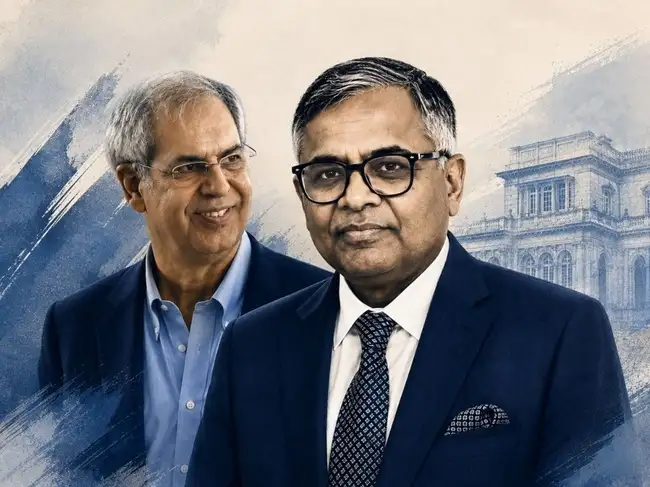
The power struggle at Tata Sons has escalated into a legal dispute, bringing questions about Corporate Governance, shareholder rights and the future leadership of one of India’s largest business groups into focus. Tata Trusts, which collectively hold a 66% stake in Tata Sons, have challenged the reappointment of N. Chandrasekaran as chairman, arguing that opposition from their nominees should have prevented the decision from going through.
The dispute goes beyond the continuation of Chandrasekaran’s leadership. It also involves the interpretation of Tata Sons’ Articles of Association, the influence of Tata Trusts over major corporate decisions, the possibility of a stock market listing and the balance of authority between the company’s board and its largest shareholders.
The disagreement has exposed differences within the Tata Group‘s governance structure. While Tata Trusts hold a controlling ownership stake, Tata Sons operates as a separate corporate entity with its own board and decision-making procedures. Determining how these powers interact is now central to the dispute.
The legal battle could have implications for the group’s leadership arrangements, its long-term ownership structure and the future relationship between Tata Trusts and Tata Sons.
What Triggered the Tata Sons Leadership Dispute?
The immediate issue is the challenge to N. Chandrasekaran’s reappointment as chairman of Tata Sons. Tata Trusts have questioned the decision, arguing that their nominees’ opposition should have carried sufficient weight to prevent the reappointment.
Chandrasekaran has led Tata Sons since 2017 and has overseen the group’s operations across a wide range of businesses, including technology, automobiles, steel, aviation and consumer products. His leadership has coincided with major strategic investments and changes across several Tata companies.
The challenge to his continuation has brought the relationship between the company’s board and its largest shareholder into the spotlight. Tata Trusts argue that their position and the governance arrangements of Tata Sons should be reflected in decisions concerning the chairman’s appointment.
At the heart of the disagreement is whether the opposition of trust-nominated directors can block a board decision or whether the reappointment can proceed under the company’s existing Articles of Association and applicable corporate law.
The distinction matters because ownership and management authority are not necessarily identical. A shareholder may hold a majority stake in a company, but decisions taken by its board must still follow the procedures established under its constitutional documents and the law.
Why Tata Trusts Have Significant Influence Over Tata Sons
Tata Trusts collectively own approximately 66% of Tata Sons, giving them a dominant position in the company’s shareholding structure. Their influence is particularly important because Tata Sons serves as the principal holding company of the Tata Group.
The company holds significant stakes in several major Tata businesses and plays a central role in determining the group’s overall strategic direction. Decisions at Tata Sons can therefore influence a broad network of companies operating in different industries.
Tata Trusts are philanthropic organisations associated with the Tata legacy. Their relationship with Tata Sons gives them an important position in the group’s ownership and governance arrangements.
However, the current dispute highlights the difference between being the largest shareholder and exercising authority over every operational or board-level decision. Tata Sons has its own corporate governance framework, and the board is responsible for taking decisions within the boundaries of that framework.
The trusts’ challenge suggests that they believe the existing arrangements give their nominees a role in major leadership decisions that should not be overlooked. The legal proceedings will help determine how those rights should be interpreted in the specific circumstances of the chairman’s reappointment.
Why the Trusts Want Greater Control Over Key Decisions
The disagreement is not limited to the chairman’s position. It also reflects broader concerns about how important decisions at Tata Sons are made and how much influence Tata Trusts should exercise over the holding company.
As the majority shareholder, the trusts have a significant economic interest in Tata Sons. Their nominees on the board can also provide a channel through which shareholder concerns are considered during corporate decision-making.
The current dispute has raised questions about whether trust representatives should have a stronger say in decisions involving leadership, strategic direction and the company’s long-term structure.
One important concern is the possibility of a stock market listing for Tata Sons. An initial public offering could fundamentally change the company’s ownership profile by introducing public shareholders and subjecting it to additional market disclosure and governance requirements.
For Tata Trusts, the implications of such a move could extend beyond financial considerations. A listing may affect the existing ownership arrangement and the way influence is distributed between the trusts, the board and outside investors.
The disagreement over the IPO question has added another dimension to the leadership dispute, making it a broader debate about the future control and structure of the Tata Group’s holding company.
Why Can’t Tata Trusts Simply Call a Shareholder Meeting and Remove the Chairman?
One of the central questions in the dispute is why Tata Trusts cannot simply use their 66% shareholding to call a shareholder meeting and remove the chairman.
The answer lies in the distinction between the position of chairman and the legal powers associated with different corporate offices. The chairman of a company is generally appointed through procedures established by its board and constitutional documents. Shareholders, meanwhile, exercise their rights through mechanisms provided under company law and the company’s Articles of Association.
Holding a majority stake gives Tata Trusts considerable influence over shareholder resolutions and certain corporate decisions. However, it does not automatically mean that every board-level appointment can be reversed through a direct shareholder instruction.
The removal or replacement of a chairman may involve specific procedural requirements, depending on the company’s Articles of Association, the nature of the appointment and the relevant provisions of corporate law.
There is also a distinction between removing a person as a director and changing the person holding the position of chairman. These are separate corporate roles and may involve different decision-making procedures.
Consequently, the trusts’ legal options depend on the precise governance provisions applicable to Tata Sons. The current court proceedings are significant because they concern how those provisions should be interpreted and whether the reappointment followed the required process.
Articles of Association at the Centre of the Court Battle
The Tata Sons dispute centres heavily on the company’s Articles of Association, which establish the rules governing its internal management and corporate decision-making.
Articles of Association are an important part of a company’s constitutional framework. They set out how directors are appointed, how board meetings are conducted, what voting procedures apply and how particular powers are distributed among shareholders and directors.
In the Tata Sons case, the interpretation of these rules is crucial because the disagreement concerns the authority of trust-nominated directors and the validity of the chairman’s reappointment.
Tata Trusts contend that opposition from their nominees should have prevented the decision. The legal question is whether the relevant provisions support that interpretation or whether the board was entitled to proceed despite their objections.
The court will need to examine the applicable provisions, the decision-making process and the legal significance of the objections raised by the trust representatives.
The outcome could clarify the relationship between majority ownership and board-level authority within Tata Sons. It may also establish how similar governance disagreements should be handled in the future.
How the Tata Sons IPO Dispute Adds to the Leadership Rift
The possibility of a Tata Sons stock market listing is another major issue surrounding the conflict. An IPO would bring the holding company into the public markets and could introduce a new group of shareholders alongside its existing owners.
For a company with such an extensive portfolio of businesses, a listing could have important implications for transparency, valuation and ownership. Publicly listed companies are generally subject to disclosure obligations and market scrutiny that differ from those applicable to privately held businesses.
A listing could also give investors a direct opportunity to participate in the financial performance of Tata Sons rather than gaining exposure only through its listed subsidiaries.
However, the question of whether Tata Sons should list is connected to the interests of its existing shareholders and the group’s long-term governance structure.
Tata Trusts’ 66% ownership position gives them a major stake in any discussion about a potential listing. At the same time, the company’s board must consider its regulatory obligations, financial position and the interests of the company as a whole.
The IPO debate has therefore become part of the wider disagreement over who should have the final say on Tata Sons’ strategic direction.
Why the Dispute Has Reached the Courts
The disagreement has moved into the legal system because the parties have different interpretations of the company’s governance rules and the authority of its shareholders and directors.
Public disagreements over corporate leadership can create uncertainty, particularly when they involve a holding company that oversees a large and diversified business group. Taking the matter to court provides a formal mechanism for examining the relevant documents and determining the legal position.
The court proceedings are expected to focus on the Articles of Association, the role of trust-nominated directors and the process followed during Chandrasekaran’s reappointment.
The case also follows a period of public debate over the future of Tata Sons and the relationship between the trusts and the company’s leadership. The dispute has attracted attention because of the Tata Group’s economic significance and its presence across several important industries.
However, the legal outcome will depend on the evidence, applicable corporate rules and arguments presented by the parties. The existence of a disagreement does not itself establish that the reappointment was invalid or that either side’s interpretation is legally correct.
What Happens Next in the Tata Sons Power Struggle?
The next stage will depend on how the court examines the company’s governance documents and the arguments presented by Tata Trusts and Tata Sons.
The proceedings could clarify whether the objections raised by trust-nominated directors had the legal effect claimed by the trusts. They may also determine the extent to which the company’s board can exercise its authority when its largest shareholder disagrees with a leadership decision.
Several possible developments could shape the next phase of the dispute:
- Judicial interpretation: The court may clarify the meaning and application of the relevant provisions in Tata Sons’ Articles of Association.
- Chairman reappointment: The legal proceedings could determine whether the process followed for Chandrasekaran’s reappointment complied with the company’s governance requirements.
- Shareholder influence: The case may provide greater clarity on the powers available to Tata Trusts as the majority shareholder.
- Future governance arrangements: The dispute could encourage discussions about how board decisions and shareholder interests should be balanced.
- IPO-related decisions: The wider disagreement over a potential stock market listing may remain an important part of the relationship between Tata Trusts and Tata Sons.
These are potential areas of development rather than confirmed outcomes. The final direction will depend on the court’s findings and any subsequent decisions taken by the company’s shareholders and board.
What the Tata Sons Dispute Means for the Wider Tata Group
Tata Sons occupies a central position in the Tata Group’s corporate structure. Its leadership and governance arrangements matter because the holding company has interests across multiple sectors, including automobiles, information technology, steel, aviation, telecommunications and consumer businesses.
A prolonged disagreement between Tata Trusts and Tata Sons could attract continued attention from investors, employees, business partners and other stakeholders. Uncertainty surrounding leadership and major strategic decisions can make it more difficult for outside observers to assess the group’s long-term direction.
At the same time, the group’s individual operating companies have their own boards and management teams. A dispute at the holding-company level does not automatically mean that the day-to-day operations of every Tata business will be disrupted.
The larger issue is whether the parties can maintain a stable governance structure while resolving their differences over leadership, ownership rights and strategic priorities.
For investors, the proceedings could provide greater clarity about the relationship between the holding company and its controlling shareholder. For the wider corporate sector, the case may also offer important lessons about the role of Articles of Association, shareholder influence and board independence in large business groups.
Tata Sons Leadership Battle Raises Questions About Corporate Control
The conflict between Tata Trusts and Tata Sons has developed into a significant corporate governance dispute involving the reappointment of N. Chandrasekaran, the interpretation of internal rules and the possibility of a future stock market listing.
Tata Trusts’ 66% ownership gives them a dominant position as shareholders, but the legal authority of the company’s board and the procedures set out in its Articles of Association remain central to the dispute.
The court proceedings will be important in determining how these powers interact and whether the objections raised by trust-nominated directors should have affected the chairman’s reappointment.
Beyond the immediate leadership question, the dispute could influence future discussions about the ownership, governance and strategic direction of Tata Sons. The eventual outcome will help establish how the interests of a controlling shareholder and the responsibilities of a company’s board should be balanced within one of India’s most prominent business groups.
For breaking news and live news updates, like us on Facebook or follow us on Twitter and Instagram. Read more on Latest Business on thefoxdaily.com.






COMMENTS 0