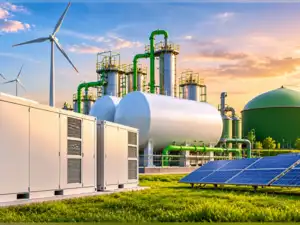
The Indian government has urged state administrations to enter power purchase agreements for approximately 41 gigawatts (GW) of unsold Clean Energy capacity, highlighting the need to strengthen electricity procurement planning and accelerate the country’s transition towards renewable power. The central government has also called on states to forecast electricity demand earlier and sign additional contracts for battery energy storage to improve the reliability of electricity supplies.
The push comes as India faces the challenge of balancing its expanding clean energy capacity with the electricity requirements of states. While Renewable Energy projects are being developed to increase the share of non-fossil fuel power in the country’s electricity mix, a significant amount of generated or planned capacity still requires buyers through formal agreements.
The government’s focus on the 41 GW of unpurchased clean energy reflects the importance of coordinating power generation, transmission infrastructure, electricity procurement and storage. Without sufficient purchasing agreements, renewable energy capacity may not be fully integrated into the electricity supply system.
Government Urges States to Purchase 41 GW of Unsold Clean Energy
The central government has asked states to enter agreements for 41 GW of clean energy that currently remains without confirmed buyers. These agreements are important because electricity producers generally require long-term purchase commitments to secure financing, plan operations and establish predictable revenue streams.
State distribution companies, commonly known as discoms, play a central role in electricity procurement. They purchase power from generating companies and supply it to households, businesses, industries and other consumers. Their decisions about long-term contracts therefore influence how much renewable electricity can be absorbed into the national power system.
When states delay signing power purchase agreements, renewable energy developers can face uncertainty about future demand and the commercial viability of their projects. The availability of 41 GW of unpurchased clean energy consequently presents a challenge for both power producers and policymakers seeking to expand renewable electricity generation.
The government’s appeal is aimed at encouraging states to make procurement decisions earlier rather than waiting until electricity demand rises or supply shortages emerge. Timely agreements could help improve coordination between renewable energy generation and the requirements of electricity distribution companies.
Early Electricity Demand Forecasting Becomes a Priority
The Union Minister has emphasised the need for states to forecast their electricity requirements well in advance. Accurate demand forecasting is essential for determining how much power needs to be purchased, which generation sources should be contracted and what additional infrastructure will be required.
Electricity demand can change significantly because of seasonal weather conditions, industrial activity, urbanisation, agricultural requirements and household consumption. If states underestimate their future requirements, they may struggle to arrange sufficient electricity when consumption increases.
On the other hand, excessive procurement without a clear understanding of future demand can create financial pressure for distribution companies. Long-term agreements may require buyers to make payments even when contracted electricity is not fully utilised, depending on the terms of the arrangement.
Early forecasting can help state governments and power distribution companies strike a better balance between electricity availability and procurement costs. It can also give renewable energy developers greater visibility into future demand, helping them plan projects and investment decisions.
The government’s emphasis on forecasting indicates that renewable energy expansion needs to be supported by stronger planning across the entire electricity value chain, rather than focusing only on adding new generation capacity.
Unexpected Electricity Consumption Surge Stressed the National Grid
Power Secretary has reported that electricity consumption increased unexpectedly this year, placing additional pressure on the national grid. The development has highlighted the difficulties involved in predicting electricity demand accurately and ensuring that sufficient generation and transmission capacity are available.
Unexpected increases in consumption can create operational challenges for electricity system operators. When demand rises faster than anticipated, power suppliers may need to arrange additional electricity at short notice, while grid managers must maintain a continuous balance between supply and consumption.
India’s electricity system requires careful coordination because power cannot be stored easily in unlimited quantities using conventional infrastructure. Electricity generation and consumption must remain balanced in real time to maintain grid frequency and stability.
A sudden rise in demand can therefore increase pressure on generating stations, transmission networks and distribution companies. It can also make electricity procurement more complicated, particularly when renewable generation fluctuates because of changing weather conditions.
The reported consumption surge has reinforced the government’s argument that states should improve demand forecasting and secure adequate electricity contracts before peak consumption periods arrive.
Battery Storage Contracts Needed to Support Renewable Energy
Alongside agreements for unpurchased clean energy, the government has emphasised the need for additional Battery Storage contracts. Energy storage is becoming increasingly important as India expands its use of solar and wind power, both of which depend on weather conditions and cannot always generate electricity according to consumer demand.
Solar power generation is generally concentrated during daylight hours, while electricity consumption can remain high during the evening. Wind generation can also vary depending on weather patterns. This creates a mismatch between the timing of renewable electricity production and the periods when consumers need power.
Battery energy storage systems can help address this challenge by storing electricity when generation is higher than immediate demand and releasing it when consumption increases or renewable output falls.
For example, electricity generated by solar projects during the afternoon can be stored in batteries and supplied during evening peak-demand periods. This can reduce dependence on conventional power plants that might otherwise be required to meet sudden increases in consumption.
Additional storage agreements can also improve the ability of electricity distribution companies to manage fluctuations in renewable generation. By combining clean energy procurement with storage capacity, states can make renewable electricity more useful for meeting their daily power requirements.
Why Unsold Renewable Energy Capacity Matters for India’s Power Sector
India has been expanding its renewable energy infrastructure as part of its broader efforts to diversify electricity generation and reduce dependence on fossil fuels. However, adding generation capacity alone does not guarantee that the electricity produced will be purchased and delivered to consumers.
Power purchase agreements provide a contractual framework between electricity generators and buyers. They typically establish the terms under which electricity will be supplied, including pricing arrangements, contract duration and other commercial conditions.
For renewable energy developers, these agreements can provide revenue visibility and support project financing. For distribution companies, they help secure electricity supplies to meet future demand.
When a large amount of clean energy capacity remains without purchase agreements, it can indicate a gap between the development of generation projects and the procurement decisions of electricity buyers.
The 41 GW figure therefore highlights a planning challenge. States need to assess how much renewable electricity they will require, when that power will be available and whether their transmission and storage infrastructure can accommodate it.
Transmission Infrastructure and Grid Planning Remain Important
Securing purchase agreements is only one part of integrating additional renewable electricity into India’s power system. Transmission infrastructure must also be capable of carrying electricity from generation centres to areas where demand is concentrated.
Renewable energy projects are often located in regions with strong solar or wind resources. However, the largest electricity-consuming centres may be located elsewhere. This makes interstate transmission networks important for moving electricity across geographical regions.
If transmission capacity is insufficient, renewable power generation may not always reach consumers even when a buyer has signed an agreement. Grid infrastructure therefore needs to develop alongside generation capacity and electricity procurement.
Energy storage can complement transmission investment by allowing electricity to be stored closer to generation sites or consumption centres, depending on project design and system requirements.
The government’s call for states to sign clean energy agreements and expand battery storage procurement points to the need for a coordinated approach. Generation, transmission, storage and distribution planning must work together to ensure that additional renewable capacity translates into reliable electricity supplies.
Financial Challenges for State Electricity Distribution Companies
State distribution companies will be central to the implementation of the government’s request. Their financial position, procurement strategies and ability to manage electricity costs can influence how quickly new clean energy agreements are signed.
Electricity distribution companies must balance the need to secure reliable supplies with the cost of purchasing power. They also need to account for changing demand patterns, payment obligations under existing contracts and the financial impact of adding new generation sources.
Long-term renewable energy agreements can help provide price visibility, but procurement decisions still require careful evaluation. States must consider whether contracted power will match their future consumption patterns and whether the associated transmission and storage arrangements are available.
Battery storage contracts may introduce additional investment and procurement requirements. However, they can also provide flexibility by shifting electricity supply from periods of high renewable generation to periods of stronger demand.
For states, the challenge will be to expand clean energy procurement while maintaining financial discipline and ensuring that electricity remains affordable for consumers.
What the Government’s Push Means for India’s Clean Energy Transition
The request for agreements covering 41 GW of unsold clean energy highlights a shift in focus from simply increasing renewable generation capacity to ensuring that the electricity can be purchased, transmitted, stored and consumed effectively.
India’s clean energy transition depends on more than the installation of solar panels and wind turbines. It also requires long-term procurement commitments, reliable grid infrastructure, accurate demand estimates and flexible storage systems.
Encouraging states to sign power purchase agreements could improve demand visibility for renewable energy developers and help connect additional capacity with electricity buyers. Better forecasting could also reduce the risk of supply shortages during periods of unexpectedly high consumption.
Meanwhile, battery storage contracts could help address the intermittent nature of renewable power and improve the ability of electricity distribution companies to meet peak demand.
However, the effectiveness of these measures will depend on how quickly states respond, the financial terms of procurement agreements and the availability of supporting infrastructure. The government has highlighted the need for action, but the actual impact will depend on implementation across individual state electricity systems.
States Face a Key Role in Matching Clean Energy Supply With Demand
The government’s appeal for states to sign agreements for 41 GW of unpurchased clean energy comes at a time when electricity demand has become more difficult to predict. The unexpected consumption surge reported by the Power Secretary has underlined the importance of preparing for changing demand patterns and strengthening grid management.
Early electricity demand forecasting, additional battery storage contracts and timely power purchase agreements are central to addressing these challenges. Together, these measures can help reduce the gap between renewable energy availability and the electricity requirements of consumers.
For India, the next stage of clean energy expansion will depend not only on how much renewable capacity is developed but also on how effectively that electricity is integrated into the national grid. The response from state governments and distribution companies will therefore be important in determining how quickly the country’s available clean energy capacity can be converted into reliable power supplies.
For breaking news and live news updates, like us on Facebook or follow us on Twitter and Instagram. Read more on Latest Business on thefoxdaily.com.





COMMENTS 0