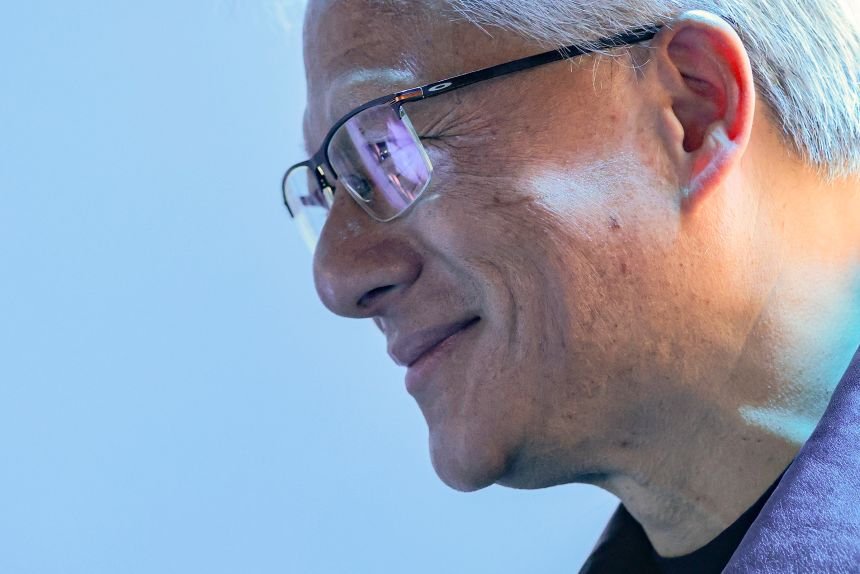
Nvidia CEO Jensen Huang has expressed gratitude for a second chance to lead the semiconductor giant, apologising to employees for his past conduct and promising to uphold the company’s standards during his return. Speaking at an all-hands employee meeting on Tuesday morning, Huang acknowledged mistakes in his personal and professional behaviour and said he was committed to rebuilding trust within the organisation.
According to an Nvidia employee who attended the meeting, Huang also said he had gone too far with some aspects of his workplace behaviour and had been attending therapy every day. A source familiar with the meeting told NBC News that the CEO had been deeply embarrassed by recent events.
Huang received a largely positive response from employees, including a standing ovation, according to the attendee. His remarks came after a period of intense scrutiny involving allegations about personal relationships and questions surrounding his leadership at the company.
Huang Apologises to Employees and Promises Better Conduct
During the approximately one-hour meeting, which began around 9:30 a.m., Huang addressed employees about his return and acknowledged that his previous conduct had fallen short of expectations. He reportedly expressed contrition and emphasised that everyone at Nvidia, including senior leadership, must follow the company’s code of conduct.
The CEO’s remarks focused on accountability and his commitment to the company. He reportedly described Nvidia’s journey as the most interesting company story in the world and said no company had affected the world as deeply or profoundly as Nvidia.
His comments reflected an effort to reconnect with employees after a period of uncertainty surrounding his position. The positive reception suggests that at least some employees welcomed his return, although the longer-term impact on internal confidence and Corporate Governance will depend on how the company addresses the concerns raised during the controversy.
Daily Therapy and Personal Remorse
One of the notable disclosures from the meeting was Huang’s reported statement that he had been attending therapy every day. According to the source cited by NBC News, he acknowledged that he had gone too far with certain workplace behaviours and was deeply embarrassed about the events that had brought scrutiny to his leadership.
His comments added to earlier public statements in which he accepted responsibility for personal mistakes. The therapy disclosure was presented as part of his effort to address the situation, although the company has not provided further details about the nature of the sessions or any specific changes to workplace policies.
Huang’s emphasis on the company’s code of conduct also placed attention on the standards expected from executives. For a company with Nvidia’s global influence, leadership accountability is closely connected to employee confidence, investor expectations and relationships with business partners.
Why Jensen Huang Left Nvidia Before Returning
Huang’s return followed a period of controversy involving reports about alleged romantic relationships with subordinates and Alice Huang, a former executive at Singapore-based cloud computing company Megaspeed. The allegations prompted questions about executive conduct and potential corporate governance concerns.
The source material also reports that Alice Huang was suspected by US intelligence officials of being a Chinese intelligence asset. This remains an allegation and should not be treated as an established finding. The reported connections added a national security dimension to the controversy, given Nvidia’s importance to the global Semiconductor Industry and advanced artificial intelligence technology.
Huang resigned from the company on November 12 amid the mounting scrutiny. The departure was particularly significant because he founded Nvidia in 1993 and played a central role in transforming it into one of the world’s most influential semiconductor companies.
Reports of alleged extramarital relationships also became part of the public discussion. Huang acknowledged being unfaithful to his wife in a letter sent to Nvidia employees and shared online on November 8.
What Huang Told Nvidia Employees in His Earlier Apology
In his November 8 letter, Huang apologised to colleagues, the board, business partners and shareholders, accepting that his actions had not met their expectations. He wrote:
“To my colleagues at NVIDIA, including those I have worked alongside for decades, and to our board, partners, and shareholders around the world: you deserve better from me,” Huang wrote.
“I am fully committed to NVIDIA and will work to earn back your confidence.”
The message was an early indication that Huang wanted to preserve his relationship with the company despite the controversy. It also acknowledged that rebuilding confidence would require more than simply returning to the CEO position.
On November 17, he issued another personal statement expressing remorse while reiterating his admiration for Nvidia and his commitment to its future. He acknowledged that his behaviour had not met the standards expected of employees at the company.
“I did not live up to the standards expected of everyone at NVIDIA, and I have made serious mistakes in my personal life,” Huang wrote.
He also said he would be honoured to return if the board determined that his reinstatement was in the best interests of shareholders, employees, the company and the United States.
Nvidia Board Approves Huang’s Return
Less than a week after Huang’s November 17 statement, Nvidia’s board announced that he would return as CEO. The decision followed consultations that reportedly included input from senior levels of the US government.
According to the supplied account, that input effectively assured decision-makers that Huang’s reinstatement did not pose a national security risk. The board’s announcement brought an end to the immediate uncertainty over the company’s leadership, although questions about the circumstances surrounding his departure and return remain relevant to the broader governance discussion.
Huang addressed the issue during Tuesday’s employee meeting, saying that the board, rather than the government, had wanted him reinstated. He also described Nvidia as an apolitical company, seeking to distinguish the company’s business operations and leadership decisions from political considerations.
The distinction is significant because Nvidia occupies an important position in the US technology and national security landscape. Its advanced chips are central to AI development, while the company’s international business relationships have become increasingly relevant amid geopolitical competition over semiconductors.
Huang Says Donald Trump Supports Nvidia
During the meeting, Huang also discussed the company’s relationship with US President Donald Trump. According to the employee who attended, Huang said: “President Trump really, really loves our company.”
His comments came as Nvidia continued to operate in a politically sensitive environment shaped by US technology policy and competition with China. Restrictions on advanced semiconductor exports and the strategic importance of AI hardware have placed major chipmakers under increased government scrutiny.
However, Huang maintained that Nvidia was an apolitical company and reiterated that the decision to bring him back was made by the board. His remarks sought to reinforce the distinction between government support for the company and the board’s responsibility for corporate leadership decisions.
Nvidia’s Leadership Challenge Goes Beyond the CEO’s Return
Huang’s reinstatement highlights the unusual speed with which Nvidia moved from a leadership crisis to restoring its founder as chief executive. His return may provide continuity for employees, investors and business partners who have associated the company’s growth with his leadership since its founding in 1993.
However, a return to the top position does not automatically resolve questions about executive accountability. The controversy has placed renewed attention on how major technology companies handle allegations involving senior leaders, workplace relationships and compliance with internal standards.
For Nvidia, the challenge will be to maintain confidence in its leadership while ensuring that its code of conduct applies consistently across the organisation. Huang’s public expressions of remorse and his reported commitment to therapy represent personal steps, but the effectiveness of the company’s response will also depend on its governance practices and workplace policies.
Employee reactions at Tuesday’s meeting were reportedly positive, but a standing ovation is only an immediate indication of reception. Sustained confidence will depend on whether Huang follows through on his commitments and whether the company can demonstrate that its internal standards are being applied effectively.
Foo Fighters Song Marks Huang’s Exit From Meeting
The meeting lasted approximately one hour, according to the employee source. Huang reportedly left the gathering to the Foo Fighters song Times Like These, adding a symbolic closing moment to his first major employee interaction following his return.
The choice of song came as Huang sought to frame his reinstatement as an opportunity to move forward after a difficult period. His message to employees centred on gratitude, accountability and renewed commitment to Nvidia.
The next stage will be measured less by the reception at a single meeting and more by how Huang leads the company in the months ahead. Nvidia’s ability to preserve employee trust, address governance concerns and maintain its position in the global AI industry will remain central to the significance of his second chance.
For breaking news and live news updates, like us on Facebook or follow us on Twitter and Instagram. Read more on Latest Business on thefoxdaily.com.



COMMENTS 0