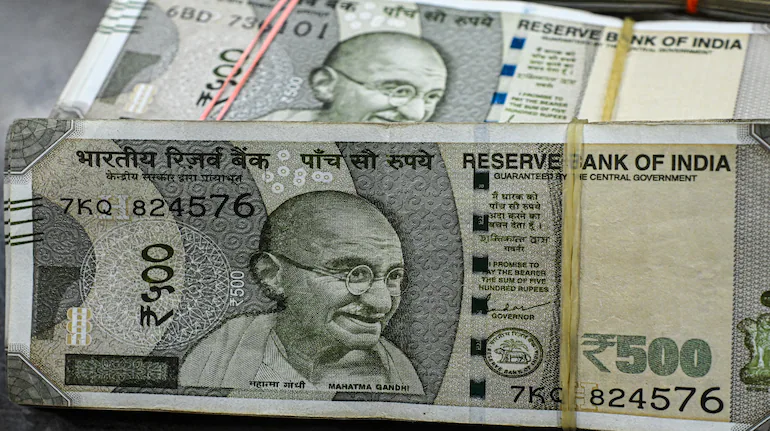
The Indian Rupee opened higher against the US Dollar on Wednesday, November 25, supported by renewed foreign investor interest in domestic equities and improving sentiment around the currency’s outlook. The rupee gained 18 paise to open at 92.73 per dollar, compared with Monday’s closing level of 92.91.
The domestic currency’s recovery came as the US dollar paused ahead of key American inflation and economic growth data. These releases are expected to provide fresh clues about the Federal Reserve’s monetary policy decisions ahead of its December meeting.
Asian currencies, meanwhile, traded mixed against the dollar. The Chinese yuan led gains among regional peers, while the Japanese yen and Philippine peso recorded declines. Movements in crude oil prices, foreign portfolio investment flows and expectations of central bank intervention remained important factors for currency markets.
Rupee Opens 18 Paise Higher at 92.73 per Dollar
The rupee started Wednesday’s session at 92.73 against the US dollar, strengthening by 18 paise from Monday’s close of 92.91. The improvement followed renewed foreign investor interest in Indian equities, which supported demand for the domestic currency.
According to Finrex, the rupee was expected to open around 92.64 and trade within a range of 92.25 to 93.35. The brokerage also indicated that the Reserve Bank of India (RBI) could purchase dollars to prevent the rupee from strengthening excessively.
Such intervention can influence the pace of currency movements. When the central bank buys dollars in the foreign exchange market, it increases demand for the US currency and can help limit appreciation in the rupee. The RBI may use such operations to manage excessive volatility rather than target a specific exchange rate.
The expected trading range also reflects uncertainty around global dollar movements, Foreign Investment activity and domestic demand for foreign currency.
Foreign Investor Flows Provide Support to the Rupee
Foreign portfolio investment activity has emerged as an important factor influencing the rupee’s recent movement. Foreign investors need to convert currencies when purchasing Indian equities, and renewed inflows can increase demand for the domestic currency.
Finrex noted that foreign portfolio investors (FPIs) selling dollars to purchase Indian assets were providing opportunities for importers to hedge their foreign currency requirements.
The brokerage also observed that exporters had an opportunity to hedge their receivables on Monday, when the rupee weakened to 93.05 per dollar amid RBI dollar buying.
Currency hedging allows exporters and importers to manage the risk of exchange-rate fluctuations. Exporters receiving payments in dollars may use favourable exchange-rate levels to protect the rupee value of future receipts. Importers, who need dollars to pay overseas suppliers, may also use market opportunities to manage their future payment costs.
US Dollar Takes a Breather Ahead of Inflation and Growth Data
The US dollar traded relatively steadily on Wednesday after declining in the previous session. Investors were waiting for key inflation and economic growth readings, which represent important inputs ahead of the Federal Reserve’s December policy meeting.
Traders were pricing in a 97% chance of an interest-rate hike at the December meeting, according to the market expectations cited in the source. This expectation has kept attention focused on whether upcoming economic data will reinforce or challenge the outlook for tighter monetary policy.
Stronger economic indicators or persistent inflation could support expectations of higher interest rates. Conversely, weaker readings may lead investors to reconsider the expected policy path. Changes in these expectations can influence the dollar, global bond yields and currency movements across emerging markets.
Dollar Index at 103.85
The US Dollar Index, which measures the greenback against a basket of six major currencies, was flat at 103.85 on Wednesday. This followed a 0.44% decline in the previous session.
The index had moved above 104 on Monday evening after stronger-than-expected US Purchasing Managers’ Index (PMI) data supported the dollar. Its subsequent decline indicated some easing in the dollar’s recent strength.
The euro slipped 0.03% to $1.0961, while the British pound weakened 0.05% to $1.3106. The Japanese yen edged 0.03% lower to 159.28 per dollar.
Asian Currencies Trade Mixed Against the US Dollar
Asian currencies recorded different movements during Wednesday’s session as investors assessed regional economic data and changes in the US dollar. The Chinese yuan was the strongest performer among the currencies listed, while the Japanese yen experienced the largest decline.
| Asian Currency | Movement Against US Dollar | Performance |
|---|---|---|
| Chinese yuan | +0.31% | Gained |
| Taiwan dollar | +0.13% | Gained |
| South Korean won | +0.08% | Gained |
| Malaysian ringgit | +0.03% | Gained |
| Singapore dollar | +0.02% | Gained |
| Thai baht | -0.04% | Declined |
| Indonesian rupiah | -0.09% | Declined |
| Philippine peso | -0.16% | Declined |
| Japanese yen | -0.19% | Declined |
The mixed performance shows that regional currencies were responding to different domestic and international factors rather than moving uniformly against the dollar.
Japanese Yen and Australian Dollar Respond to Economic Data
The Japanese yen remained under pressure, although it held relatively steady after the release of data showing that service-sector prices in Japan had increased to a 36-year high in October.
Higher service-sector prices can influence expectations about domestic inflation and the Bank of Japan’s monetary policy. However, the yen’s exchange rate also depends on interest-rate differences between Japan and other major economies, particularly the United States.
The Australian dollar moved higher following data showing that inflation in October was hotter than forecast. Higher-than-expected inflation can affect expectations about future interest-rate decisions by the Reserve Bank of Australia, supporting the currency when investors anticipate tighter monetary conditions.
Crude Oil Prices Remain Important for the Rupee
Crude oil prices are another important factor for the Indian currency because India depends heavily on imported energy. When oil prices rise, the country’s import bill can increase, creating additional demand for dollars and potentially putting pressure on the rupee.
Brent crude’s January futures contract had fallen below $90 per barrel before recovering to around $90.68 during Asian trading on Wednesday. The rebound followed the recent decline in oil prices.
For India, the direction of crude prices matters because higher energy import costs can affect the current account balance and inflation. Lower oil prices may ease some of these pressures, although the impact also depends on import volumes, global demand and exchange-rate movements.
The relationship between crude oil and the rupee is not automatic. Foreign investment flows, dollar strength and central bank activity can influence the currency even when oil prices move in the opposite direction.
What Could Influence the Rupee in the Coming Sessions?
The rupee’s near-term direction will depend on a combination of domestic and international developments. Wednesday’s opening gains indicate improved sentiment, but several factors could determine whether the currency maintains its strength.
- US inflation data: Upcoming inflation readings could influence expectations about the Federal Reserve’s December policy decision and affect demand for the dollar.
- US economic growth: GDP figures may provide further information about the strength of the American economy and the outlook for interest rates.
- Foreign investment flows: Continued FPI purchases of Indian equities could support demand for the rupee, while renewed outflows may create pressure.
- RBI intervention: Dollar purchases by the central bank could limit excessive appreciation and influence trading conditions.
- Crude oil prices: Changes in international oil prices may affect India’s import costs and demand for foreign currency.
- Asian currency movements: Regional exchange-rate trends and changes in global risk sentiment could influence emerging-market currencies.
Rupee Outlook: A Stronger Opening Amid Global Uncertainty
The rupee’s 18-paise gain to 92.73 per dollar on November 25 reflects improving sentiment supported by renewed foreign investor interest in Indian equities. The dollar’s pause ahead of important US economic data also provided a more supportive environment for emerging-market currencies.
However, the outlook remains dependent on developments in global markets. The Federal Reserve’s expected policy direction, movements in Treasury yields, crude oil prices and the RBI’s approach to currency management will remain important influences.
Finrex expects the rupee to trade within the 92.25-93.35 range, while noting the possibility of RBI dollar purchases to prevent excessive strength. This is a market estimate rather than a guaranteed trading outcome.
For businesses and investors, the latest movement highlights the importance of monitoring exchange rates and managing currency exposure. Exporters and importers may use favourable market levels to hedge future transactions, while investors will continue watching foreign capital flows and global economic data for clues about the rupee’s next move.
For breaking news and live news updates, like us on Facebook or follow us on Twitter and Instagram. Read more on Latest Business on thefoxdaily.com.






COMMENTS 0