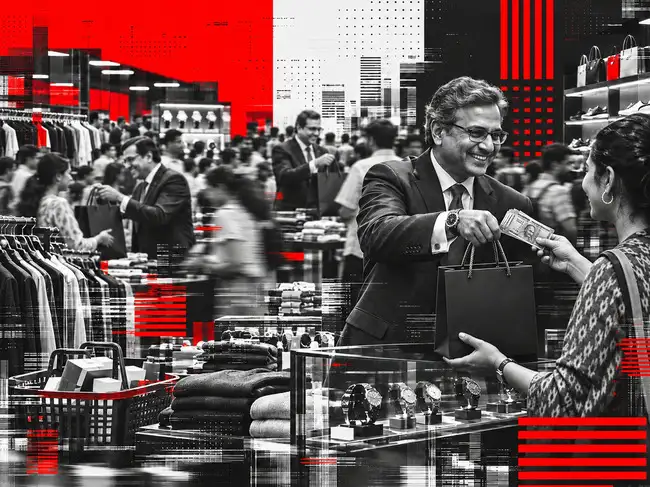
Black Friday is emerging as an increasingly important sales opportunity for Indian retailers, giving companies another chance to generate revenue after the Diwali shopping season and before winter sales begin. Once largely associated with the American holiday shopping calendar, the November retail event is gaining traction in India as E-commerce platforms, brands and offline retailers use discounts to encourage consumers to make purchases.
The shift is changing how businesses approach the final stretch of the year. Instead of treating November as a relatively quiet period between major shopping occasions, retailers are beginning to view Black Friday as a separate commercial window that can support order volumes, gross merchandise value (GMV) and inventory movement.
The opportunity is particularly relevant because consumer behaviour during Black Friday can differ from the buying patterns seen around Diwali. While festive shopping often involves gifts, household purchases and family-related spending, Black Friday promotions can appeal to consumers looking to buy products for themselves. This creates another reason to shop and gives companies an opportunity to reach customers who may not have made additional purchases immediately after the festive season.
For Indian businesses, the growing popularity of Black Friday could make November a more valuable month in the annual retail calendar. However, higher sales during promotional periods do not automatically translate into higher profits. Retailers must balance discounts, marketing expenses, inventory costs and the possibility that some purchases would have happened even without the sale.
Black Friday Creates a New Sales Window Between Diwali and Winter Promotions
India’s retail calendar is shaped by several major shopping occasions. The festive season around Diwali is one of the most important periods for consumer spending, particularly across electronics, fashion, home appliances, beauty products and household goods. Winter promotions and year-end offers provide another opportunity for retailers to attract customers as the calendar approaches January.
Black Friday is creating an additional opportunity between these established sales periods.
For retailers, the timing matters. Businesses that experience strong festive demand may otherwise face a slowdown after Diwali as consumers complete their planned purchases and become more selective about spending. Black Friday promotions can help bring shoppers back to the market by giving them a fresh reason to purchase products.
This also allows companies to extend their promotional activity beyond the traditional festive season. Rather than relying entirely on Diwali sales and waiting for winter discounts, retailers can use November campaigns to maintain customer engagement and generate additional transactions.
The development is especially relevant for e-commerce businesses, which can promote discounts across multiple product categories without depending on a single physical retail location. Brands can also use digital advertising, targeted offers and platform-wide campaigns to reach consumers who are actively comparing prices.
For offline retailers, Black Friday can provide an opportunity to participate in the same shopping conversation through store-level promotions and brand campaigns. The broader the participation across retail channels, the more familiar the event can become to Indian consumers.
Consumers Are Shopping for Themselves, Not Just for Gifting
One of the important differences between Black Friday and festive shopping is the motivation behind a purchase. Diwali spending often includes gifts for family members, friends, employees and business associates. Consumers may also purchase household products, upgrade appliances or buy items as part of festive preparations.
Black Friday promotions can encourage a different type of buying behaviour. Consumers may use the discounts to purchase products they personally want, replace older devices, upgrade their wardrobes or finally buy items they had been considering for some time.
This distinction matters because personal purchases can expand the range of products consumers consider during November. Instead of focusing primarily on festive requirements or gifts, shoppers can respond to offers based on individual preferences, product upgrades and perceived savings.
For retailers, understanding this motivation can help improve promotional strategies. A campaign built around gifting may not appeal to the same audience as one highlighting personal upgrades, technology purchases or fashion discounts.
Companies can therefore position Black Friday as a shopping event in its own right rather than simply extending their Diwali promotions. Product recommendations, category-specific discounts and personalised offers can help retailers connect with consumers who are looking for value on purchases they intend to make for themselves.
However, discounts remain only one part of the decision. Product availability, brand reputation, delivery convenience, return policies and the actual price reduction can all influence whether a consumer completes a purchase.
Black Friday Helps Retailers Reset Inventory Before January
Inventory management is another reason Black Friday is becoming commercially relevant for Indian companies. Retailers must balance the products they have in stock against changing consumer demand, upcoming seasonal requirements and the cost of holding unsold merchandise.
After the Diwali shopping period, businesses may have to manage inventory that did not sell as expected. Some products may also need to be cleared before newer collections, models or seasonal merchandise become more important in the following months.
Black Friday promotions can provide an opportunity to move selected inventory while consumer interest in discounts is relatively high. Retailers can use the event to offer deals on products that need faster movement, reduce excess stock and improve their inventory position before the next major sales period.
This does not mean every Black Friday discount is necessarily an inventory-clearance exercise. Companies may also promote newly launched products, popular categories and items with strong demand. The commercial strategy depends on the retailer’s stock position, product lifecycle and sales objectives.
Nevertheless, November promotions can give businesses greater flexibility in managing stock. Products that remain unsold for extended periods can tie up working capital and increase storage, handling and operational costs. Selling them through a planned promotional campaign may be preferable to carrying them into another sales cycle.
For companies dealing in electronics, fashion and consumer goods, inventory decisions are particularly important because product preferences, model cycles and seasonal demand can change quickly. A well-planned Black Friday campaign can help retailers manage these transitions while attracting customers with competitive offers.
The Biggest Question: Is Black Friday Creating New Demand?
Higher order volumes and GMV during Black Friday promotions can make the event appear successful for retailers. However, one important question remains: how much of this activity represents genuinely additional demand?
Not every purchase made during a discount event is necessarily a new sale. Some consumers may simply bring forward purchases they would otherwise have made in December or January. Others may shift their spending from one retailer to another because a competing platform is offering a better price.
In such cases, a company may record a stronger November performance without necessarily increasing its total sales over a longer period. The timing of revenue changes, but the overall amount consumers spend may remain similar.
For retailers, the difference between incremental demand and shifted demand is critical. Incremental demand refers to purchases that would not have happened without the promotion. Shifted demand involves transactions that would likely have occurred later or through another channel.
Companies need to examine more than headline sales figures to understand the actual impact of Black Friday. They can compare promotional-period performance with previous months, analyse repeat purchasing patterns and assess whether customers who entered through discounts return for full-price purchases.
Retailers should also examine performance across product categories. A promotion may generate additional demand for one category while merely shifting purchases in another. Understanding these differences can help businesses decide where Black Friday discounts are commercially worthwhile.
The long-term value of the event will depend on whether it brings new customers into the market, increases purchase frequency and encourages spending that would otherwise not have taken place.
Higher Sales Do Not Always Mean Higher Profits
Black Friday can help companies increase order volumes and GMV, but the financial benefit depends on how much money retailers retain after offering discounts and covering promotional expenses.
Discounting can reduce the gross margin earned on each product. If a retailer cuts prices aggressively to compete with other platforms, it may sell more units while earning less on every transaction. Additional marketing, logistics, payment processing and fulfilment expenses can further affect profitability.
This creates a trade-off between sales growth and margins. Companies may accept lower margins during a major shopping event if the promotion helps them acquire new customers, clear inventory or increase sales in categories with stronger long-term potential. However, such a strategy only makes sense when the broader financial benefits justify the discount.
For example, a retailer selling products with excess inventory may be able to use Black Friday discounts to recover working capital and reduce the cost of holding unsold stock. Another company with limited inventory and strong existing demand may have less reason to offer substantial price reductions.
The effectiveness of a campaign also depends on the quality of the discount. Consumers increasingly compare prices across platforms and may question offers that appear larger than the actual reduction. Retailers therefore need to ensure that promotional pricing offers genuine value rather than relying entirely on headline discount percentages.
Companies must also consider whether customers attracted by low prices will return after the event. If shoppers make a one-time purchase and do not develop loyalty to the brand or platform, the cost of acquiring them may outweigh the immediate benefit of the sale.
Why November Could Become More Important for India’s Retail Industry
The growing acceptance of Black Friday suggests that India’s retail industry is gradually expanding its promotional calendar. Shopping occasions are no longer limited to traditional festivals and end-of-season clearance events. International retail campaigns can also find an audience when they align with consumer interest in discounts and convenient online shopping.
For e-commerce platforms, the event offers another opportunity to generate traffic, encourage transactions and compete for consumer spending. For brands, it creates a marketing window to promote products and reach shoppers between major seasonal campaigns. Offline retailers can also participate by using targeted offers to attract customers into stores.
The opportunity extends beyond immediate revenue. A successful campaign can introduce consumers to new brands, increase awareness of product categories and help retailers understand changing preferences. Businesses can use this information to improve future pricing, merchandising and inventory decisions.
However, the long-term importance of Black Friday will depend on whether Indian consumers continue to treat it as a meaningful shopping occasion. Retailers will need to offer genuine discounts and relevant products rather than simply adding another promotional label to the calendar.
What Indian Companies Need to Get Right
As Black Friday becomes more established, retailers will need to focus on the quality and profitability of their campaigns rather than sales volume alone. Several factors will determine whether the event creates lasting commercial value.
- Relevant product selection: Companies should focus on categories that match consumer demand instead of offering discounts across every product without a clear strategy.
- Genuine price reductions: Transparent pricing can build consumer trust and encourage shoppers to return for future purchases.
- Inventory planning: Retailers need to identify products that require faster movement while maintaining sufficient stock of items with strong demand.
- Customer acquisition: Businesses should measure whether Black Friday attracts new buyers or simply shifts purchases from existing customers.
- Margin protection: Discounts, advertising expenses and fulfilment costs must be evaluated together to determine the actual profitability of a campaign.
- Repeat purchases: Companies should assess whether customers acquired during November continue buying after the promotional period ends.
These factors will become increasingly important as more companies participate in the event. If retailers compete only by offering deeper discounts, the result could be higher transaction volumes without a corresponding improvement in profitability.
Black Friday Could Turn November Into a Bigger Business Opportunity
Black Friday is gaining importance in India because it addresses a gap in the retail calendar between Diwali and winter sales. It gives companies another opportunity to attract consumers, move inventory and maintain sales momentum during a month that can otherwise sit between two major shopping periods.
The changing motivation behind purchases is also significant. Consumers are not necessarily shopping for gifts or festive requirements; many are using promotions to buy products for themselves. This gives retailers another route to generate demand across different categories.
Still, the real measure of success will not be the number of orders or the value of merchandise sold during the event. Companies will need to establish whether Black Friday generates additional purchases, attracts valuable customers and improves inventory efficiency without damaging margins.
If retailers can achieve that balance, Black Friday could become more than another discount campaign. It could develop into a regular November revenue opportunity, making the month a more important part of India’s annual shopping and business cycle.
For breaking news and live news updates, like us on Facebook or follow us on Twitter and Instagram. Read more on Latest India on thefoxdaily.com.






COMMENTS 0