
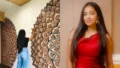
At 26, Pune-based artist Disha Daga has transformed a personal hobby into a growing professional art practice, creating intricate mandala designs for corporate clients and institutions. Working under the name Disha Draws, she has secured projects involving a consumer electronics brand, a global automobile manufacturer, an investment firm and Vantara, the wildlife centre in Jamnagar.
Her work has also reached the Reserve Bank of India’s Pune office, where a large mandala painting is displayed near the entrance. Without formally studying art, Daga has built a career through years of practice, experimentation and an ability to turn her creative skills into a business.
Her journey illustrates how an interest developed outside a conventional educational path can evolve into a profession. It also highlights the financial uncertainty and business responsibilities that independent artists must navigate while sustaining their creativity.
How Disha Daga Discovered Mandala Art
A mandala is an intricate arrangement of shapes and patterns radiating from a central point. Derived from the Sanskrit word for “circle”, it traditionally represents the universe. For Daga, however, Mandala Art became much more than a geometric design on paper or walls. It developed into a creative practice that eventually connected art with entrepreneurship.
Daga began sketching mandala patterns in 2016, after finishing school and before entering college. Looking for a hobby beyond dance, she found inspiration in mehendi designs on Pinterest. She began experimenting with intricate patterns without initially knowing that the style was called mandala art.
A Google search eventually introduced her to the term and helped her understand the designs she had been drawing. What started as an informal pastime gradually became a regular part of her life.
While studying at Wadia College, Daga balanced her degree, diploma courses and dance with her growing interest in art. She did not have formal art training, but the repeated patterns kept drawing her back to her notebooks.
Each layer required concentration and precision. Over time, the process taught her patience and helped her slow down. Her old accountancy notebooks became a record of this early journey, with ledgers on the front pages and mandala drawings filling the pages at the back.
A Pandemic-Era Experiment Opened the Door to Paid Work
Daga’s journey took a decisive turn in 2020, when the COVID-19 pandemic disrupted college schedules and led to the cancellation of events. With more familiar activities on hold, she grew tired of drawing mandalas on paper and decided to paint one directly onto a wall in her home.
She shared a photograph of the finished artwork online. The post attracted attention, and people who came across her work began asking her to create similar designs for them.
In August 2021, Daga received her first commercial project. She had not set out to become a professional artist, and the opportunity emerged without a long-term career plan.
“I was chosen as a medium at that time,” she says, reflecting on how the opportunity arrived.
The experience marked a shift from making art primarily for personal enjoyment to creating work for paying clients. It also showed how sharing creative projects online can help artists connect with people beyond their immediate circles.
From Notebook Sketches to the RBI’s Pune Office
Daga’s mandala designs have since reached clients across different industries. Her portfolio includes work for a consumer electronics brand, a global car manufacturer, an investment firm and Vantara, the wildlife centre in Jamnagar.
One of her recent government commissions was a large painting at the Reserve Bank of India’s Pune office. Positioned near the entrance, the artwork gives her intricate designs a prominent place within an institutional setting.
Her work has also travelled to Malaysia, Thailand and the United States, extending her reach beyond India. Alongside commissioned projects, Daga conducts online and offline workshops to introduce more people to mandala art.
According to Daga, these workshops have reached more than 25,000 students. Her Instagram account, where she operates as Disha Draws, has attracted 42,000 followers.
The combination of commissions, workshops and an online audience has helped her develop an independent practice. However, a growing portfolio and wider recognition do not remove the uncertainties associated with earning a living through art.
The Financial Reality of an Independent Artist
Creative Careers can be rewarding, but income is not always consistent. Daga says her earnings depend on commissions, exhibitions, workshops and her ability to reach potential clients. When fewer projects come in, managing finances and maintaining a steady workflow can become challenging.
Independent artists must also devote time to activities that happen outside the creative process. Marketing, client communication, fee negotiations and project management all compete with the hours needed to design and produce artwork.
Daga believes artists need to understand the basics of business, even when they bring in professionals to help with particular responsibilities. Building an audience and producing good work are important, but artists must also learn how to communicate with clients, negotiate appropriate compensation and manage projects effectively.
She argues that art should be treated as a profession deserving fair payment and financial security, rather than being viewed only as a passion or hobby.
Her experience highlights the different skills involved in building a sustainable creative career. Artistic ability may form the foundation, but financial planning, professional communication and business awareness can be equally important in turning that ability into a reliable source of income.
Why Patience and Mindfulness Matter in Her Work
Mandala art demands precision, repetition and close attention to detail. Every layer must work with the patterns around it, making concentration an essential part of the process.
For Daga, the practice has helped develop patience and mindfulness. She describes it as an activity that has transformed her life despite her never having formally studied art.
However, working professionally has also taught her that creativity cannot always be forced. When she experiences an artist’s block, she sometimes turns down commissions if she believes she cannot deliver the quality a client expects.
Rather than accepting every opportunity, she gives herself room to step away from work. She dances for her own enjoyment, takes herself out for coffee with her iPad or watches something light.
“Your work is not your life,” she says.
Her approach reflects the importance of setting boundaries in creative professions, where personal interests can become closely tied to professional responsibilities. Recognising when to pause allows her to protect the quality of her work instead of treating every commission as an obligation that must be accepted.
Challenging Conventional Ideas About Career Success
Daga hopes her experience encourages young people to question the idea that success depends exclusively on academic achievements or conventional career choices. Her own path developed from an interest she pursued alongside her studies, rather than from a formal qualification in art.
Her story does not suggest that an independent artistic career is easy or financially predictable. Instead, it shows how a personal skill can grow into professional work when combined with consistent practice, opportunities to showcase that work and an understanding of the business involved.
For young people who choose familiar career paths because they appear safer, Daga encourages them to consider building a direction of their own, even when the outcome is uncertain.
Her journey from the margins of accountancy notebooks to a painting at the RBI’s Pune office offers an example of how creative interests can evolve beyond their original purpose. It also demonstrates that sustaining such a career involves more than talent: artists must learn to manage clients, finances, workload and their own well-being.
A Creative Career Built Without Formal Art Training
Disha Daga’s progression from sketching mandalas as a hobby to undertaking professional commissions demonstrates how an informal interest can develop into an independent career. Her work for corporate clients and institutions, international reach and workshops for thousands of students have expanded the scope of her practice.
At the same time, her reflections on financial uncertainty, business responsibilities and creative blocks provide a realistic picture of independent artistic work. Recognition may create new opportunities, but maintaining a career requires patience, professional discipline and an ability to balance creative ambitions with practical needs.
For Daga, mandala art has become both a means of expression and a profession. Her experience challenges the assumption that every successful career must begin with formal training or follow a familiar route, while underscoring the effort needed to make an unconventional path sustainable.
Written by Bhagyashri Prajapati, an intern with The Indian Express.
For breaking news and live news updates, like us on Facebook or follow us on Twitter and Instagram. Read more on Latest Business on thefoxdaily.com.

COMMENTS 0