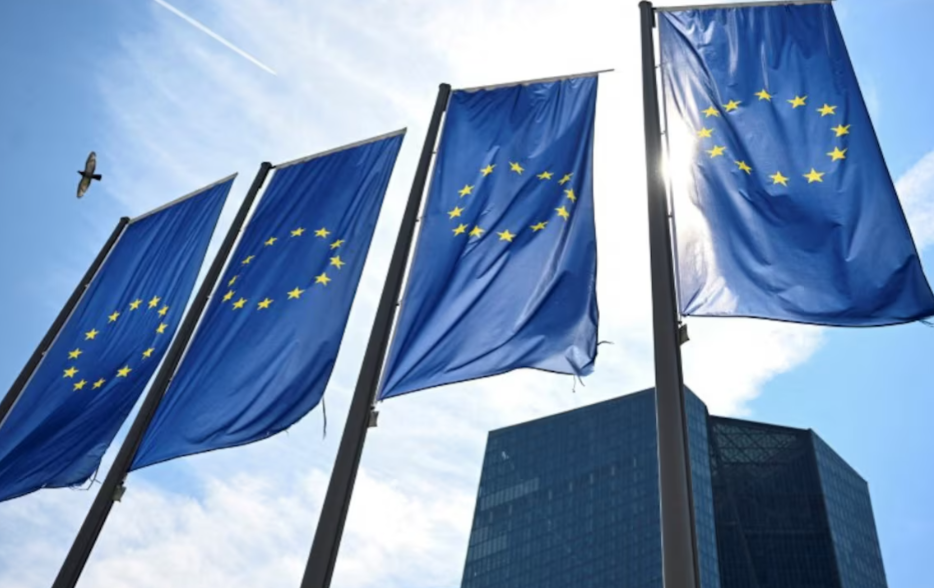
The European Central Bank (ECB) raised its key interest rate to 2.50% on September 10, 2026, as the Iran war pushed oil prices above $100 a barrel and renewed concerns about an energy-driven inflation wave across the euro zone.
The 25-basis-point increase from 2.25% marks the ECB’s second rate hike of the year. Policymakers warned that inflation is likely to remain above the central bank’s 2% target for an extended period, putting renewed focus on the future path of European interest rates.
The decision comes as the euro zone economy has shown more resilience than expected. That gives the ECB some room to tighten monetary policy, but higher energy prices, rising government borrowing costs and geopolitical uncertainty are making the outlook increasingly complicated.
Why Did the ECB Raise Interest Rates?
The immediate concern is the renewed rise in energy prices. Fighting between the United States and Iran intensified after a period of relative calm, with military, shipping and energy infrastructure coming under attack.
Brent crude has moved back above $100 a barrel, creating a fresh inflation risk for Europe. The euro zone is heavily dependent on imported energy, meaning a sustained increase in oil and natural gas prices can quickly affect transportation, electricity, heating and production costs.
The ECB therefore faces a difficult balancing act. It must prevent temporary energy inflation from becoming persistent while avoiding excessive tightening that could unnecessarily weaken economic growth.
ECB Raises Policy Rate to 2.50%
The ECB increased its policy rate from 2.25% to 2.50%. The central bank said inflation was expected to remain above its target for some time because of continuing geopolitical and energy pressures.
The latest decision represents a reversal of some of the optimism that had emerged when energy prices were more stable. The renewed conflict has changed the inflation discussion because the problem is no longer simply about domestic price pressures.
Instead, policymakers are now dealing with an external energy shock that could spread through the wider European economy.
ECB Raises Inflation Forecasts
The ECB also increased its inflation projections. It now expects euro zone inflation to average 3.0% in 2026, 2.5% in 2027 and 2.1% in 2028.
These projections show that the central bank expects inflation to remain above its 2% objective for longer than previously anticipated.
However, the forecasts may not fully reflect the latest increase in energy prices. Natural gas is particularly important because many European countries depend on gas for heating and industrial activity.
Gas-price shocks can take longer to pass through the economy than oil-price shocks, but their effects can also be more persistent. This means the inflation consequences of the Iran conflict could extend beyond the initial jump in fuel prices.
Oil Above $100 Creates a New Inflation Challenge
The biggest complication for the ECB is the sharp increase in oil prices. Brent crude has moved above the psychologically important $100 level as attacks around the Middle East threaten energy supplies and shipping routes.
Higher oil prices directly increase fuel costs. But the impact does not stop there. Companies facing higher transportation, energy and raw-material expenses may eventually pass part of those costs on to consumers.
This creates a potential chain reaction:
- Higher crude prices increase fuel costs.
- Transport and logistics expenses rise.
- Businesses face higher operating costs.
- Some companies increase prices to protect margins.
- Consumer inflation can remain elevated for longer.
The ECB is closely watching whether this process remains limited or becomes widespread across the economy.
Euro Zone Growth Has Been More Resilient
There is an important reason why the ECB feels able to raise rates: the euro zone economy has performed better than expected.
The ECB now forecasts economic growth of 0.9% in 2026, 1.4% in 2027 and 1.5% in 2028.
Recent economic data have suggested that higher energy costs, competition from China and weather-related disruptions have not yet caused a major deterioration in activity.
Bank lending also accelerated in July, suggesting that the previous rate increase had not significantly damaged credit demand.
This resilience gives policymakers more flexibility. If economic activity were already contracting sharply, another rate increase would carry a much greater risk of deepening a downturn.
Will the ECB Raise Rates Again?
Financial markets are currently pricing in the possibility of one more rate increase this year, followed by another one or two moves in 2027.
Economists are more cautious. Some believe the September increase could be the ECB’s final hike for now, while others increasingly see the possibility of additional tightening if inflation remains elevated.
The ECB itself did not provide clear guidance about its next move. Instead, policymakers repeated their standard approach of making decisions based on incoming economic data.
This leaves future interest-rate decisions heavily dependent on oil and gas prices, wage growth, inflation expectations, economic activity and financial conditions.
Christine Lagarde Faces a Difficult Policy Balance
ECB President Christine Lagarde is facing a particularly complicated policy environment. The central bank must respond to inflation without unnecessarily damaging economic growth.
If energy prices remain high for an extended period, policymakers could face pressure to keep rates higher for longer. But if the energy shock fades, excessive tightening could unnecessarily weaken demand.
The key question is therefore whether today’s energy inflation becomes embedded in broader pricing and wage behaviour.
Core Inflation Offers Some Relief
Not all inflation indicators are moving in the wrong direction. Core inflation, which excludes volatile food and energy prices, eased to 2.4% last month.
Consumer expectations for future price increases have also moderated, while wage growth has slowed.
These developments are important because they suggest the current inflation problem has not yet developed into the kind of self-reinforcing wage-price cycle seen during previous energy shocks.
Capital Economics economist Andrew Kenningham argued that the current environment is different from the 2022 energy shock because demand conditions are less supportive of persistent inflation.
Why 2026 Could Be Different From the 2022 Energy Shock
Europe has already experienced a major energy-driven inflation shock following Russia’s invasion of Ukraine in 2022. Inflation eventually climbed above 10%, creating severe pressure on households and businesses.
The current situation has similarities, but there are also important differences.
Companies, particularly in Germany, have so far absorbed some of the increase in costs rather than immediately passing everything on to consumers. Wage pressures are also less intense than during the earlier shock.
This could prevent the latest energy surge from developing into a prolonged inflation spiral.
Government Bond Yields Add Another Problem
The ECB is also monitoring rising government borrowing costs. Long-term bond yields have climbed to levels not seen since before the global financial crisis, reflecting concerns about inflation and government debt.
Higher bond yields can tighten financial conditions even without another central-bank rate increase. Governments face greater costs when issuing new debt, while companies and households can also encounter more expensive borrowing.
Competition from major technology companies raising substantial amounts of money to finance artificial intelligence investment has added pressure to bond markets.
Political uncertainty in Germany has also affected German government bonds, which serve as an important benchmark for euro zone borrowing costs.
ECB Rate Decision at a Glance
| Indicator | Latest ECB Outlook |
|---|---|
| Policy rate | 2.50%, up from 2.25% |
| 2026 inflation forecast | 3.0% |
| 2027 inflation forecast | 2.5% |
| 2028 inflation forecast | 2.1% |
| 2026 growth forecast | 0.9% |
| 2027 growth forecast | 1.4% |
| 2028 growth forecast | 1.5% |
| Inflation target | 2% |
What Happens If Oil Prices Stay High?
A prolonged period of crude prices above $100 would make the ECB’s job considerably harder.
If higher energy costs remain temporary, the central bank may be able to look through some of the initial inflation increase. But if oil and natural gas remain expensive for months, the effects could spread into transportation, manufacturing, food production and services.
That would increase the probability of additional rate increases or a longer period of restrictive monetary policy.
For consumers, higher rates can make mortgages, loans and other forms of credit more expensive. For businesses, they can increase financing costs and discourage some investment.
What Could Stop Further ECB Rate Hikes?
The ECB may have reasons to pause if inflation pressures begin to weaken. A decline in oil and gas prices would immediately reduce one of the largest external risks.
Slower wage growth and stable inflation expectations would provide additional reassurance. A significant deterioration in economic activity could also make policymakers more cautious about tightening further.
The central bank therefore has several indicators to monitor before its next decisions.
Key Factors Markets Will Watch
- Oil prices: Whether Brent remains above $100 or falls back significantly.
- Natural gas prices: A crucial factor for European heating and industrial costs.
- Core inflation: Whether underlying price pressures continue to ease.
- Wage growth: Whether salaries begin accelerating again.
- Inflation expectations: Whether households and businesses expect prices to remain high.
- Economic growth: Whether the euro zone continues to outperform expectations.
- Bond yields: Whether government borrowing costs continue rising.
- Middle East conflict: The duration and impact of disruptions to energy and shipping.
Lagarde’s Future Also Draws Attention
The ECB’s monetary-policy debate is taking place alongside questions about Lagarde’s own future. Her current term as ECB president is scheduled to run until October 31, 2027.
Lagarde has been linked to a possible future role at the World Economic Forum and has also spoken about promoting European values in connection with next year’s French presidential election.
However, she has previously indicated that she does not expect to leave the ECB before 2027.
A separate report suggesting ECB board member Isabel Schnabel could move to the International Monetary Fund has also raised speculation about possible changes among the euro zone central bank’s senior leadership.
Why This ECB Decision Matters Globally
The ECB’s decision has implications beyond the euro zone. Higher European interest rates can affect global capital flows, currency markets and borrowing costs.
At the same time, the central bank’s response to the Iran-driven energy shock will be watched by other major central banks facing similar inflation risks.
The broader lesson is that central banks cannot control the supply of oil or natural gas. Their main tool is monetary policy, which can influence demand and inflation expectations but cannot directly restore disrupted energy supplies.
ECB’s Biggest Test: Inflation Versus Growth
The September rate increase highlights the central bank’s central dilemma. Inflation is moving higher because of geopolitical energy pressures, while economic growth remains resilient enough to tolerate tighter policy.
That combination makes a further rate hike possible, but not inevitable.
If the conflict continues to disrupt energy supplies, the ECB may need to keep rates elevated for longer. If the conflict eases and energy markets normalise, policymakers could eventually stop tightening and allow previous measures to work through the economy.
Bottom Line
The ECB raised its key interest rate to 2.50% on September 10, 2026, responding to renewed inflation risks caused by the Iran war and energy-price surge. The central bank now expects inflation to remain above its 2% target through 2028, while still forecasting positive euro zone economic growth.
The biggest uncertainty is the future path of oil and natural gas prices. If the Middle East conflict continues disrupting energy supplies, additional ECB tightening could become necessary. But easing energy prices, moderating wages and weaker core inflation could allow policymakers to pause.
For now, the ECB’s message is clear: the next move will depend heavily on the data—and on how long the energy shock lasts.
For breaking news and live news updates, like us on Facebook or follow us on Twitter and Instagram. Read more on Latest Business on thefoxdaily.com.



COMMENTS 0