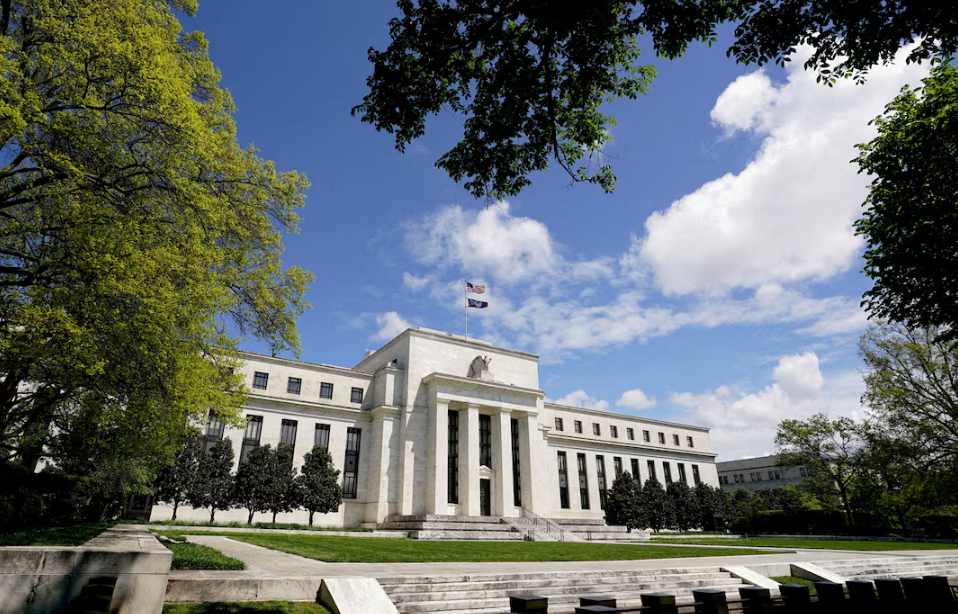
The Federal Reserve and Bank of England are reportedly examining global banks’ exposure to major trading firms after turmoil at AI-focused hedge fund Situational Awareness contributed to substantial losses at Jane Street. The inquiry highlights concerns about leverage, counterparty risk, margin calls and how quickly banks can identify financial risks during volatile markets.
US Fed and Bank of England Examine Trading Firm Exposure
On September 21, 2026, Reuters reported, citing the Financial Times, that the US Federal Reserve and the Bank of England were asking global banks about their financial exposure to large trading firms.
The reported regulatory scrutiny follows turmoil at Situational Awareness, an AI-focused hedge fund run by former OpenAI researcher Leopold Aschenbrenner. The fund was reportedly forced to sell most of its public equities portfolio to Citadel Securities after a sharp sell-off in artificial intelligence and semiconductor stocks.
According to the Reuters report, the episode contributed to Jane Street taking a reported $15 billion hit that month. The precise financial arrangements and the distribution of losses among the institutions involved were not detailed in the report.
The Financial Times said regulators were seeking information about trading firms’ risk appetite, how banks’ exposures to those firms evolved during the trading day and how risk controls operated.
Reuters said it could not immediately verify the Financial Times report. The Federal Reserve, Bank of England and Jane Street did not immediately respond to Reuters’ requests for comment outside business hours.
Why Regulators Are Looking Beyond Individual Trading Losses
The reported inquiry focuses on a broader financial stability question: how can losses at one market participant affect the banks and trading firms connected to it?
Large financial institutions frequently maintain relationships with multiple counterparties. These relationships can involve financing, trading activity, collateral arrangements and other contractual obligations.
When a trading firm experiences financial stress, its counterparties may need to reassess their exposure, the value of collateral and the likelihood that contractual obligations will be met.
The potential concern is not simply that one company has suffered a loss. It is whether financial connections could transmit that stress to other institutions, particularly when several market participants face pressure simultaneously.
How financial connections can transmit risk
- A sharp decline in asset prices reduces the value of a trading portfolio.
- Financing arrangements may require additional collateral as market conditions change.
- Counterparties reassess their exposure and the financial strength of the affected firm.
- A firm under pressure may need to reduce positions or sell assets.
- If multiple participants face similar pressures, market liquidity and financial stability could come under strain.
This sequence describes a potential mechanism through which financial stress can spread. It does not establish that every step occurred in the Situational Awareness episode.
What Happened to Situational Awareness?
Situational Awareness is an AI-focused hedge fund led by Leopold Aschenbrenner, a former OpenAI researcher. The fund came under pressure following a sharp sell-off in artificial intelligence and semiconductor stocks.
Reuters reported that the fund was forced to sell most of its public equities portfolio to Citadel Securities. The report linked the episode to substantial losses at Jane Street, citing a $15 billion hit that month.
The episode has attracted regulatory attention because it brings together several issues that can become important during market disruptions: concentrated investment exposure, leverage, financing arrangements and relationships between trading firms and banks.
Why AI and semiconductor stock volatility matters
Artificial intelligence and semiconductor stocks can be sensitive to changes in investor expectations about future growth, competition, technology spending and company earnings.
When a group of related stocks declines sharply, investors with substantial exposure to that market theme can experience significant portfolio losses.
If those positions are financed partly through borrowing or other forms of leverage, the consequences can extend beyond the decline in asset values. Financing terms may require additional collateral or prompt counterparties to reconsider existing exposure.
However, the Reuters report does not provide enough detail to determine the fund’s exact leverage, the size of individual positions or the precise sequence of transactions that led to Jane Street’s reported losses.
What the Federal Reserve and Bank of England Are Investigating
The reported information requests focus on how banks assess their exposure to large trading firms and whether their risk management systems can respond effectively when market conditions change rapidly.
Trading firms’ risk appetite
Risk appetite refers to the amount and types of risk an institution is prepared to accept while carrying out its business activities.
Regulators are reportedly asking banks about the risk appetite of major trading firms. This information can help financial institutions understand the potential risks associated with their counterparties.
A trading firm’s risk profile may change as its positions, financing needs and market conditions evolve. Banks therefore need to consider not only a counterparty’s financial position at one moment but also how that position could change.
How bank exposure changes throughout the trading day
One of the most significant aspects of the reported inquiry is its focus on intraday exposure.
Intraday exposure refers to the financial risk an institution carries during the course of a trading day. It can change as asset prices move, transactions are completed and collateral requirements are adjusted.
A bank’s exposure at the end of the day may not fully reveal the highest level of risk it faced during a period of market volatility.
For example, a bank dealing with a trading firm whose portfolio is exposed to falling stock prices may see its potential exposure increase rapidly. The bank’s ability to identify that change depends on its monitoring systems, the information available and the terms of its financial agreements.
The reported questions suggest regulators want to understand how banks track these changing exposures rather than relying solely on periodic or end-of-day assessments.
Whether risk controls operated effectively
Risk controls are the policies, systems and procedures used by financial institutions to identify, measure and limit potential losses.
They can include counterparty exposure limits, collateral requirements, monitoring systems and escalation procedures for situations in which a client’s financial position deteriorates.
The reported inquiry into how these controls operated could help regulators understand whether banks had adequate visibility into their trading-firm exposures during the market disruption.
However, a request for information is not proof that a bank’s risk controls failed or that any institution breached regulatory requirements. Such conclusions would require evidence and formal findings.
Jane Street Losses: Understanding the Importance of Counterparty Risk
Counterparty risk is the possibility that another party in a financial transaction will fail to meet its contractual obligations.
This risk matters because banks and trading firms often depend on one another to complete transactions, provide financing and meet collateral requirements.
When a counterparty experiences financial stress, other institutions may need to reassess whether their exposure remains within acceptable limits.
The reported Jane Street losses have therefore raised questions about how financial institutions assess the risks associated with large trading firms, especially when market volatility and financing pressures occur together.
Why a large trading loss does not automatically mean a banking crisis
A substantial loss at a trading firm does not necessarily translate into equivalent losses for its banking counterparties or create a systemic financial crisis.
The consequences depend on several factors, including the size of each institution’s exposure, the collateral available, the financial strength of counterparties and the contractual arrangements between them.
It is also important to distinguish between a firm’s own trading losses and the direct financial obligations it has to other institutions.
The reported $15 billion hit is a significant headline figure, but the available report does not establish the total losses absorbed by banks or the overall exposure of the financial system.
How Leverage and Margin Calls Can Increase Financial Pressure
Leverage allows investors and financial institutions to take positions larger than the capital they directly commit. While it can increase potential returns, it also makes portfolios more sensitive to adverse price movements.
When the value of a leveraged portfolio falls, the investor’s available capital can come under pressure. Depending on the financing agreement, a lender or counterparty may require additional collateral through a margin call.
A margin call is a demand for additional funds or eligible collateral when the existing margin is no longer sufficient under the applicable terms.
How margin calls can contribute to market stress
If a fund cannot meet a collateral requirement using its available resources, it may need to reduce positions or sell assets.
When several market participants attempt to sell similar assets at the same time, prices can face additional pressure. This can make it more difficult for leveraged investors to maintain their positions.
The resulting feedback loop can involve falling asset values, tighter financing conditions and further asset sales.
The SEC’s reported examination of Situational Awareness is relevant to this issue. Reuters reported that the regulator subpoenaed Wall Street banks last month, including Goldman Sachs, JPMorgan, Citigroup and Bank of America.
The examination reportedly covered the fund’s trading activity, use of leverage, trades that triggered margin calls and communications with lenders following its near-collapse.
These reported areas of examination highlight why regulators may need to understand not only the final trading losses but also the financing arrangements and transactions that preceded them.
SEC, Federal Reserve and Bank of England: Different Areas of Scrutiny
The reported regulatory developments involve different institutions examining related aspects of the same broader financial episode.
| Regulator | Reported focus | Potential relevance |
|---|---|---|
| US Securities and Exchange Commission | Situational Awareness trading activity, leverage, margin calls and communications with lenders. | Examines the fund’s trading and financing-related circumstances. |
| US Federal Reserve | Bank exposure to large trading firms, risk appetite, intraday exposure changes and risk controls. | Examines risks financial institutions may face through their counterparties. |
| Bank of England | Reported information requests to global banks about trading-firm exposure and risk controls. | Focuses on financial relationships and potential risks involving major trading firms. |
The inquiries should not be treated as identical, and the reported information requests do not establish wrongdoing by any named institution.
The SEC’s reported examination focuses on the hedge fund’s trading and financing activity, while the central banks’ reported questions concern banks’ exposure to major trading firms and the operation of their risk management systems.
Could the Jane Street Episode Affect Global Financial Stability?
The reported scrutiny has drawn attention to the possibility that concentrated trading positions and interconnected financing arrangements could create broader financial risks.
Systemic risk arises when problems at one institution or in one market spread through financial connections and threaten the functioning of the wider financial system.
However, the existence of a large trading loss does not by itself establish that systemic risk has materialised.
To assess the broader implications, regulators would need to understand how losses are distributed, the extent of banks’ exposures, the availability of collateral and the ability of institutions to meet their obligations.
The Reuters report does not provide sufficient information to calculate total banking-system exposure or conclude that a financial crisis is developing.
Why interconnectedness matters
A financial institution may have multiple counterparties, each with different contractual arrangements and levels of exposure. Stress at one firm can therefore require several institutions to reassess their own positions.
If those institutions are also exposed to similar market movements, the effects can become more complicated.
This is one reason regulators pay attention to concentrations of exposure and the relationships between financial institutions rather than examining each trading loss in isolation.
What the Reported Scrutiny Could Mean for Banks
The reported inquiry could increase attention on how banks monitor large trading counterparties and manage risk during periods of rapid market movement.
The actual consequences will depend on what regulators discover and whether their findings lead to further supervisory action or changes in risk management practices.
Potential implications for risk management
- Intraday monitoring: Banks may face closer questions about how frequently they assess changing counterparty exposures.
- Collateral management: Institutions may need to explain how collateral arrangements respond to market volatility.
- Exposure concentration: Regulators may seek clearer information about large or concentrated relationships with trading firms.
- Stress testing: Banks may face additional scrutiny of how they assess severe market movements and potential counterparty failures.
- Risk reporting: Financial institutions may need to demonstrate that relevant information reaches decision-makers in time to respond to changing conditions.
These are potential areas of regulatory attention, not confirmed new requirements resulting from the reported inquiry.
What Investors Should Watch After the Jane Street Losses
For investors, the episode highlights the importance of understanding how market movements interact with leverage, financing and counterparty relationships.
A sharp decline in a particular market sector can affect investors differently depending on their portfolio composition, financing arrangements and ability to manage changing collateral requirements.
However, the reported episode does not establish that every AI-focused investment, semiconductor stock or trading firm carries the same level of risk.
Investors following the developments should distinguish between confirmed information, reported regulatory inquiries and speculation about possible consequences.
Key developments to monitor
- Formal statements from the Federal Reserve or Bank of England about the reported information requests.
- Verified information about the reported Jane Street losses and the circumstances surrounding Situational Awareness.
- Further details about the SEC’s examination of the hedge fund’s trading and financing arrangements.
- Any regulatory findings concerning bank exposure, leverage or risk controls.
- Changes announced by financial institutions in their counterparty risk management practices.
The Bigger Insight: Why Intraday Exposure Deserves Attention
One important aspect of the reported inquiry is its focus on how bank exposures evolve throughout the trading day.
Financial reports often emphasise figures measured at a particular moment. But in fast-moving markets, exposure can change as prices move, transactions are completed and collateral requirements are reassessed.
A closing balance may therefore provide only part of the picture.
Understanding the path of exposure during the day can help explain when risk increased, how quickly it changed and whether risk controls responded appropriately.
This is particularly relevant when institutions have large relationships with trading firms operating across volatile markets.
The broader lesson is that effective risk management involves more than measuring the amount of exposure at one point in time. It also requires understanding how quickly that exposure can change and whether institutions have the information needed to respond.
Conclusion: Regulators Seek Greater Clarity on Trading Firm Risks
The reported scrutiny by the US Federal Reserve and Bank of England following the Jane Street losses and Situational Awareness turmoil highlights the importance of counterparty risk, leverage, collateral arrangements and intraday exposure monitoring.
The central banks are reportedly seeking information from global banks about their relationships with large trading firms, including how exposures change throughout the trading day and how risk controls operate. Separately, the SEC has reportedly examined Situational Awareness’s trading activity, leverage, margin calls and lender communications.
These developments reflect a wider regulatory interest in understanding how financial stress at investment funds and trading firms can affect their counterparties.
The reported inquiry does not establish that a particular bank failed its risk controls or that the global financial system faces an imminent crisis.
The next important development will be the emergence of verified information about the financial exposures involved and any findings from regulators. Until then, the central question remains whether banks have sufficiently timely and comprehensive information to identify changing counterparty risks before those exposures become difficult to manage.
For breaking news and live news updates, like us on Facebook or follow us on Twitter and Instagram. Read more on Latest Business on thefoxdaily.com.





COMMENTS 0