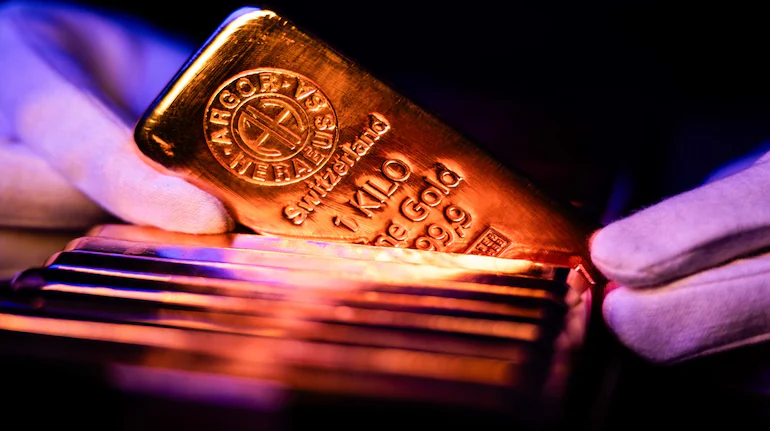
Gold prices have fallen to their lowest level since October 2025, as elevated crude oil prices and persistent inflation concerns weaken expectations of a US interest rate cut. After a sharp selloff towards the end of the week, commodity analysts expect gold and Silver to potentially open higher on Monday, November 2. However, whether the rebound can develop into a sustained recovery will depend on how prices respond to key technical resistance levels.
International gold prices dropped to around $3,876 per ounce on Friday, recording a weekly decline of 3% and a monthly fall of 8.15%. The metal was also down 3.17% compared with the same period a year earlier. US gold futures settled with a 3.63% decline, trading near $3,885 per ounce.
The weakness in international markets was reflected in domestic bullion prices. Spot gold fell below Rs 1.40 lakh per 10 grams, while silver declined to around Rs 1.82 lakh per kilogram on the Multi Commodity Exchange (MCX).
Gold and Silver Prices Under Pressure in Domestic Markets
MCX gold futures for December 4 delivery declined 0.05% to Rs 1,38,419 per 10 grams. Silver futures fell 0.13% to Rs 1,78,900 per kilogram, reflecting the cautious sentiment across the precious metals market.
According to Jateen Trivedi, Vice President and Research Analyst for Commodity and Currency at LKP Securities, selling pressure intensified towards the end of the week despite volatility and a brief recovery during earlier sessions.
Trivedi noted that gold had experienced cumulative selling pressure of more than 6% over the previous three weeks, indicating continued weakness in investor sentiment. The decline suggests that market participants remain cautious about holding bullion amid changing expectations for US monetary policy.
Gold and Silver Rates in Mumbai on October 31
Domestic bullion prices reflected the broader weakness in precious metals. The reported rates in Mumbai on Saturday, October 31, 2026, were:
- 24-carat gold: Rs 1,37,720 per 10 grams.
- 22-carat gold: Rs 1,26,150 per 10 grams.
- Silver: Rs 1,790 per 10 grams.
- Silver: Rs 1,79,037 per kilogram.
These prices provide a snapshot of the domestic market following the latest decline. Actual retail prices may vary depending on the jeweller, local charges and applicable taxes.
Why Are Gold Prices Falling?
Inflation concerns and elevated oil prices have emerged as important factors weighing on bullion. Higher energy costs can increase inflationary pressure, potentially reducing the likelihood of interest rate cuts by the US Federal Reserve.
Gold does not generate interest income, so expectations of higher interest rates can make interest-bearing assets more attractive relative to the precious metal. This can weaken investment demand for bullion, particularly when traders expect monetary policy to remain restrictive for longer.
Investors are also monitoring developments surrounding US-Iran tensions, uncertainty linked to US elections and important American economic data. Unemployment figures and non-farm payrolls are among the indicators that could influence expectations about the Federal Reserve’s next policy decisions.
The dollar index was reported at around 101.66, while Brent crude futures traded near $114.13 per barrel. Movements in the dollar and crude prices remain important considerations for bullion investors as they assess inflation and interest rate expectations.
Can Gold Witness a Gap-Up Opening on November 2?
Despite the broader weakness, analysts believe the sharp fall on Friday may have pushed gold and silver into oversold territory, creating the possibility of a technical rebound at the beginning of the next trading week.
Nirpendra Yadav, Senior Research Analyst at Bonanza Portfolio, said both metals remained under pressure on the MCX, with lower lows on daily and weekly charts indicating a bearish short-to-medium-term trend. He also pointed to weak fundamental support as a factor keeping market sentiment cautious.
However, Yadav believes the sharp selloff could lead to a gap-up opening on Monday, November 2. Such a move would indicate an initial recovery in buying interest after the recent decline, although it would not automatically confirm that the broader downward trend has ended.
He cautioned that any recovery could face resistance at immediate technical levels. Unless prices move decisively above those zones, the rebound may remain temporary and attract fresh selling interest.
Why a Gap-Up Opening May Not Confirm a Trend Reversal
A gap-up opening occurs when a financial asset begins trading above its previous closing level. In the case of gold, a higher opening after Friday’s decline could reflect short-covering, renewed buying or a technical recovery following oversold conditions.
However, the direction of the opening session alone cannot establish whether the market has entered a sustained recovery. Traders generally look for continued buying interest and a decisive move above resistance levels before treating a rebound as evidence of a stronger trend.
Gold’s recent performance also highlights the difference between a short-term technical recovery and a change in underlying market conditions. If inflation concerns continue to limit expectations of US rate cuts, bullion could remain vulnerable even after a temporary rise.
What Should Gold Investors Watch Next?
Investors will be watching several developments as the new trading week begins. US-Iran tensions could influence crude oil prices and inflation expectations, while American employment data may affect the outlook for interest rates.
The dollar’s movement will also remain important because changes in its value can influence the international price of gold. At the same time, traders will assess whether buying interest is strong enough to push prices above immediate technical resistance levels.
Yadav has advised investors to remain cautious and consider sharp upward moves as potential selling opportunities rather than assuming that a confirmed trend reversal has begun.
For investors, the key question is therefore not simply whether gold opens higher on November 2, but whether the metal can sustain its recovery beyond the immediate resistance zones. Until that happens, the broader short-to-medium-term trend remains under pressure, and volatility could continue in both gold and silver markets.
For breaking news and live news updates, like us on Facebook or follow us on Twitter and Instagram. Read more on Latest Business on thefoxdaily.com.





COMMENTS 0