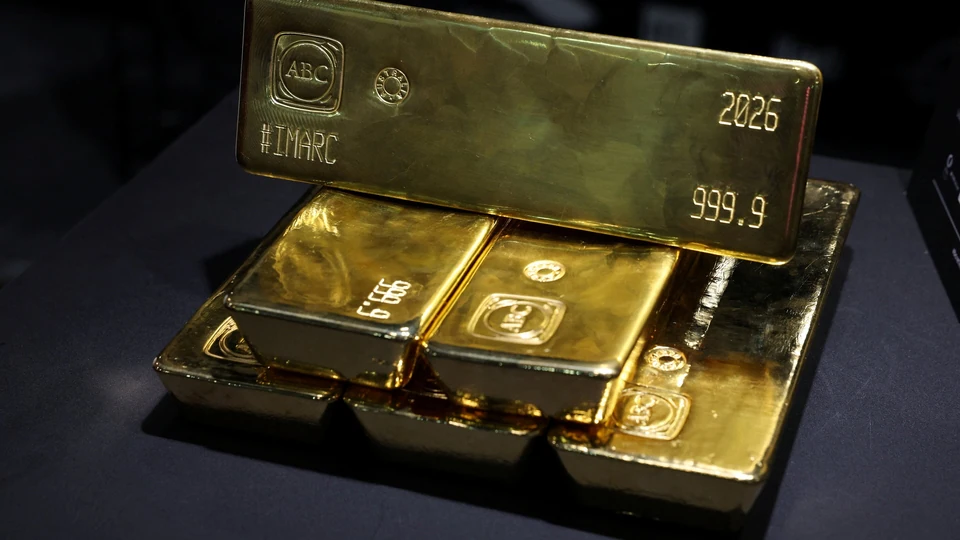
Gold Prices fell on Thursday as investors assessed the Federal Reserve‘s interest rate decision and awaited key US Inflation data for further clues about the outlook for monetary policy. Persistent uncertainty in the Middle East and changing expectations for future interest rates also influenced market sentiment.
Spot gold declined 0.7% to $4,037.98 per ounce by 0410 GMT, while US gold futures for December delivery remained relatively steady at $4,049.80 per ounce. Investors were cautious ahead of the latest US inflation figures, which could influence expectations for the Federal Reserve’s next interest rate decision.
Gold Prices Fall as Federal Reserve Holds Interest Rates Steady
The Federal Reserve kept interest rates unchanged within the 3.75% to 4.00% range on Wednesday, as expected. Policymakers are awaiting additional inflation data before making further adjustments to borrowing costs.
The decision has kept investors focused on the timing of the central bank’s next policy move. Interest rate expectations are particularly important for gold because the precious metal does not generate interest income, making its relative attractiveness sensitive to changes in bond yields and monetary policy.
According to the CME FedWatch Tool, traders were pricing in approximately a 78% probability of a US interest rate hike in December, down from 84% before the Federal Reserve’s announcement.
Higher interest rates generally increase the opportunity cost of holding non-yielding assets such as gold. When interest-bearing investments offer more attractive returns, investors may reduce their exposure to bullion, putting downward pressure on prices.
Conversely, expectations of lower interest rates can support gold by reducing the relative appeal of interest-bearing assets. This relationship makes central bank communications and economic indicators important drivers of short-term movements in the precious metals market.
US PCE Inflation Data in Focus
Investors are awaiting the US Personal Consumption Expenditures price index, scheduled for release at 1230 GMT. The PCE index is a key inflation measure closely monitored by the Federal Reserve as it works toward its 2% inflation target.
The upcoming report could influence expectations for future interest rate decisions and determine whether investors anticipate further monetary tightening. Inflation figures are particularly significant because persistent price pressures could encourage policymakers to maintain restrictive monetary conditions.
A stronger-than-expected inflation reading could increase concerns about higher interest rates, potentially weighing on gold prices. Conversely, softer inflation could ease pressure on the Federal Reserve to tighten policy and provide support for bullion.
However, the market reaction will also depend on broader economic conditions, geopolitical developments and investor positioning. Gold traders will therefore assess the inflation figures alongside other indicators rather than relying on a single data release.
Middle East Uncertainty Influences Gold Market Sentiment
Geopolitical uncertainty in the Middle East remains another factor influencing precious metals trading. Ajay Kedia, director of Mumbai-based Kedia Commodities, attributed the decline in gold prices to persistent regional uncertainty and market positioning ahead of the US inflation report.
Gold is widely considered a safe-haven asset because investors may turn to it during periods of geopolitical tension and financial instability. However, uncertainty does not always translate into immediate price gains, as interest rate expectations, profit-taking and short-term trading positions can offset demand for protection.
Diplomatic developments involving the United States and Iran are also attracting attention. The Wall Street Journal reported on Wednesday that US Vice President JD Vance had sent a letter to Iranian Security Council chief Mohsen Rezaei in an effort to revive peace negotiations.
Progress toward negotiations could influence perceptions of geopolitical risk, while renewed tensions could strengthen demand for defensive assets. The impact on gold will depend on how these developments interact with monetary policy expectations and broader financial market conditions.
World Bank Forecasts 23% Surge in Global Commodity Prices
The World Bank said global commodity prices were set to surge 23% in 2026, citing rising energy prices, disruptions to cargo shipping during the Middle East war, grain shipment problems in the Black Sea and strong demand for safe-haven assets such as gold.
The forecast highlights the potential impact of geopolitical disruptions on Commodity Markets. Higher energy prices and transportation costs can increase production expenses and contribute to broader inflationary pressures across the global economy.
For gold, the relationship between inflation and prices is complex. Investors may purchase bullion to protect against economic uncertainty and declining purchasing power. However, persistent inflation can also encourage central banks to maintain higher interest rates, increasing the opportunity cost of holding gold.
These competing forces mean that rising commodity prices do not automatically lead to higher gold prices. Investors must also consider how inflation affects monetary policy, currency movements and demand for alternative investments.
China’s Gold Imports Rise to a Five-Month High
China’s net gold imports through Hong Kong increased by more than 28% in September compared with August, reaching a five-month high, according to data from the Hong Kong Census and Statistics Department released on Wednesday.
The increase provides an indication of changing gold flows into one of the world’s important precious metals markets. Stronger import activity can offer clues about physical-market demand, although import figures alone do not establish the full picture of domestic consumption or investment demand.
China’s gold market remains important for investors monitoring the balance between physical demand and financial market activity. Changes in consumer purchases, investment interest and import flows can influence market sentiment over time.
The rise in September imports also contrasts with Thursday’s decline in international gold prices, illustrating how short-term price movements can differ from developments in physical markets. While interest rate expectations may dominate immediate trading, demand trends can provide additional context for the broader outlook.
Silver, Platinum and Palladium Prices Also Decline
Other precious metals also recorded losses on Thursday as investors assessed the broader market environment.
- Silver: Spot prices fell 1.5% to $53.15 per ounce.
- Platinum: Prices declined 1.5% to $1,515.70 per ounce.
- Palladium: Prices dropped 0.6% to $1,004.25 per ounce.
The declines indicate that weakness extended beyond gold, although each metal has different demand drivers. Silver and platinum have substantial industrial applications, meaning their prices can respond to changes in manufacturing activity and industrial demand as well as investment flows.
Interest rate expectations, currency movements and changes in investor risk appetite can influence the broader precious metals market. Nevertheless, individual metals may respond differently depending on their supply conditions and industrial uses.
What Could Drive Gold Prices Next?
The immediate outlook for gold prices will depend largely on the US PCE inflation report and its implications for Federal Reserve policy. The figures could prompt investors to reassess the likelihood of a December interest rate increase and adjust their positions in bullion and other financial assets.
Several factors are likely to remain important for the gold market:
- US inflation data: The PCE report could influence expectations for future Federal Reserve interest rate decisions.
- Interest rate expectations: The prospect of higher rates could weigh on gold, while expectations of lower rates may support prices.
- Middle East developments: Changes in regional tensions and diplomatic negotiations could affect safe-haven demand.
- Chinese gold imports: Import trends may provide additional insight into physical-market activity.
- Global commodity prices: Rising energy costs and shipping disruptions could complicate the inflation outlook.
These factors could exert opposing pressures on bullion. Strong inflation may strengthen expectations of tighter monetary policy, while geopolitical uncertainty and sustained investment demand could help limit losses.
Gold Market Outlook
Thursday’s decline reflects the competing forces shaping the gold market as investors balance Federal Reserve policy, inflation risks and geopolitical uncertainty. The central bank’s decision to keep interest rates unchanged has shifted attention toward incoming economic data, with the US PCE inflation report expected to provide further clues about the direction of monetary policy.
Meanwhile, the World Bank’s commodity price forecast and rising Chinese gold imports offer additional context for assessing the market. Although these developments could influence longer-term sentiment, their immediate effects will depend on how investors weigh them against interest rate expectations.
For gold traders, the key question is whether incoming inflation data will reinforce expectations of tighter monetary policy or ease concerns about future rate increases. Developments in the Middle East and changing demand conditions will also remain relevant as investors assess the precious metal’s direction in the near term.
For breaking news and live news updates, like us on Facebook or follow us on Twitter and Instagram. Read more on Latest Business on thefoxdaily.com.






COMMENTS 0