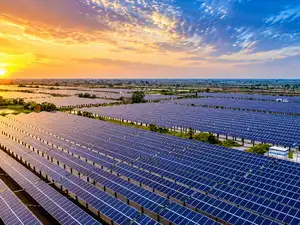
India’s agricultural sector could create a major growth opportunity for the domestic solar Manufacturing industry, with the solarisation of irrigation pumps potentially generating demand for around 116 GW of solar modules. The transition could strengthen the country’s Renewable Energy ecosystem while reducing farmers’ dependence on conventional electricity and diesel-powered irrigation systems.
The opportunity is linked to the government’s Pradhan Mantri Kisan Urja Suraksha evam Utthaan Mahabhiyan (PM-KUSUM) scheme, which aims to promote Solar Energy use in agriculture. According to the Indian Solar Manufacturers Association (ISMA), sustained policy support and clear demand visibility will be important for domestic manufacturers to benefit from this potential market.
Key Highlights
- Solarising agricultural irrigation pumps could create demand for 116 GW of solar modules.
- PM-KUSUM aims to support the adoption of solar energy in the agricultural sector.
- Solar pumps can reduce farmers’ dependence on conventional electricity and diesel.
- Solarisation could improve electricity availability for agricultural activities.
- ISMA highlights the need for consistent policies and long-term demand visibility to support domestic manufacturers.
How India’s Farms Could Create a 116 GW Solar Opportunity
Agriculture is emerging as an important potential market for solar energy deployment in India. Irrigation requires a reliable power supply, and solar-powered pumps offer an alternative to conventional electricity connections and diesel-based systems.
The solarisation of irrigation pumps could create demand for approximately 116 GW of solar modules. This would represent a significant opportunity for manufacturers supplying solar modules to the domestic market.
The scale of the potential demand also highlights how renewable energy adoption in agriculture could support the expansion of India’s solar manufacturing industry.
PM-KUSUM Scheme Supports Agricultural Solarisation
The PM-KUSUM scheme is central to India’s efforts to expand solar energy use in agriculture. Its objective is to encourage the adoption of solar-powered solutions and improve the energy options available to farmers.
Solarising irrigation pumps can help reduce dependence on conventional electricity and diesel. It can also support more reliable access to electricity for agricultural activities, particularly where farmers face challenges with power availability.
By encouraging solar adoption in farming, the scheme can connect agricultural energy requirements with the country’s broader renewable energy ambitions.
Benefits of Solar Pumps for Farmers
Solar-powered irrigation systems can offer several potential advantages to farmers. One of the main benefits is reduced dependence on conventional electricity and diesel for operating water pumps.
Solarisation can also improve electricity availability for irrigation, helping farmers access an alternative source of power. The shift could make agricultural energy use less dependent on conventional supply arrangements.
These benefits make solar pumps an important part of efforts to expand clean energy adoption beyond residential, commercial and industrial applications.
Why Domestic Solar Manufacturers Could Benefit
The potential demand for 116 GW of solar modules could create significant opportunities for India’s domestic solar manufacturing sector. A large-scale agricultural solarisation programme would require solar equipment, creating a potential market for manufacturers supplying modules.
However, the size of the opportunity will depend on how quickly solar pump installations expand and how consistently the policy framework supports adoption. Manufacturers need greater clarity about future demand to plan production capacity, investment and supply chains.
ISMA Stresses the Need for Sustained Policy Support
ISMA has highlighted the importance of sustained policy support and demand visibility for domestic manufacturers. A large potential market alone may not be sufficient to encourage long-term investment unless companies have confidence that demand will continue.
Consistent policy implementation can help create a more predictable environment for manufacturers and other participants in the solar supply chain. It can also support the expansion of solarisation programmes across agricultural regions.
What the 116 GW Opportunity Means for India’s Solar Industry
The potential 116 GW demand from agricultural pump solarisation underlines the importance of farming as a future market for renewable energy. It brings together two major priorities: improving energy access for farmers and strengthening domestic solar manufacturing.
If supported by consistent policies and effective implementation, agricultural solarisation could become an important source of demand for Indian solar module manufacturers. For the sector, the challenge will be turning this estimated opportunity into sustained installations and long-term business growth.
For breaking news and live news updates, like us on Facebook or follow us on Twitter and Instagram. Read more on Latest Business on thefoxdaily.com.






COMMENTS 0