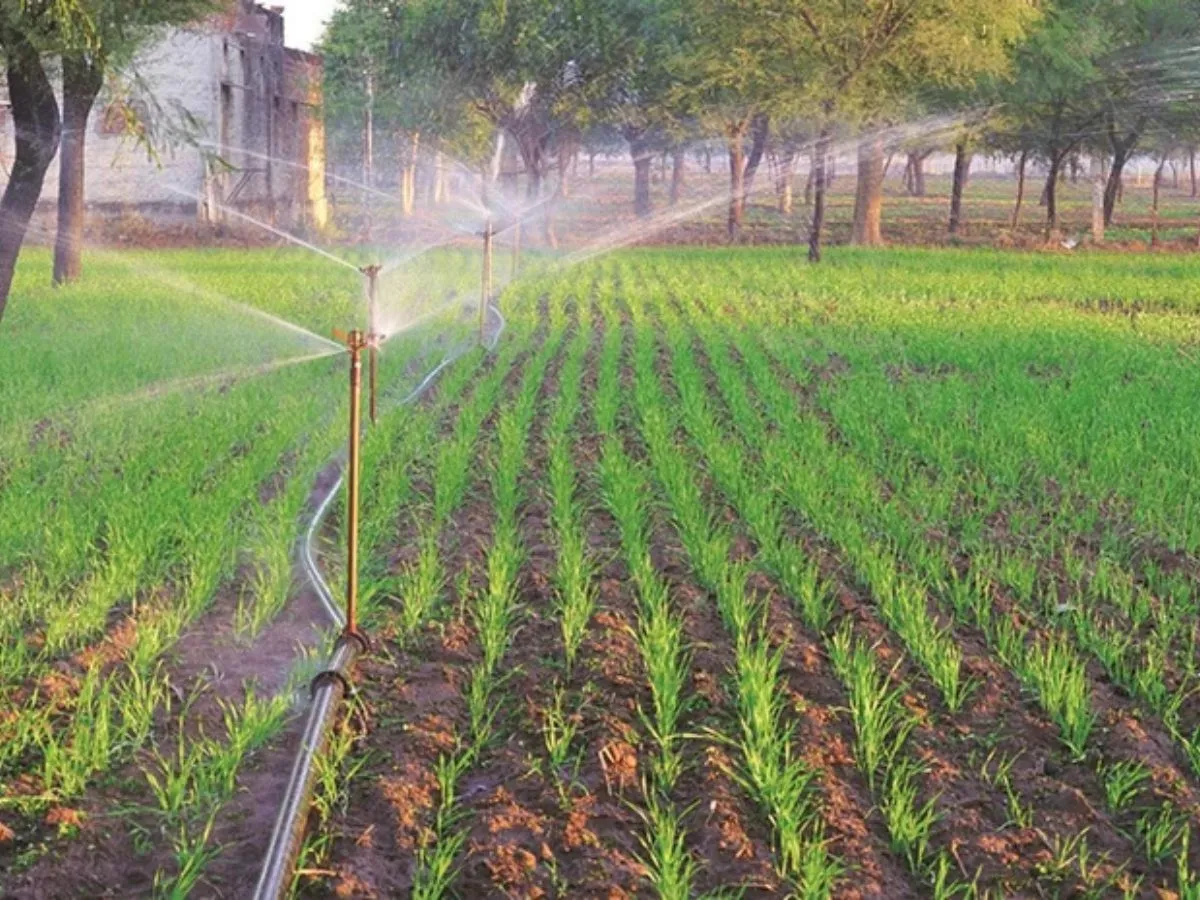
India’s rabi crop sowing declined 17.2% year-on-year as of November 6, with oilseeds, pulses and wheat recording significant reductions in planted area. The slowdown comes amid a weak post-monsoon rainfall period, raising concerns about the progress of the winter cropping season.
According to the government’s weekly agricultural report, farmers had planted 108.66 lakh hectares by November 6, compared with 131.26 lakh hectares during the corresponding period last year. This represents a shortfall of 22.59 lakh hectares.
Oilseeds recorded the steepest decline among the major crop groups, while rapeseed and mustard accounted for a substantial share of the overall reduction. Pulses and wheat acreage also remained below last year’s levels, reflecting slower planting activity across several important agricultural regions.
Key Highlights
- India’s total rabi sowing declined 17.2% to 108.66 lakh hectares as of November 6.
- Oilseed acreage fell 23.6%, with rapeseed and mustard sowing declining 25.4%.
- Pulses coverage dropped 14.4%, while gram acreage decreased 21.6%.
- Wheat sowing declined 12% compared with the same period last year.
- Post-monsoon rainfall was 32% below normal between October 1 and November 10, according to the India Meteorological Department.
Total Rabi Sowing Declines by 17.2%
The latest government data shows that farmers had covered 108.66 lakh hectares under rabi crops by November 6. During the same period last year, the planted area stood at 131.26 lakh hectares.
The difference of 22.59 lakh hectares represents a 17.2% year-on-year decline. The reduction indicates that planting activity has been slower across several major winter crops during the early part of the season.
Rabi crops are generally sown after the monsoon season and harvested during the spring months. Wheat, mustard, gram, lentils and several other pulses are important crops grown during this period.
The progress of rabi sowing depends on factors such as soil moisture, irrigation availability, temperatures and farmers’ decisions about crop selection. Rainfall after the monsoon can be particularly important in regions where agricultural production depends partly on stored soil moisture.
Oilseed Sowing Records the Sharpest Decline
Oilseeds experienced the largest reduction among the major crop categories. The total area under oilseed cultivation declined 23.6% to 42.08 lakh hectares, compared with 55.09 lakh hectares during the corresponding period last year.
Rapeseed and mustard, two important rabi oilseed crops, recorded a 25.4% decline in planted area. Their coverage fell to 40.31 lakh hectares from 54.02 lakh hectares a year earlier.
The reduction of 13.71 lakh hectares in rapeseed and mustard acreage accounted for approximately 61% of the overall shortfall in rabi sowing. This makes the crop category a major contributor to the decline in total winter planting.
Mustard is an important source of edible oil in India, and changes in its production can influence domestic oilseed availability. However, the eventual impact on output will depend on crop development, Weather conditions, yields and harvesting results.
Pulses Acreage Falls 14.4% as Gram Sowing Weakens
Pulses coverage declined 14.4% to 31.93 lakh hectares by November 6, compared with the corresponding period last year. The reduction was largely influenced by lower gram cultivation, as farmers planted less area under the crop.
Gram, which represents the largest component of the reported pulses acreage, recorded a 21.6% decline. Its planted area fell to 21.36 lakh hectares from 27.25 lakh hectares a year earlier.
However, not all pulse crops experienced a decline. Lentil sowing increased 3.6% to 4.54 lakh hectares, indicating that planting trends differed across individual crops.
Urad acreage also increased by 27.2%, although the rise came from a relatively small base. These differences show that the overall decline in pulses cultivation was not uniform across all varieties.
Pulses are an important source of protein in Indian diets. Changes in their cultivated area can influence future domestic supply, although actual production will also depend on weather conditions and crop yields.
Wheat Sowing Declines 12%
Wheat acreage also remained below last year’s level. Farmers had planted 19.77 lakh hectares under wheat by November 6, compared with 22.47 lakh hectares during the same period a year earlier.
This represents a 12% decline in planted area. Wheat is one of India’s most important rabi crops and plays a major role in domestic food supply and agricultural income.
The early-season reduction does not necessarily indicate a similar decline in final wheat production. Planting activity can change over the coming weeks, while productivity depends on several factors, including irrigation, soil conditions and temperatures during crop development.
Nevertheless, the slower start makes subsequent sowing progress important for assessing the overall position of the wheat crop this season.
Coarse Cereals and Maize Also Record Lower Acreage
Coarse cereal sowing declined 17.5% to 8.15 lakh hectares compared with the corresponding period last year. Maize, one of the important crops in this category, recorded a 23.1% reduction in planted area.
The decline across coarse cereals adds to the broader slowdown in rabi cultivation. These crops serve different purposes, including food consumption, animal feed and industrial applications.
The reduction in maize acreage is particularly relevant to the wider agricultural market because maize is used in poultry feed and several industrial supply chains. However, the final effect on availability will depend on subsequent planting, production and demand conditions.
Post-Monsoon Rainfall Deficit Adds to Agricultural Concerns
The slowdown in rabi sowing coincides with a significant rainfall deficit after the southwest monsoon season. According to the India Meteorological Department (IMD), India received 60.3 mm of rainfall between October 1 and November 10, against a normal level of 88.4 mm.
This represents a 32% shortfall compared with the normal rainfall for the period. Below-normal rainfall can reduce soil moisture and affect planting decisions, particularly in areas where farmers depend on residual moisture from the monsoon.
The rainfall deficit has varied considerably across states and regions, meaning the impact on agricultural activity is unlikely to be uniform.
Madhya Pradesh, Rajasthan and Maharashtra Face Major Rainfall Deficits
Some important agricultural states recorded particularly large rainfall shortfalls during the reported period.
- Madhya Pradesh: Rainfall was 78% below normal.
- Rajasthan: Rainfall was 47% below normal.
- Maharashtra: Rainfall was 93% below normal.
These figures highlight the uneven distribution of post-monsoon rainfall across major farming regions. A substantial rainfall deficit can affect soil moisture conditions and make it more difficult for farmers to begin sowing without sufficient irrigation support.
However, the extent of the impact depends on local conditions, including access to canals, groundwater, reservoirs and other irrigation sources.
Regional Rainfall Trends Show a Sharp Difference
The IMD data also showed contrasting rainfall conditions across India’s major geographical regions. Northwest India received rainfall 3% above normal between October 1 and November 10.
In contrast, central India recorded a 47% rainfall deficit during the same period. The difference indicates that the post-monsoon rainfall shortage has been concentrated more heavily in certain parts of the country.
Such regional variations are important when assessing the national sowing figures. Farmers in areas with better rainfall or irrigation access may be able to continue planting, while those in moisture-deficient regions may delay operations or reconsider crop choices.
What Lower Rabi Sowing Means for Agriculture and Food Supply
The decline in planted area raises questions about the outlook for India’s winter crop production. Lower acreage can reduce the potential area available for harvesting, particularly if planting delays are not recovered later in the season.
Oilseeds and pulses deserve particular attention because both categories have recorded significant declines. Reduced mustard cultivation could influence the availability of domestic oilseed supplies, while lower gram acreage may become relevant for the pulses market.
Wheat sowing will also remain an important indicator because of the crop’s role in India’s food supply. However, it is too early to draw firm conclusions about final production from the November 6 acreage figures alone.
Future rainfall, irrigation availability, sowing decisions and crop yields will determine how much of the early-season gap can be recovered.
Conclusion
India’s rabi sowing declined 17.2% year-on-year as of November 6, with oilseeds, pulses and wheat all recording lower planted areas. Rapeseed and mustard accounted for approximately 61% of the overall acreage shortfall, while gram also experienced a significant reduction.
The 32% post-monsoon rainfall deficit has added to concerns about planting progress, particularly in states such as Madhya Pradesh, Rajasthan and Maharashtra. However, rainfall conditions vary across regions, and the final impact will depend on irrigation access and weather developments during the remaining sowing period.
The coming weeks will be important for determining whether farmers can narrow the acreage gap. Progress in mustard, pulses and wheat cultivation will remain central to assessing India’s rabi crop outlook and its potential implications for agricultural markets and food supplies.
For breaking news and live news updates, like us on Facebook or follow us on Twitter and Instagram. Read more on Latest Business on thefoxdaily.com.






COMMENTS 0