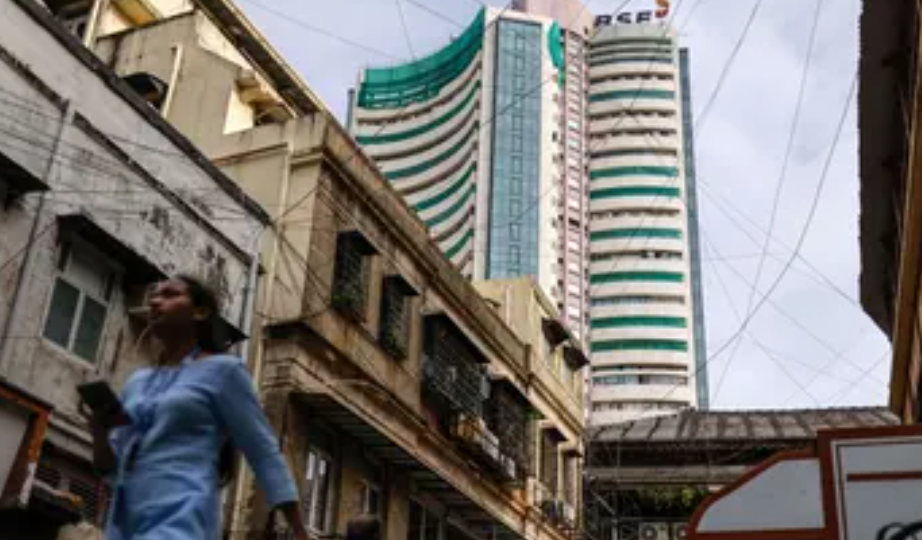
Indian equity markets began Monday’s trading session on a positive note, with the Sensex and Nifty opening higher despite continuing concerns about inflation, elevated crude oil prices and geopolitical uncertainty in the Middle East. The early gains followed a prolonged period of weakness for benchmark indices, leaving investors focused on whether the market could sustain its recovery.
At 9:17 am on September 21, the BSE Sensex was trading at 74,721.20, up more than 435 points. The Nifty 50 stood at 23,391.55, gaining 46.65 points, or 0.20 per cent. The opening movement came as Brent crude prices eased, while investors monitored developments in the US-Iran conflict, foreign investment activity and the closing day of the National Stock Exchange of India’s initial public offering.
The positive opening did not remove the market’s broader concerns. Oil prices remained elevated, geopolitical tensions continued to threaten energy supplies, and foreign investors had recorded substantial net selling during September. These factors could influence inflation expectations, interest-rate outlooks and market sentiment.
Sensex and Nifty Open in the Green
The Sensex and Nifty began the week with gains, offering some relief after a difficult period for Indian equities. The opening figures showed buying interest in the early session, although an opening rise alone does not establish whether the market has entered a sustained recovery.
At 9:17 am, the Sensex was at 74,721.20, more than 435 points higher. The Nifty 50 was trading at 23,391.55, up 46.65 points, representing a 0.20 per cent increase.
Before the market opened, GIFT Nifty futures were at 23,338 points at 7:49 am. That level indicated a broadly flat start for the benchmark index. The Nifty had closed Friday at 23,346.4, according to figures cited in the Reuters report referenced by Hindustan Times.
The difference between the pre-market indication and the eventual opening highlights why investors watch actual trading activity alongside futures. Pre-market signals can offer clues about sentiment, but they do not guarantee how the cash market will perform once trading begins.
Six Consecutive Weekly Declines Put Market Sentiment Under Pressure
The latest opening gains followed a challenging stretch for Indian equities. The Nifty 50 and Sensex had both recorded their sixth consecutive weekly decline, marking their longest losing streak in six years.
A series of weekly declines can affect investor confidence in several ways. Some investors may become more cautious about taking fresh positions, while others may look for opportunities in shares whose prices have fallen. Market participants may also pay closer attention to earnings expectations, global developments and the cost of borrowing.
However, a prolonged decline does not by itself determine what happens next. Markets can experience short-term rebounds during a broader downturn, just as a positive opening can be followed by renewed selling. The direction of the session depends on the balance between buying and selling, new information and changing expectations.
Crude Oil Prices Remain a Major Market Variable
Crude oil was one of the central factors shaping investor attention on Monday. Brent crude futures eased 2.2 per cent to $101.60 per barrel as traders assessed the possibility of recovering shipments from Saudi Arabia. At the same time, ongoing attacks by Yemen’s Houthi movement continued to contribute to tensions in the Middle East.
The decline in Brent prices offered some relief, but the price level remained high. A modest daily fall does not necessarily mean that energy-related risks have disappeared, particularly when supply routes and regional security remain uncertain.
Why oil prices matter to Indian equities
India imports a substantial share of the crude oil it consumes, making international energy prices an important factor for its economy. When crude becomes more expensive, the effects can spread beyond fuel markets.
- Inflation: Higher energy costs can raise transportation and production expenses, potentially putting upward pressure on prices across the economy.
- Corporate costs: Businesses that depend on fuel, logistics or energy-intensive operations may face higher operating expenses.
- Household spending: Higher fuel and transport costs can leave consumers with less money available for other purchases.
- Interest-rate expectations: If energy prices contribute to persistent inflation, investors may reassess the likely path of monetary policy.
- External balances: A larger oil import bill can put pressure on India’s trade balance and foreign-exchange requirements.
These effects do not reach every company in the same way. The impact depends on factors such as pricing power, operating costs, supply contracts and the ability to pass higher expenses on to customers.
Middle East Conflict Keeps Energy Supply Risks in Focus
Geopolitical developments remained a source of uncertainty for financial markets. The United States and Iran exchanged fresh threats on Sunday. US President Donald Trump warned that Iran could face severe economic consequences or a threat to its leadership if it did not reach a deal. Iran’s military said it would respond harshly to any new attack.
The conflict had appeared stalemated for months, with neither side showing clear signs of making concessions. The dispute has also contributed to a wider energy crisis, affected Iran’s economy and created risks of further regional escalation.
For investors, the economic significance of such developments lies partly in their potential effect on energy production, shipping routes and supply expectations. Even without a direct interruption to all shipments, uncertainty can influence crude prices as traders assess possible future disruptions.
It is important to distinguish between a geopolitical threat and a confirmed change in physical oil supply. Markets may react to the possibility of disruption before the full economic consequences are known. That can lead to sharp price movements in either direction as new information emerges.
Brent’s Retreat Offers Relief, but Risks Remain
Brent crude’s 2.2 per cent decline to $101.60 per barrel was a potentially supportive development for markets concerned about inflation and corporate costs. Lower oil prices can ease some pressure on businesses and consumers, particularly when the decline is sustained.
However, the quoted assessment from Hariselvan Radhakrishnan, founder and CEO of HST Wealth, cautioned that prices remained elevated. He said the unresolved Middle East conflict left the market exposed to renewed flare-ups and supply disruptions, as reported by Reuters.
The distinction is important: a retreat in oil prices may reduce immediate pressure, while the broader risk environment remains unsettled. Investors may therefore continue monitoring both daily price movements and the underlying factors affecting supply.
NSE IPO Closing Day Draws Investor Attention
Investors were also watching the primary market, as the National Stock Exchange of India’s $2.3 billion initial public offering was scheduled to close for subscriptions later on Monday.
An initial public offering, or IPO, allows a company to offer shares to investors through a public-market process. The subscription period is an important stage because it gives market participants an opportunity to submit applications under the offer’s terms.
The NSE IPO’s closing day added another point of interest to an already eventful market session. However, the supplied report does not provide subscription figures or a final demand breakdown, so those details should not be assumed.
Investors assessing an IPO generally consider the company’s business model, financial performance, valuation, governance, risks and the purpose of the offering. Market conditions can also affect investor appetite, but they are only one part of the decision-making process.
Foreign Investors Return as Buyers on Friday
Foreign investor activity was another key indicator in the market outlook. Provisional data showed that foreign investors purchased Indian shares worth ₹6 billion, or approximately $62.55 million, on Friday. The buying followed six consecutive sessions of net selling.
A single day of purchases can indicate a change in short-term activity, but it does not establish a lasting reversal in foreign investor sentiment. Investors often assess flows over several sessions or weeks to understand whether buying is becoming more consistent.
The broader September figures remained negative. Foreign investors had sold $2.20 billion worth of shares so far during the month. Their year-to-date outflows had reached $26.26 billion, according to the figures in the report.
How foreign investment flows can affect the market
Foreign portfolio investors are important participants in Indian equity markets. Their buying and selling can influence demand for shares, especially when flows are large relative to trading activity.
Several factors may shape their decisions, including global interest-rate expectations, currency movements, valuations, economic growth prospects and opportunities in other markets. The supplied article reports the investment flows but does not identify one definitive cause for the overall selling.
It is therefore useful to separate the reported figures from possible explanations. The data show the direction and scale of flows; understanding the reasons requires additional evidence about investor positioning and global conditions.
What Investors May Watch During the Session
Monday’s positive opening left several factors in focus as trading progressed. These indicators could help investors understand whether early gains were being supported by broader market conditions.
- Crude oil movement: Whether Brent continues to ease or rises again amid geopolitical developments.
- Middle East updates: Any developments that could affect energy supply expectations or regional security.
- Inflation concerns: How changing energy costs influence expectations about consumer prices and interest rates.
- Foreign investor flows: Whether Friday’s buying is followed by additional purchases or a return to net selling.
- IPO developments: Subscription information and other official updates as the NSE offering reaches its closing stage.
- Market breadth: Whether gains are concentrated in a few large companies or shared more widely across listed stocks.
These factors provide context, but none can guarantee the direction of the Sensex or Nifty. Market prices reflect a wide range of expectations, and new information can quickly change investor behaviour.
Why a Positive Opening Does Not Guarantee a Strong Close
Opening levels are a snapshot of market activity at a particular time. They are not a prediction of the closing level. Prices can move throughout the day as investors respond to company-specific news, global markets, trading volumes and changes in risk appetite.
After six consecutive weekly declines, some market participants may interpret an early rise as a sign of renewed buying interest. Others may remain cautious until gains persist over a longer period. Both responses can coexist in the market.
For readers following the indices, it is useful to track the actual percentage change, trading volume, sector performance and whether the market’s gains broaden or narrow. These measures offer more context than a single headline index figure.
Key Takeaways from Monday’s Market Opening
- The Sensex opened at 74,721.20 at 9:17 am, gaining more than 435 points.
- The Nifty 50 stood at 23,391.55, up 46.65 points or 0.20 per cent.
- Brent crude futures fell 2.2 per cent to $101.60 per barrel, while Middle East tensions continued to create supply concerns.
- Foreign investors bought ₹6 billion in Indian shares on Friday, following six straight sessions of net selling.
- The NSE’s $2.3 billion IPO was due to close for subscriptions later on Monday.
Conclusion: Markets Balance Early Gains Against Global Uncertainty
Indian stock markets opened higher on Monday, with the Sensex gaining more than 435 points and the Nifty 50 rising 0.20 per cent at 9:17 am. The positive start came after six consecutive weekly declines for both benchmarks, offering a shift in early-session sentiment.
Yet several uncertainties remained. Brent crude had eased but was still above $100 per barrel, the US-Iran conflict continued to threaten regional stability, and foreign investors had recorded significant net outflows during September. The closing day of the NSE IPO also kept the primary market in focus.
The key question for investors was whether the early gains would be sustained as trading progressed and new information emerged. A single positive opening cannot settle that question. Oil prices, geopolitical developments, foreign investment flows and broader market participation remained important factors to monitor.
Disclaimer: This article is for informational purposes only and is not investment advice. Stock-market investments involve risk. Readers should assess official disclosures and their own financial circumstances before making investment decisions.
For breaking news and live news updates, like us on Facebook or follow us on Twitter and Instagram. Read more on Latest Business on thefoxdaily.com.






COMMENTS 0