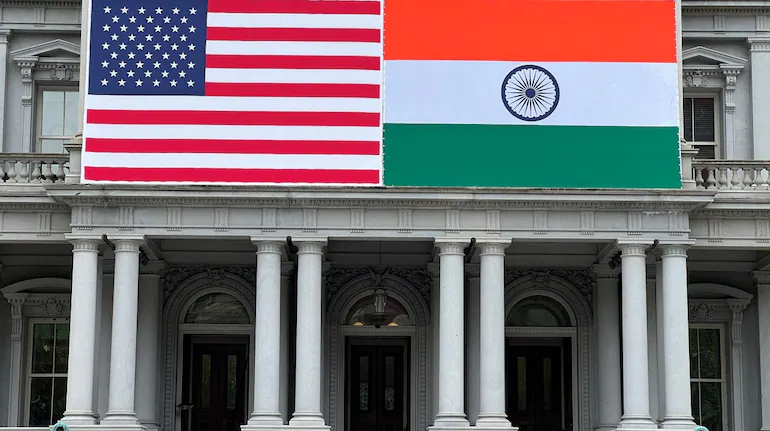
The United States has assured India that it will receive comparatively favourable treatment over other countries under the proposed tariff framework, a senior Indian government official has said. However, the final decision on the tariff arrangement will depend on the outcome of a US investigation into labour practices and supply-chain compliance.
The investigation, conducted under Section 301 of the US Trade Act, is examining whether India and other economies have failed to effectively prohibit imports of goods produced using forced labour. The findings could influence how the US finalises its tariff policy towards the countries covered by the probe.
Key Highlights
- The US has assured India of comparatively favourable treatment under its tariff framework.
- The final tariff arrangement remains dependent on the conclusion of the Section 301 investigation.
- The second part of the investigation was launched in March 2026 by the Office of the US Trade Representative.
- The probe covers labour practices and supply-chain compliance across 60 economies, including India.
- The US argues that goods produced using forced labour distort competition and harm American workers.
US Assures India of Better Treatment Than Other Economies
According to the senior government official, the US has indicated that India will receive a comparative advantage over its peers in the proposed tariff framework. The assurance suggests that India could receive relatively favourable treatment compared with other countries covered by the US trade measures.
However, the assurance does not mean that the final tariff structure has already been decided. The government official said the framework’s finalisation is linked to the conclusion of the ongoing Section 301 investigation.
This leaves an important part of the India-US Trade arrangement dependent on the investigation’s findings. The eventual outcome will help determine how the US approaches tariff treatment for India and other economies included in the review.
What Is the US Section 301 Investigation?
The second part of the US Section 301 investigation was launched in March 2026 by the Office of the United States Trade Representative (USTR). It focuses on labour standards and supply-chain compliance across 60 economies, including India.
The probe examines whether the countries under review have failed to introduce and effectively enforce restrictions on the importation of goods produced using forced labour. The US is assessing whether such practices create unfair competitive conditions in International Trade.
According to the US position, products made through forced labour can distort competition by allowing businesses to benefit from production practices that undermine labour protections. Washington also argues that these practices can disadvantage American workers and businesses.
Why the Investigation Matters for India
India’s inclusion in the investigation means that its labour-related import restrictions and supply-chain enforcement practices are part of the US review. The findings could become an important consideration in determining the country’s final tariff treatment.
The US assurance of comparatively favourable treatment is a significant development for the ongoing trade discussions. However, the distinction between an assurance and a completed tariff agreement remains important. Until the investigation concludes and the framework is finalised, the precise tariff terms for India remain unsettled.
Final Tariff Framework Awaits Investigation Outcome
The next important step is the conclusion of the Section 301 investigation. Its findings will help shape the final US tariff framework covering India and the other economies under review.
For India, the key issue will be whether the assurance of favourable treatment is reflected in the final tariff structure. The outcome will provide greater clarity on the trade terms between the two countries and the impact of the US investigation on India’s position relative to other economies.
For breaking news and live news updates, like us on Facebook or follow us on Twitter and Instagram. Read more on Latest Business on thefoxdaily.com.





COMMENTS 0