The modern workplace is undergoing a profound transformation. For decades, staying late, answering emails after dinner, and attending meetings outside office hours were often viewed as signs of dedication and ambition. Today, however, a growing number of professionals—particularly from Generation Z—are challenging those expectations.
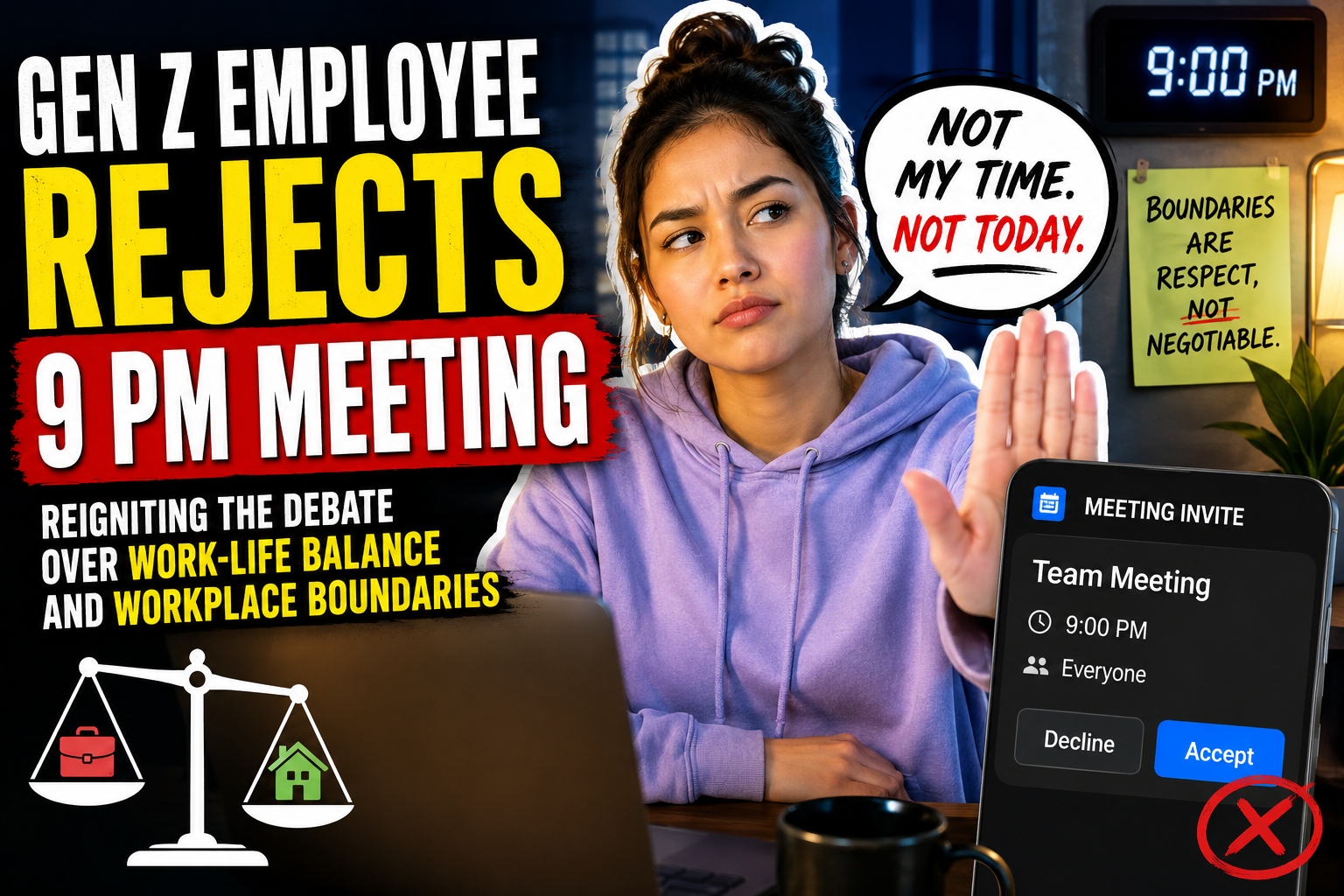
A recent workplace exchange that gained widespread attention on LinkedIn has become the latest example of this cultural shift. The conversation involved a manager inviting an employee to a 9 PM meeting and receiving an unexpected response: a firm but respectful refusal.
What might have once been considered unusual is now fueling a broader debate about employee well-being, workplace boundaries, productivity, and the future of corporate culture.
The Exchange That Sparked a Viral Workplace Discussion
The discussion originated from a LinkedIn post that shared a conversation between a manager and a Gen Z employee. When informed that a 9 PM meeting was important, the employee responded with a simple suggestion: if the meeting was truly important, it should be scheduled during normal working hours.
When the manager argued that everyone else had joined the meeting, the employee’s response struck a chord with many professionals:
“Everyone else is burnt out. I’d like to not be.”
The conversation continued, with the manager describing the meeting as a one-time occurrence. The employee disagreed, arguing that workplace habits often begin with small exceptions that gradually become expectations.
“It’s never just one. That’s how it starts.”
Afterward, the employee logged off at the end of the workday, maintaining the boundary she had established.
Why This Story Resonated Across Industries
The story quickly gained attention because it reflects a challenge many employees face daily: balancing professional responsibilities with personal well-being.
While technology has made communication easier than ever, it has also blurred the line between work and personal life. Smartphones, messaging apps, and remote work tools have created a culture where employees are often reachable at any hour.
For many workers, especially younger professionals, the question is no longer whether they can work after hours but whether they should be expected to do so regularly.
The viral exchange highlights a growing belief that availability should not be confused with productivity.
How Gen Z Is Redefining Workplace Success
Generation Z, typically defined as those born between the late 1990s and early 2010s, entered the workforce during a period marked by rapid technological change, remote work expansion, and increasing awareness of mental health issues.
Unlike previous generations that often associated long hours with career advancement, many Gen Z employees prioritize sustainability, flexibility, and work-life balance.
This does not necessarily mean they are less ambitious. Instead, they often define success differently.
- Career growth alongside personal well-being.
- Productivity instead of presenteeism.
- Results rather than hours worked.
- Flexibility without sacrificing performance.
- Mental health as a professional priority.
These values are increasingly influencing hiring practices, workplace policies, and leadership strategies worldwide.
The Burnout Problem Modern Companies Cannot Ignore
The employee’s comment about burnout touched on an issue that has become one of the biggest challenges facing organizations today.
Burnout is not simply feeling tired after a busy week. It is a state of physical, emotional, and mental exhaustion caused by prolonged workplace stress.
Employees experiencing burnout often report:
- Reduced motivation.
- Lower productivity.
- Difficulty concentrating.
- Increased stress levels.
- Higher likelihood of leaving their jobs.
As organizations compete for talent, retaining skilled employees has become increasingly important. Preventing burnout is now viewed not only as a wellness issue but also as a business priority.
Are Late-Night Meetings Ever Necessary?
The debate is not entirely one-sided.
Global businesses often operate across multiple time zones, making occasional after-hours meetings unavoidable. International teams may need to coordinate projects, address urgent issues, or communicate with clients located in different parts of the world.
In these situations, flexibility from both managers and employees can be necessary.
However, critics argue that exceptional circumstances should not become routine expectations.
The central issue is not whether a single late meeting is acceptable but whether employees feel pressured to sacrifice personal time regularly.
The Difference Between Flexibility and Availability
One of the most important insights emerging from this discussion is the distinction between flexibility and constant availability.
Flexible work arrangements can benefit both employees and employers by allowing individuals to manage their schedules more effectively.
Constant availability, on the other hand, can create an environment where employees feel unable to disconnect from work.
Organizations that fail to recognize this difference may inadvertently contribute to employee dissatisfaction and long-term productivity challenges.
How Workplace Expectations Have Evolved
Workplace culture has changed dramatically over the past several decades.
| Traditional Workplace Expectations | Modern Workplace Expectations |
|---|---|
| Long hours demonstrate commitment | Results demonstrate commitment |
| Availability is expected | Boundaries are respected |
| Work-first mentality | Work-life integration |
| Hierarchy-driven decisions | Collaborative communication |
| Presence equals productivity | Output equals productivity |
This shift has been accelerated by remote work, digital collaboration tools, and increasing awareness of employee wellness.
Why Setting Boundaries Early Matters
One reason the employee’s response resonated so strongly is that it reflected a proactive approach to workplace health.
Many professionals wait until they experience significant stress before addressing workload concerns. By that point, burnout may already be affecting performance, relationships, and overall well-being.
Establishing boundaries early can help employees:
- Maintain consistent productivity.
- Reduce stress levels.
- Protect personal relationships.
- Improve mental health.
- Create sustainable career habits.
Rather than viewing boundaries as obstacles, many experts increasingly see them as tools for long-term professional success.
What Employers Can Learn From This Conversation
The viral exchange also offers valuable lessons for managers and business leaders.
Organizations seeking to attract and retain top talent must understand how employee expectations are evolving.
Successful companies increasingly focus on:
- Respecting personal time.
- Planning meetings more effectively.
- Reducing unnecessary after-hours communication.
- Promoting healthy work habits.
- Measuring performance through outcomes rather than availability.
These practices can contribute to stronger employee engagement, improved retention, and healthier workplace cultures.
The Future of Work-Life Balance
The conversation sparked by one employee’s refusal to attend a 9 PM meeting reflects a much larger transformation taking place across industries.
As younger generations gain influence within the workforce, expectations surrounding flexibility, mental health, and professional boundaries are likely to continue evolving.
Companies that adapt to these changes may find themselves better positioned to attract skilled employees and maintain high levels of engagement.
Meanwhile, employees are becoming increasingly confident in advocating for healthier workplace practices and more sustainable definitions of success.
Conclusion
The viral story of a Gen Z employee declining a 9 PM meeting has become more than just a workplace anecdote. It has highlighted important questions about burnout, availability, productivity, and the changing relationship between employees and employers.
While opinions remain divided on the role of after-hours work, one message has emerged clearly: workplace culture is evolving. Today’s professionals are increasingly prioritizing boundaries, well-being, and sustainable productivity over outdated notions that long hours automatically equal commitment.
As organizations navigate this shift, the challenge will be finding the right balance between business needs and employee well-being. The companies that succeed may ultimately build healthier, more productive, and more resilient workforces for the future.
For breaking news and live news updates, like us on Facebook or follow us on Twitter and Instagram. Read more on Latest Careers on thefoxdaily.com.






COMMENTS 0