As Artificial Intelligence reshapes business operations, hiring decisions and professional responsibilities, management institutions face a challenge that goes beyond teaching students how to use new technology. They must prepare graduates to make sound decisions when job roles change, business models evolve and the Future of Work becomes difficult to predict.
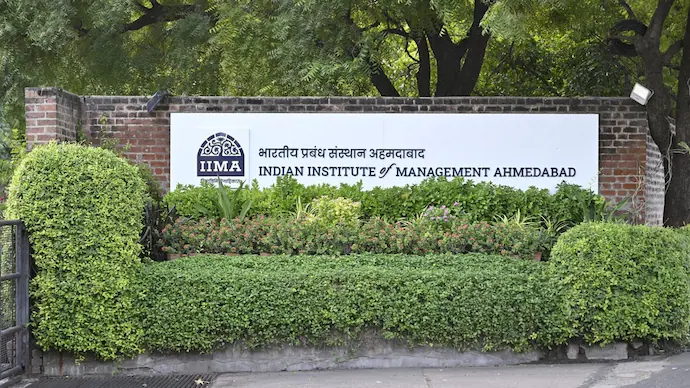
At the Indian Institute of Management Ahmedabad (IIM Ahmedabad), director Professor Bharat Bhaskar says management education must focus on adaptability rather than promise protection from automation or layoffs. The institute is providing students and faculty members with authorised AI licences while adapting its teaching methods to help future managers understand and evaluate AI-generated information.
In an interview with India Today, Bhaskar explained that students should learn to use AI during their education because they are likely to encounter the technology throughout their professional lives. However, access to AI tools alone will not make them effective managers. They must also develop independent judgement, critical thinking and the ability to make decisions when information is incomplete.
The approach reflects a broader question facing business schools: how can they prepare students for careers when the tasks, skills and responsibilities associated with those careers may change significantly over time?
Why IIM Ahmedabad Is Integrating AI Into Management Education
IIM Ahmedabad’s approach is based on the view that artificial intelligence is becoming an important part of professional work. As organisations encourage employees to use AI to improve productivity, students need opportunities to understand the technology before entering the workplace.
Bhaskar said educational institutions cannot adequately prepare future managers by keeping them away from AI. Students who are expected to use these tools in their careers should learn how to apply them during their education as well.
The institute’s decision to provide authorised AI licences gives students and faculty members access to AI tools for learning, research and productivity. The aim is to familiarise users with the technology while helping them understand its practical applications.
However, integrating AI does not mean allowing students to rely on it for every academic task. IIM Ahmedabad continues to assess students’ independent understanding through examinations in which AI use may be restricted.
This distinction is important. Students need opportunities to experiment with AI, but they must also demonstrate that they understand the concepts, evidence and reasoning behind their answers.
AI access is not the same as AI competence
Giving students access to AI tools is only one part of preparing them for the workplace. They must learn when the technology is useful, how to evaluate its output and where independent analysis remains necessary.
An AI system may generate a response quickly, summarise a complex document or suggest possible solutions to a business problem. A manager must still determine whether the response is accurate, relevant and appropriate to the situation.
For example, a business decision involving customer behaviour, investment or operational changes may require information from multiple sources. An AI-generated recommendation cannot automatically replace the need to assess the quality of that information, consider competing options and understand the consequences of a decision.
This is why IIM Ahmedabad’s approach places emphasis on using AI as a learning and productivity tool without allowing it to replace the student’s responsibility to think independently.
Can an MBA Protect Students From AI-Related Layoffs?
Bhaskar has made it clear that a management degree cannot guarantee that a graduate’s job will remain secure throughout their career. Business conditions change, organisations adopt new technologies and employers adjust their workforce requirements in response to changing needs.
The traditional expectation that a qualification prepares someone for a relatively stable professional path is becoming harder to sustain when the responsibilities attached to a role may evolve after a graduate enters employment.
According to Bhaskar, educational institutions should therefore focus on developing managers who can understand technology, use AI productively and exercise independent judgement. The objective is not to predict every future job requirement but to help students respond effectively when their responsibilities change.
Why adaptability matters more than predicting every future job
Predicting exactly which occupations will disappear, which new roles will emerge and how quickly companies will adopt AI is difficult. Different industries and organisations may introduce the technology at different speeds and use it for different purposes.
A graduate who learns only a fixed set of tools or procedures may find that some of those skills become less relevant as business practices change. Someone who can evaluate new technology, learn unfamiliar systems and reconsider established approaches may be better equipped to respond to those changes.
This does not mean that adaptability can guarantee employment. Layoffs can occur for reasons unrelated to an individual’s abilities, including changes in business strategy and financial conditions. Rather, the educational objective is to prepare students to handle uncertainty instead of assuming that their initial qualification will remain sufficient throughout their careers.
For management students, this means developing a combination of technological awareness, business understanding, analytical ability and decision-making skills.
How AI and Automation Could Change the Nature of Work
Bhaskar’s comments extend beyond generative AI applications such as chatbots and writing assistants. He also highlighted the impact of robotics and automated systems on factories and other industrial operations.
These technologies affect different types of work in different ways. Generative AI can assist with tasks involving information processing, while robotics and automation can change how physical operations are performed.
In some workplaces, machines may take over particular tasks. In others, employees may work alongside automated systems or use AI to complete parts of their responsibilities more efficiently.
The resulting changes may affect the skills employers value. Tasks that mainly involve collecting, organising or summarising information could become less time-consuming when AI tools are available. Understanding the meaning of that information, identifying its limitations and using it to make decisions may become more important in the relevant roles.
From gathering information to evaluating decisions
Managers have traditionally needed to collect information before assessing a business problem. AI can assist with parts of that process, but the availability of faster answers does not eliminate the need to determine what those answers mean.
Consider a manager evaluating a proposed change in business strategy. AI may help organise available information or generate possible approaches, but the manager still needs to assess assumptions, consider operational constraints and understand the potential consequences.
The same principle applies when information is incomplete or circumstances change unexpectedly. A recommendation that appears reasonable under one set of assumptions may become unsuitable when new evidence emerges.
For management education, the implication is that technical familiarity should be accompanied by the ability to question outputs and make decisions in context.
Why AI Investment Could Create More Uncertainty for Businesses
Bhaskar also highlighted the substantial investments companies are making in AI. Although businesses are committing resources to the technology, the financial returns from those investments remain an important consideration.
Companies must determine whether AI applications can improve productivity, reduce costs, support revenue growth or create other measurable benefits. The scale of an investment alone does not establish whether it will produce the expected commercial results.
If businesses do not achieve sufficient returns, they may reconsider the pace or direction of their investment. Such decisions could influence technology spending, business priorities and hiring plans.
Bhaskar described this uncertainty as part of the development of new technologies. Early enthusiasm can be followed by a period in which companies assess what works in practice and which applications make commercial sense.
What this means for future managers
Future managers may need to evaluate AI not only as a technical tool but also as a business investment. They will need to understand the problem a technology is intended to solve, the resources required to implement it and the value it may deliver.
For example, adopting an AI system may require changes to existing workflows, staff responsibilities and organisational processes. A manager must consider whether the proposed benefits justify the cost and whether the organisation can implement the change effectively.
These decisions become more complicated when the commercial outlook is uncertain. Managers may have to compare competing options without having complete information about future demand, costs or returns.
IIM Ahmedabad’s emphasis on judgement and decision-making addresses this broader challenge. Understanding AI requires more than knowing how to operate a tool; it also requires evaluating how the technology affects an organisation and its objectives.
How IIM Ahmedabad’s Case-Based Teaching Helps Students Think Independently
IIM Ahmedabad’s case-based teaching method is central to its approach to management education. Instead of focusing exclusively on theoretical explanations, case discussions ask students to examine business problems, consider alternatives and decide how they would respond.
Bhaskar said students can use AI to prepare an initial set of answers before class. However, the purpose of the classroom discussion is to move beyond those first responses and examine the reasoning behind them.
Faculty members can introduce new information, change the assumptions underlying a case or present circumstances that require students to reconsider their original conclusions. Students must then evaluate whether their earlier decisions remain appropriate.
Learning to challenge AI-generated answers
When students arrive with similar AI-generated responses, the instructor can take the discussion further by introducing questions that require independent analysis.
A business case may initially appear to support one course of action. New information about costs, customer preferences or operational constraints could change the assessment. Students must decide whether to maintain their original position or adopt a different approach.
This process encourages students to examine assumptions rather than accept a plausible-sounding answer without scrutiny. It also exposes them to situations in which several options may be reasonable, but each carries different risks and consequences.
Bhaskar argued that if AI could solve every educational problem and provide all the learning a student needed, there would be little reason to pursue a structured management programme. The value of management education lies partly in teaching students to evaluate alternatives and make decisions under uncertain conditions.
In this model, AI can help students prepare, but the learning process depends on what they do with the information it provides.
Why Independent Judgement Remains Essential in an AI-Driven Workplace
AI-generated answers can appear confident even when the underlying information is incomplete or unsuitable for the problem being considered. Managers therefore need to evaluate the evidence, identify assumptions and recognise when further information is required.
Independent judgement is particularly important when decisions involve competing priorities or consequences that cannot be reduced to a single calculation. A manager may need to weigh financial considerations against operational limitations, customer expectations or longer-term organisational goals.
In such situations, a tool can support analysis without removing the responsibility for the final decision. The person making the decision must understand why a recommendation is being considered and whether the available evidence supports it.
Management education can help students practise this process by exposing them to unfamiliar scenarios and requiring them to explain and defend their choices.
Examinations in which AI use may be restricted serve a related purpose. They allow the institute to assess students’ own understanding rather than relying entirely on work produced with technological assistance.
Why Management Courses Must Evolve With Industry
Bhaskar said management education must keep pace with changes in industry as AI, robotics and automated systems influence how businesses manufacture products, manage operations and deliver services.
Courses built around established business practices may need to evolve as organisations adopt new technologies and reconsider how work is organised. This requires institutions to understand how businesses are changing rather than rely exclusively on existing teaching approaches.
Bhaskar emphasised closer engagement with industry because companies themselves are still working out how best to use AI. Management institutes need to study these developments, conduct research and experiment with new approaches to education.
Research, industry engagement and self-directed learning
IIM Ahmedabad is also providing students with projects and self-study opportunities to explore emerging challenges under the guidance of faculty members and researchers.
These opportunities can help students investigate questions that may not have straightforward answers. Rather than learning only established frameworks, they can examine how new technologies affect business decisions and explore different ways to address unfamiliar problems.
Closer engagement with industry can also help management education remain connected to the challenges organisations face when implementing AI. Businesses may have different requirements depending on their operations, resources and objectives, making it difficult to rely on a single approach for every situation.
For students, the central lesson is that learning cannot end when they receive their degrees. They will need to keep updating their knowledge as technologies, organisational practices and business requirements evolve.
What IIM Ahmedabad’s AI Strategy Means for Management Students
IIM Ahmedabad’s approach offers a clear message for students preparing for careers in management: familiarity with AI is becoming an important part of professional preparation, but it should not come at the expense of independent thinking.
Students can use AI to explore concepts, organise information and prepare for classroom discussions. They must also learn to verify information, recognise limitations and explain the reasoning behind their decisions.
The approach suggests several priorities for management education:
- Technological awareness: Understand how AI, robotics and automation can affect business operations and job responsibilities.
- Critical thinking: Evaluate AI-generated information rather than accepting it without scrutiny.
- Decision-making: Compare alternatives and make reasoned choices when information is incomplete.
- Adaptability: Continue learning as technologies and professional responsibilities change.
- Business understanding: Assess whether technology investments address genuine organisational needs and offer practical value.
These priorities do not guarantee that graduates will avoid layoffs or that their careers will remain unaffected by automation. They reflect an approach to preparing students for a workplace in which the precise nature of future jobs cannot be predicted with certainty.
The Future of Management Education in the Age of AI
The central challenge for management institutes is not simply to teach students how to use the latest AI tools. It is to prepare them to work effectively when technology changes established practices and business decisions become more difficult to make with confidence.
IIM Ahmedabad’s strategy combines access to authorised AI tools with case-based learning, independent assessment, research and engagement with industry. Together, these elements are intended to help students understand technology while strengthening the human judgement required to use it responsibly and effectively.
Bhaskar’s position is that educational institutions cannot know exactly how the future workplace will look. Their responsibility is to prepare students to navigate that uncertainty rather than promise that any particular degree or skill set will remain sufficient throughout a career.
For future managers, the practical implication is straightforward: learning to use AI is important, but learning to question its answers, assess business consequences and adapt to unfamiliar situations is equally central to effective management.
As AI reshapes jobs and business operations, IIM Ahmedabad is emphasising a combination of technological literacy, independent judgement and adaptability. Its approach recognises that management education cannot eliminate career uncertainty, but it can help students develop the skills needed to respond to changing workplace demands.
For breaking news and live news updates, like us on Facebook or follow us on Twitter and Instagram. Read more on Latest Education on thefoxdaily.com.






COMMENTS 0