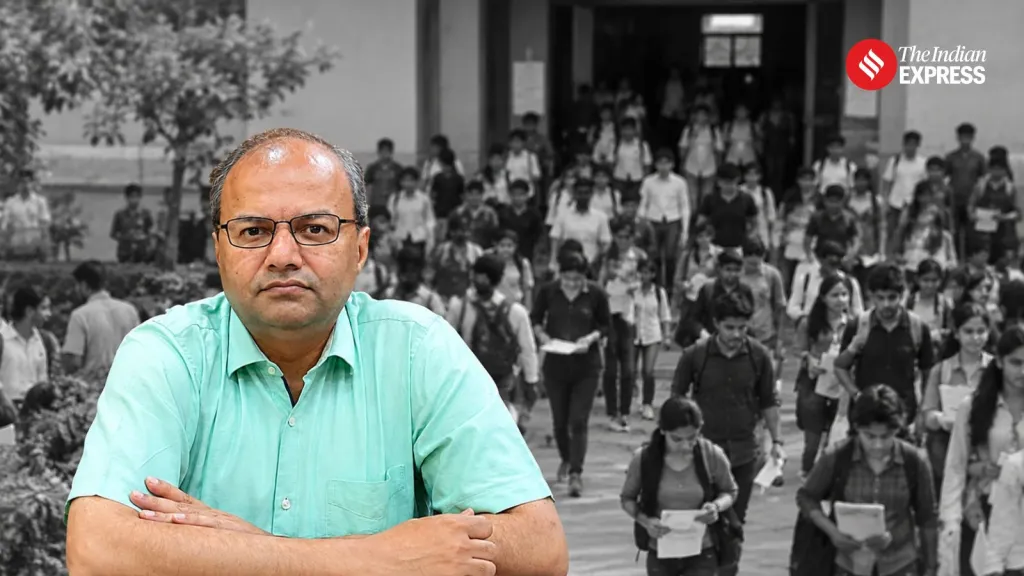
JEE Advanced is unlikely to undergo an immediate change, but the examination system could be revamped over the next few years, IIT Kanpur Director Manindra Agrawal has indicated. A possible third attempt for certain candidates is also under discussion, although no decision has been announced on how such a provision would work.
The debate comes as students who have exhausted their two permitted attempts call for another opportunity to compete for admission to the Indian Institutes of Technology (IITs). A student-led petition seeking three attempts, or at least two attempts spread across three consecutive years, has attracted more than 12,000 signatures, according to the campaign cited in the original report.
Agrawal has acknowledged the concerns of aspirants but warned that extending eligibility could create new problems. While an additional attempt might help students who have faced illness, accidents or limited access to coaching, it could also lead others to spend another year preparing without securing an IIT seat.
His comments point to a broader question facing India’s premier engineering entrance examination: how can the IIT admission process become fairer and less dependent on coaching without placing additional financial and academic pressure on students?
Will JEE Advanced introduce a third attempt?
For now, candidates should not expect an immediate change to the JEE Advanced attempt policy. Agrawal told The Indian Express that a revamp could take place in the coming years, rather than in the near term.
“Not in the immediate future. But yes, in the next few years down the line,” Agrawal said about changes to JEE Advanced.
He also confirmed that a third attempt is being considered. However, the discussion does not necessarily mean that every candidate will receive an additional year to prepare.
“It is under discussion. Not a generic third attempt but maybe in some special cases. But exactly how that is possible, we don’t know yet.”
The distinction matters. A general extension would change the eligibility rules for a broad group of candidates, whereas a provision for special cases could be limited to students who meet specific conditions.
Agrawal did not outline which circumstances might qualify, how eligibility would be assessed or when a revised policy could be introduced. Until the authorities announce formal changes, aspirants should continue to plan their preparation around the existing rules.
What is the current JEE Advanced attempt policy?
Under the rules described in the report, candidates can appear for JEE Advanced a maximum of two times in two consecutive years. Students who miss an opportunity or fail to secure a qualifying result cannot automatically carry an unused attempt into a later year beyond the permitted eligibility window.
This restriction can be particularly consequential for students who discover the examination late, face serious health problems during preparation or encounter circumstances that disrupt an examination attempt.
For students who begin preparing early and have access to established coaching programmes, two attempts may provide an opportunity to improve their performance. Others may enter the process with less preparation time, fewer educational resources or limited understanding of the examination’s demands.
The current debate is therefore not simply about allowing students to sit an examination one more time. It also concerns whether the same eligibility window gives candidates with very different educational backgrounds a reasonable opportunity to compete.
Why are JEE aspirants demanding a third attempt?
The demand for another attempt has gained support among students who believe the existing rules do not adequately account for differences in preparation opportunities and unexpected disruptions.
A student campaign has collected more than 12,000 signatures, with supporters seeking either three attempts or a system that allows candidates to use two attempts across three consecutive years. The petition reflects concerns among students who believe their chances of entering an IIT can be affected by circumstances beyond their control.
Vivek Kumar, whose name was changed in the report, said many members of the campaign came from financially disadvantaged backgrounds and had limited exposure to JEE preparation.
“Most members of our group come from not very good financial backgrounds. They were not much exposed to JEE,” Kumar said.
He also described cases in which students lost an attempt because of serious illness, accidents or other unexpected events. For these candidates, the two-attempt limit can leave little room to recover from a disruption during a critical period.
Another aspirant, identified as Arjun, said he learnt about JEE through a distant relative only after completing his Class 12 board examinations. He subsequently fell ill days before JEE Advanced but appeared for the examination despite his condition.
“I am not asking for a third attempt because I want a privilege. I just want a fair chance,” Arjun said.
His experience illustrates one of the central arguments made by supporters of an extended eligibility window: students may reach the examination with unequal levels of information, preparation and support, even when they are competing for the same seats.
However, individual accounts do not establish how many candidates would benefit from a third attempt or whether changing the rules would significantly improve admission outcomes. Those questions would need to be considered alongside the practical consequences of a revised policy.
Why IIT Kanpur’s director is cautious about extending attempts
Agrawal described the question of additional attempts as complex because a policy designed to help disadvantaged candidates could also create new difficulties for the wider student population.
He acknowledged that students from rural areas who receive little or no specialised coaching before completing Class 12 could benefit from another opportunity. An additional attempt might give such candidates more time to understand the examination and strengthen their preparation.
However, Agrawal warned that many more students could decide to spend another year preparing, only to fall short of their goals again.
“They will waste one more year, they will get more frustrated and they will still do coaching, more coaching, so they will spend more money,” he said.
His concern centres on the potential cost of extending preparation. Coaching fees, accommodation, study materials and the opportunity cost of another year can place additional pressure on families, particularly those already struggling to afford specialised education.
An extra attempt could also prolong the uncertainty faced by students who are unsure whether they will secure an IIT seat. More time to prepare does not necessarily translate into a better rank, and candidates could find themselves repeating an expensive preparation cycle.
At the same time, rejecting every request for an additional attempt could leave students with legitimate reasons for missing an opportunity without a practical route to recover it.
Agrawal summarised the competing considerations by saying, “There is an upside, there is a downside. You have to balance this.”
The challenge for policymakers is to determine whether a narrowly defined exception could address exceptional circumstances without encouraging unnecessary additional years of preparation. Any such approach would also need transparent eligibility criteria to avoid uncertainty over who qualifies.
JEE Advanced may become less dependent on coaching
Beyond the question of attempts, Agrawal identified the growing dependence on coaching as a reason to reconsider the examination system itself.
He described JEE Advanced as “very coaching dependent” and said it needed to be revamped. Discussions are taking place on ways to reduce that dependence, although the director did not announce a specific replacement format or a timetable for implementing changes.
The issue extends beyond how many times students can sit the examination. If success depends heavily on access to intensive coaching, candidates from families with greater financial resources may have advantages that are difficult for others to overcome.
Reducing that dependence would require changes that make the assessment more accessible without weakening its ability to identify students prepared for demanding engineering courses. The available comments do not establish whether future reforms would involve different question formats, revised assessment methods or other changes.
Any substantial revision would also need to account for the scale of the examination and the need for a consistent, credible process for selecting students across different educational backgrounds.
For aspirants, the practical distinction is clear: discussion about reform is not the same as a confirmed change in the examination pattern or eligibility rules. Students should not assume that a new attempt or revised format will be available in an upcoming examination cycle unless an official announcement confirms it.
IITs are exploring admission routes beyond JEE Advanced
JEE Advanced is expected to remain the principal admission route to traditional IIT courses, according to Agrawal. However, he said institutions could admit students through alternative channels in selected areas.
One example is the Bachelor of Cybersecurity programme launched this year by IIT Kanpur and IIT Madras. The programme did not use JEE Advanced as its admission route.
According to the report, around 120 candidates were shortlisted using JEE Main scores and their cybersecurity work and invited to an on-campus hackathon.
The approach illustrates how institutions can assess candidates through a combination of examination performance and practical engagement with a specialised subject. Rather than relying exclusively on a single entrance examination, such a process can also consider a student’s demonstrated interest and ability to work on relevant problems.
IITs also have provisions for admitting students through international-level Olympiads. These routes provide alternatives in particular circumstances, but they do not amount to a general replacement for JEE Advanced across IIT undergraduate admissions.
The cybersecurity example is therefore relevant to the wider discussion about selection. It shows that alternative assessment methods are possible in specialised programmes, while leaving open the question of whether similar approaches would be appropriate for other disciplines.
For students, the main lesson is to check the eligibility and selection requirements of each programme rather than assuming that every IIT course follows an identical admission process.
What happens next for JEE Advanced aspirants?
The immediate outlook remains unchanged. Agrawal’s comments indicate that a third attempt is being discussed, but neither a universal extension nor a special-case policy has been finalised in the information provided.
Several questions remain unresolved: which students might qualify for an additional attempt, what evidence would be required in special cases, how eligibility would be administered and when any revised rules could take effect.
The broader reform discussion is similarly at an early stage. Although IIT Kanpur’s director has acknowledged concerns about coaching dependence, no detailed replacement system or confirmed implementation schedule has been announced in the report.
Students preparing for JEE Advanced should therefore continue to work within the existing eligibility framework. Those who are approaching their final permitted attempt should not postpone preparation on the assumption that another opportunity will become available.
Aspirants should also distinguish between proposed changes, public demands and official decisions. A petition demonstrates that a concern has attracted support, but it does not itself change examination rules.
Any formal revision would need to be communicated through the relevant official examination channels. Until then, the two-attempt limit described in the current policy remains the basis on which candidates should plan.
The bigger question: fairness without prolonging the coaching cycle
The debate over JEE Advanced attempts reflects a difficult balance between giving students a fair opportunity and preventing the entrance examination from becoming a longer, more expensive process.
For candidates who discover JEE late or experience serious illness, an additional opportunity could make a meaningful difference. For others, another year of preparation could bring more financial pressure without improving their chances of admission.
That tension helps explain why Agrawal has raised the possibility of special-case provisions rather than endorsing an automatic third attempt for everyone.
At the same time, the discussion about coaching dependence suggests that the number of attempts may be only one part of the problem. A broader reform could examine how the examination identifies ability, how students gain access to preparation and whether alternative admission methods can serve particular academic fields.
For now, no immediate change to JEE Advanced has been announced. The prospect of a future revamp and a possible third attempt remains under discussion, leaving students to prepare under the existing rules while the debate over access, fairness and the cost of preparation continues.
For breaking news and live news updates, like us on Facebook or follow us on Twitter and Instagram. Read more on Latest Education on thefoxdaily.com.



COMMENTS 0