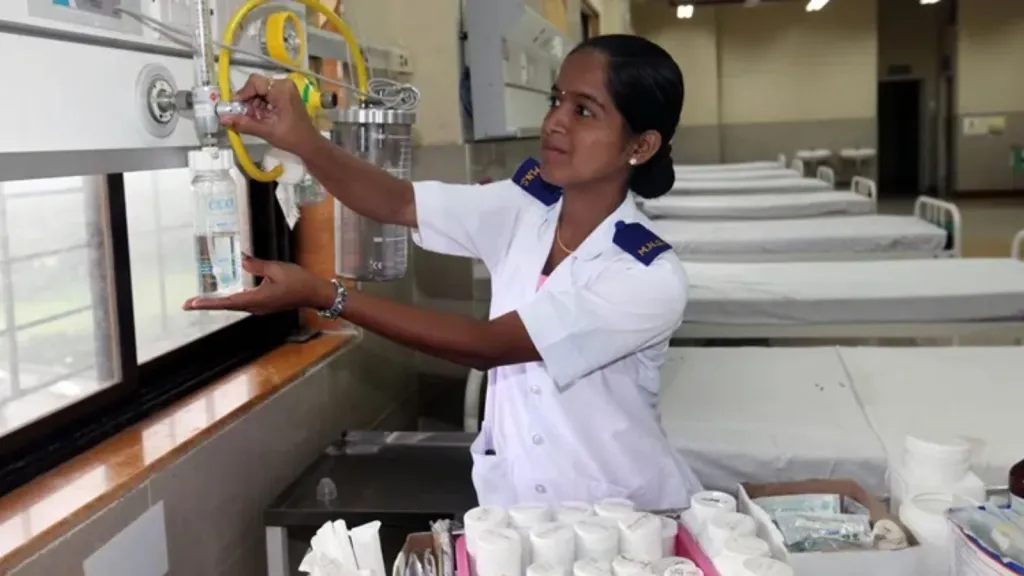
Keralam is planning a major expansion of its nursing education system, with the state government announcing the establishment of a dedicated Nursing University and a 50 per cent increase in nursing seats. The initiative aims to make professional nursing education more accessible and affordable for students who currently travel outside the state to pursue their studies.
Chief Minister V D Satheesan announced the decisions while inaugurating the state conference of the Kerala Government Nurses Union in Thiruvananthapuram. He said the government wanted to strengthen nursing education, expand opportunities within Keralam and increase the availability of trained Healthcare professionals without compromising academic standards.
The announcement comes amid concerns about the financial burden on students who leave the state for nursing courses. According to Satheesan, thousands of students from Keralam travel to other states every year, with some spending between Rs 15 lakh and Rs 20 lakh on their education.
Keralam Plans Dedicated Nursing University
The proposed Nursing University is intended to give nursing education a dedicated institutional framework in the state. The government wants to strengthen the academic environment for nursing students while creating more opportunities for those seeking professional training closer to home.
A specialised university could provide a common institutional structure for nursing education and help the state coordinate academic development in the sector. However, the government has not yet announced detailed information about the proposed university, including its location, establishment timeline, admission structure or the range of courses it will offer.
The decision forms part of a broader effort to expand healthcare education and strengthen the state’s nursing workforce. Nursing professionals play an essential role in hospitals, community healthcare services, emergency care and long-term patient support. Increasing the number of trained nurses could help address workforce requirements as healthcare services expand.
Nursing Seats to Increase by 50 Per Cent
Alongside the proposed university, the Keralam government has decided to increase the number of nursing seats across the state by 50 per cent. The expansion is expected to create additional opportunities for students seeking admission to nursing programmes.
The proposed increase could help reduce pressure on students who currently look beyond Keralam because of limited local admission opportunities. More seats within the state may also give students greater flexibility when choosing institutions and managing the cost of their education.
However, the government has emphasised that expanding capacity should not result in weaker academic standards. Satheesan said the state would work to increase the availability of nursing education while protecting the quality of training.
The practical impact of the announcement will depend on how quickly additional seats can be created and whether educational institutions have the facilities, teaching staff and clinical training opportunities needed to support larger student batches.
Students Spend Rs 15–20 Lakh to Study Nursing Outside the State
One of the main reasons behind the proposed expansion is the financial pressure faced by students who pursue nursing education outside Keralam. Satheesan said thousands of students leave the state each year to enrol in nursing courses, with education expenses often reaching Rs 15 lakh to Rs 20 lakh.
Such expenditure can place a substantial burden on families, particularly when students must also manage accommodation, travel, food and other living costs away from home. The total financial commitment may vary depending on the institution, course and location.
By increasing the number of seats within Keralam, the government hopes to give more students an opportunity to study without having to move to another state. Access to more local institutions could also help families manage education expenses and remain closer to students during their training.
Nevertheless, a larger number of seats alone will not automatically make nursing education affordable. Tuition fees, hostel charges, institutional facilities and the availability of financial assistance will also influence the overall cost for students. The government’s implementation plans will therefore be important in determining how much the expansion reduces the financial burden.
Government to Review Nursing Education Regulations
The state government also plans to review the existing regulatory framework governing nursing education. Satheesan said the objective is to ensure that nursing programmes meet national standards while making it easier for educational institutions to expand their capacity.
He indicated that regulations imposed by the Keralam Nursing Council were stricter than those prescribed by the Indian Nursing Council. The government has decided to ease certain regulatory requirements to facilitate the expansion of nursing education in the state.
The review is significant because institutions must satisfy regulatory requirements before they can increase student intake or introduce additional courses. Requirements relating to infrastructure, faculty strength, clinical training facilities and other academic arrangements can influence how quickly institutions expand.
Any changes, however, will need to remain consistent with applicable national standards and professional education requirements. Nursing students require practical training and supervised clinical experience, making educational quality particularly important in a field directly connected to patient care.
The government’s challenge will be to remove unnecessary barriers to expansion without weakening the safeguards that ensure graduates are properly trained. A successful regulatory review would need to balance institutional growth with the standards expected of qualified nursing professionals.
Health Sector to Receive Special Priority Despite Financial Constraints
Satheesan said the government would give special priority to the health sector despite the state’s financial constraints. He indicated that the administration was prepared to limit expenditure in other departments if necessary to protect spending on healthcare.
The statement places the nursing education initiative within a wider effort to strengthen healthcare services. Hospitals and other medical institutions depend on trained nurses to provide continuous patient care, support doctors and manage essential clinical responsibilities.
Expanding nursing education could contribute to the availability of qualified professionals over time. However, increasing the number of students entering nursing programmes is only one part of building a stronger healthcare workforce. Employment opportunities, working conditions, training quality and the availability of positions in healthcare institutions will also affect the long-term outcome.
The government has not provided a detailed financial allocation or implementation schedule for the proposed university and 50 per cent seat increase in the announcement. Further details will be necessary to understand how the expansion will be funded and how quickly additional educational capacity can become available.
What the Nursing University Plan Could Mean for Students
If implemented effectively, the proposed changes could reshape access to nursing education in Keralam. More seats and a dedicated university may offer students additional opportunities to pursue professional training within the state rather than searching for institutions elsewhere.
The potential benefits extend beyond admission opportunities. Students who study closer to home may be able to reduce relocation expenses and remain connected to their families. A broader network of nursing education institutions could also create opportunities for faculty recruitment, clinical partnerships and academic development.
For families, the most important question will be whether the expansion translates into affordable courses with reliable training facilities. Additional seats will have limited value if institutions cannot provide adequate teaching staff, laboratories, clinical exposure and student support.
The proposed university could also provide a dedicated platform for strengthening nursing education. Its eventual role will depend on its legal framework, academic responsibilities, relationship with existing institutions and coordination with the relevant regulatory bodies.
Maintaining Quality Will Be Central to the Expansion
Increasing nursing seats by 50 per cent is a substantial expansion target, but maintaining educational quality will be essential to its success. Nursing education combines classroom learning with practical experience, and students must develop the skills required to care for patients in different healthcare settings.
Institutions therefore need sufficient faculty members, suitable learning facilities and access to clinical training environments. If student intake increases faster than institutional capacity, the quality of practical instruction could come under pressure.
The government’s proposed review of regulations will need to address this balance. Making it easier for institutions to expand should go hand in hand with clear academic requirements and effective monitoring of training standards.
National standards will also remain important for graduates seeking employment across India and internationally. The objective is not simply to increase the number of nursing certificates issued, but to ensure that students complete their education with the knowledge and practical competence required for professional healthcare work.
What Happens Next?
The announcement establishes the government’s broad direction: create a dedicated Nursing University, increase nursing seats by 50 per cent and review regulations to support the expansion of educational institutions. The next stage will involve translating these decisions into an implementation plan.
Students and parents will be looking for clarity on the university’s proposed structure, admission process, course availability, fees and establishment timeline. Educational institutions will also need information about regulatory changes and the conditions under which additional seats can be approved.
The state government will need to coordinate the expansion with nursing education institutions and the relevant regulatory authorities. The pace of implementation will depend on institutional readiness, available funding and the ability to maintain national academic standards.
Keralam’s proposed Nursing University and 50 per cent increase in nursing seats could provide a significant boost to professional education in the state. If the plans are supported by adequate infrastructure, affordable courses and strong quality controls, they could help more students pursue nursing careers closer to home while contributing to the state’s long-term healthcare workforce needs.
For breaking news and live news updates, like us on Facebook or follow us on Twitter and Instagram. Read more on Latest Education on thefoxdaily.com.






COMMENTS 0