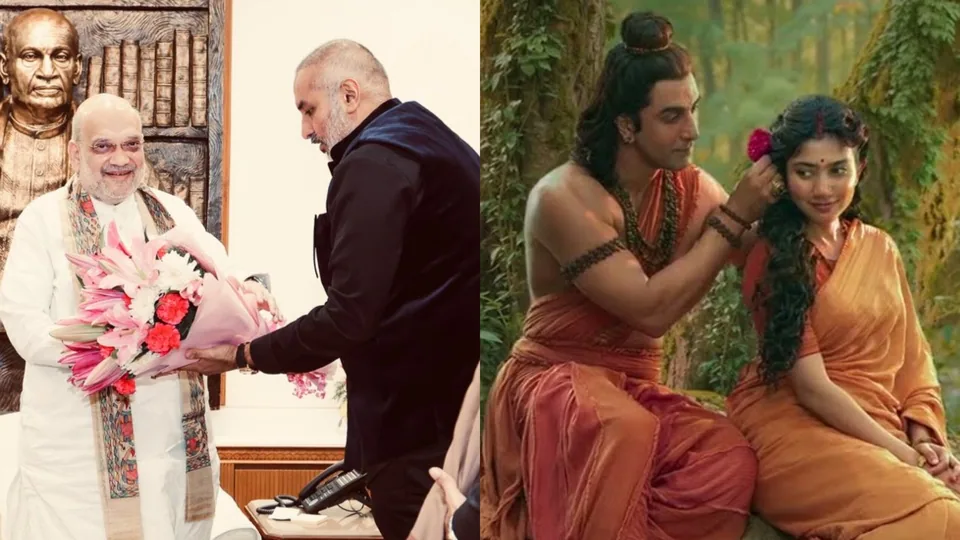
Nitesh Tiwari’s mythological epic Ramayana has attracted considerable attention since its theatrical release, with audiences discussing its scale, performances and visual effects alongside its impressive box-office performance. The film has also drawn interest from prominent public figures. Producer Namit Malhotra has now revealed that Union Home Minister Amit Shah watched the film in a cinema in Ahmedabad after his granddaughter insisted that he see it.
Speaking about his recent meeting with the Home Minister, Malhotra said Shah had already experienced the film on the big screen before meeting the team in New Delhi. According to the producer, Shah enjoyed the film and appreciated the theatrical experience.
The revelation adds another notable moment to the film’s ongoing public reception. It also highlights how the story of Lord Rama continues to attract interest across generations, including younger viewers who encouraged their family members to watch the cinematic adaptation.
Namit Malhotra reveals why Amit Shah watched Ramayana in a theatre
In an interview with Times Now, Namit Malhotra discussed the team’s meeting with Amit Shah and shared the Home Minister’s response to the film. He revealed that Shah had watched Ramayana at a theatre in Ahmedabad, Gujarat, following a request from his granddaughter.
Recalling the conversation, Malhotra said, “He was happy. He had watched the film personally. He said his granddaughter insisted a lot. That’s how he watched it at a theatre in Ahmedabad. He said he loved it and really enjoyed the experience.”
The producer’s account suggests that Shah watched the film as a cinema-going experience rather than through a private screening arranged for the production team. His granddaughter’s insistence ultimately prompted the visit to the theatre.
Malhotra’s comments also offer a glimpse into the film’s appeal among younger audiences. For a story rooted in Indian mythology and cultural tradition, interest from children and families can play an important role in introducing familiar characters and narratives to another generation.
Ramayana team meets Amit Shah in New Delhi
The revelation about Shah’s theatre visit comes after the film’s team met the Home Minister in New Delhi on November 26. The delegation included producer Namit Malhotra, director Nitesh Tiwari and actors Ranbir Kapoor and Sai Pallavi.
Following the meeting, the makers shared a video on social media, describing the interaction as an honour. Their caption highlighted the film’s reception in India and at cinemas worldwide.
The Home Minister also shared photographs from the meeting and congratulated the team for its effort to bring the ideals associated with Lord Rama to younger audiences through modern cinematic technology.
In his message, Shah wrote:
“Met with the team behind the film ‘Ramayana’ in New Delhi. Congratulations to the entire team on this innovative effort to bring the ideals of duty, sacrifice and integrity that Lord Rama, the embodiment of righteousness, set through his life to the new generation through modern cinematic technology.”
His message focused on the values associated with Lord Rama, particularly duty, sacrifice and integrity. These themes form an important part of the traditional narrative and remain central to the cultural significance of the Ramayana.
The meeting also gave the filmmakers an opportunity to discuss a project that adapts a widely recognised epic for contemporary cinema. While Shah’s public message acknowledged the team’s creative effort, Malhotra’s interview provided the additional detail about the Home Minister’s personal viewing experience.
About Ramayana: Cast, characters and story
Directed by Nitesh Tiwari, Ramayana is a large-scale cinematic adaptation of the ancient Indian epic. The first instalment features Ranbir Kapoor as Lord Rama, Sai Pallavi as Sita, Yash as Ravana and Ravi Dubey as Lakshman.
The film also includes several familiar names from Indian Cinema in important roles. Its ensemble cast features Kajal Aggarwal, Lara Dutta, Arun Govil, Rakul Preet Singh and Vivek Oberoi, among others.
The narrative draws from the story of Rama, whose life is shaped by duty, family responsibilities, exile and the struggle against Ravana. The epic’s themes of righteousness, loyalty, sacrifice and the conflict between good and evil have made it an enduring part of India’s cultural and literary heritage.
Adapting such a familiar story for a modern theatrical audience presents a significant creative challenge. Filmmakers must balance the expectations of viewers who know the traditional narrative with the demands of visual storytelling, character development and large-scale cinematic production.
Visual effects and the film’s portrayal of Sita draw attention
One of the major talking points surrounding Ramayana has been its visual scale and effects. The film has received praise for its technical presentation, with some international viewers comparing its cinematic ambition to the fantasy world of The Lord of the Rings.
However, the film has also faced criticism over certain creative choices. One point of discussion has been its portrayal of Sita as a warrior who fights monsters. The response reflects the different expectations audiences bring to an adaptation of a story with deep religious and cultural significance.
For some viewers, a modern interpretation can offer a fresh way of presenting familiar characters. Others may prefer a portrayal that stays closer to the versions of the epic they know. Such differences make adaptations of culturally significant stories particularly open to debate.
The discussion around the film therefore extends beyond its box-office performance. Its treatment of characters, visual interpretation and approach to the source narrative have all contributed to public interest.
Ramayana box-office collection: Film becomes second-highest-grossing Indian release
Alongside the attention surrounding its cast and creative choices, Ramayana has recorded a major box-office milestone. According to the figures cited in the report, the film collected approximately ₹1,814 crore worldwide within 24 days of release.
That performance placed it ahead of Dhurandhar: The Revenge, which had a reported lifetime worldwide collection of approximately ₹1,813 crore. By crossing that figure, Ramayana moved into second place among the highest-grossing Indian films in the reported ranking.
The film now trails Dangal, directed by Nitesh Tiwari, which is reported to have collected around ₹2,000 crore worldwide. The comparison places the filmmaker behind two major box-office achievements, although the films belong to different genres and were released in different market conditions.
Box-office figures can vary between trade trackers because of differences in reporting methods, exchange rates and the treatment of domestic and international collections. The reported totals should therefore be understood as industry estimates rather than audited financial statements.
Why the box-office milestone matters
Crossing the reported lifetime collection of Dhurandhar: The Revenge is significant because it places Ramayana among the biggest commercial successes in Indian cinema. The performance also demonstrates the theatrical reach of a mythological story when presented as a large-scale film.
However, box-office collections alone do not explain why audiences are responding to a film. Its subject, cast, visual presentation, marketing, release strategy and appeal across different language markets can all influence its performance.
In the case of Ramayana, the combination of a familiar epic, prominent actors and an ambitious cinematic presentation has kept the film in public conversation. The Home Minister’s reported theatre visit adds another dimension to that attention, particularly because it was prompted by a family member’s interest in the story.
Ramayana sequel planned for 2028
Ramayana is the first instalment of a planned two-part cinematic project. The sequel is scheduled for release in 2028, extending the filmmakers’ attempt to bring the epic to audiences through a multi-part theatrical adaptation.
The two-part format gives the production more room to explore the story and its characters rather than compressing the entire narrative into a single film. It also creates expectations around how the first instalment’s events will lead into the next chapter.
With the sequel still ahead, the first film’s reception may remain an important part of the conversation surrounding the project. Audience responses to its performances, visual effects and interpretation of the epic will likely continue to shape discussions about the next instalment.
A family viewing experience adds to Ramayana’s public reception
Amit Shah’s reported visit to a cinema in Ahmedabad offers a simple but notable detail about the film’s reach: his granddaughter’s enthusiasm encouraged him to watch it. Malhotra’s account does not suggest that the Home Minister attended a special screening; rather, it describes a personal theatre visit followed by a positive reaction.
For the filmmakers, such responses can be meaningful because Ramayana is a story that has been passed down through generations. A theatrical adaptation can create an opportunity for younger viewers to encounter its characters and themes while sharing the experience with older family members.
The meeting in New Delhi and Shah’s public message also brought attention to the values the film seeks to present through modern cinema. His comments highlighted duty, sacrifice and integrity, while Malhotra’s interview revealed that the Home Minister had enjoyed watching the film with his granddaughter’s encouragement.
As the first instalment continues its theatrical journey and the sequel remains planned for 2028, Ramayana is attracting attention on several fronts: its box-office performance, its creative interpretation of a familiar epic and its ability to bring different generations into the same cinema hall.
For breaking news and live news updates, like us on Facebook or follow us on Twitter and Instagram. Read more on Latest Entertainment on thefoxdaily.com.






COMMENTS 0