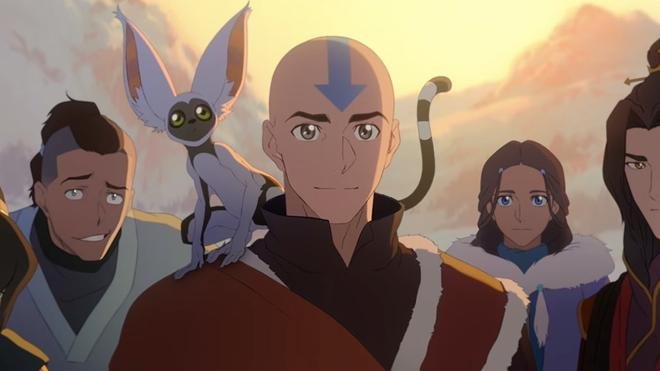
The long-awaited return to the world of Avatar Aang: The Last Airbender arrives with immense expectations—and a fair share of pressure. Marketed as a post-war reunion of the beloved Gaang, the film attempts to bridge nostalgia with a more mature narrative. But while it rekindles the political imagination that made the original series iconic, it often bends awkwardly under the constraints of franchise filmmaking.
Who: Aang and the original Gaang—Katara, Sokka, Zuko, and Toph
What: A post-war sequel film exploring life after the Hundred Year War
When: Set years after the original series events
Where: Across the Four Nations, now navigating peace and reconstruction
Why: To expand the Avatar universe and explore the consequences of victory
How: Through a mix of political storytelling, character arcs, and large-scale spectacle
At its core, this film is less about saving the world—and more about what happens after it’s already been saved.
Context: Why This Film Matters in the Avatar Legacy
The original Avatar: The Last Airbender series wasn’t just a fantasy adventure—it was a rare blend of philosophy, politics, and emotional storytelling. Its exploration of war, imperialism, and identity gave it a timeless relevance that few animated shows achieve.
This new film enters a very different landscape. Today’s entertainment industry thrives on interconnected universes, cinematic franchises, and global box office expectations. That shift fundamentally shapes how stories are told—and sometimes, what gets sacrificed.
From Intimate Storytelling to Franchise Expansion
- The original series focused on character-driven narratives
- The film leans toward spectacle and broader world-building
- Emotional nuance competes with pacing and visual grandeur
The result is a film that feels caught between two identities: a thoughtful continuation and a commercial product.
Plot and Themes: A World Learning to Heal
Set in a post-war era, the film explores the challenges of rebuilding a fractured world. Peace, it turns out, is far more complicated than victory.
Key themes include:
- Political reconstruction: How do former enemies coexist?
- Power and responsibility: What is the Avatar’s role in peacetime?
- Identity and legacy: Who are these characters without war?
These themes echo real-world post-conflict scenarios, giving the film a grounded relevance that stands out amid typical fantasy narratives.
Character Arcs: Familiar Faces, Evolving Struggles
Aang: The Reluctant Peacekeeper
Aang’s journey shifts from warrior to mediator. His struggle lies in balancing spiritual duty with political realities—a nuanced evolution that adds depth to his character.
Zuko: Leadership Under Scrutiny
Now Fire Lord, Zuko faces the complexities of governance. His arc is one of accountability, showing that redemption is not a destination but an ongoing process.
Katara, Sokka, and Toph: Finding Purpose Beyond War
Each member of the Gaang grapples with a quieter but equally profound question: what comes after being a hero?
While these arcs are compelling, they occasionally feel compressed—likely a casualty of the film’s limited runtime and broader ambitions.
Visuals and World-Building: A Feast for the Eyes
If there’s one area where the film rarely falters, it’s in its visual execution.
- Stunning landscapes across the Four Nations
- Fluid, dynamic bending sequences
- Detailed cultural aesthetics
The animation elevates the storytelling, even when the narrative struggles to keep pace. It’s clear that significant resources were invested in making the film a visual spectacle.
The Franchise Problem: When Bigger Isn’t Always Better
Here lies the film’s central tension: its ambition to expand the Avatar universe sometimes undermines its storytelling.
Symptoms of Franchise Pressure
- Overloaded subplots hinting at future installments
- Moments designed for spectacle rather than narrative necessity
- Reduced focus on intimate character interactions
This isn’t unique to Avatar—it’s a broader trend in modern filmmaking. But for a story that once thrived on simplicity and depth, the shift feels particularly noticeable.
Comparison: Original Series vs New Film
| Aspect | Original Series | New Film |
|---|---|---|
| Storytelling | Character-driven | Plot-heavy and expansive |
| Pacing | Gradual and immersive | Fast-paced, sometimes rushed |
| Themes | Personal and philosophical | Political and large-scale |
| Focus | Core group dynamics | World-building and future setup |
This comparison highlights the trade-off: depth versus scale.
What the Film Gets Right
- Reintroduces the political complexity of the Avatar world
- Delivers visually stunning action sequences
- Explores post-war themes rarely seen in mainstream animation
Where It Falls Short
- Struggles with pacing and narrative focus
- Overextends into franchise-building territory
- Underutilizes character relationships
Unique Insight: The Challenge of Growing Up With Your Audience
One of the film’s most interesting challenges is its attempt to grow alongside its audience. Fans who watched the original series as children are now adults, expecting more complex storytelling.
The film acknowledges this shift—but doesn’t fully commit to it. It sits in a middle ground, trying to appeal to both new viewers and long-time fans. That balancing act, while understandable, limits its ability to truly excel in either direction.
Prediction: What This Means for the Avatar Franchise
Despite its flaws, the film sets the stage for future installments. If the creators take feedback into account, upcoming projects could:
- Focus more on character-driven storytelling
- Streamline narrative complexity
- Balance spectacle with emotional depth
The foundation is strong—it just needs refinement.
Conclusion: A Worthy Return, But Not a Perfect One
Avatar Aang: The Last Airbender is a film of contrasts. It revives the intellectual and emotional core of the original series while simultaneously struggling with the demands of modern franchise filmmaking.
It’s a reunion fans will appreciate—but perhaps not the one they fully hoped for.
In the end, the film reminds us of something the Avatar world has always taught: balance is everything. And right now, this franchise is still searching for it.
For breaking news and live news updates, like us on Facebook or follow us on Twitter and Instagram. Read more on Latest Entertainment on thefoxdaily.com.






COMMENTS 0