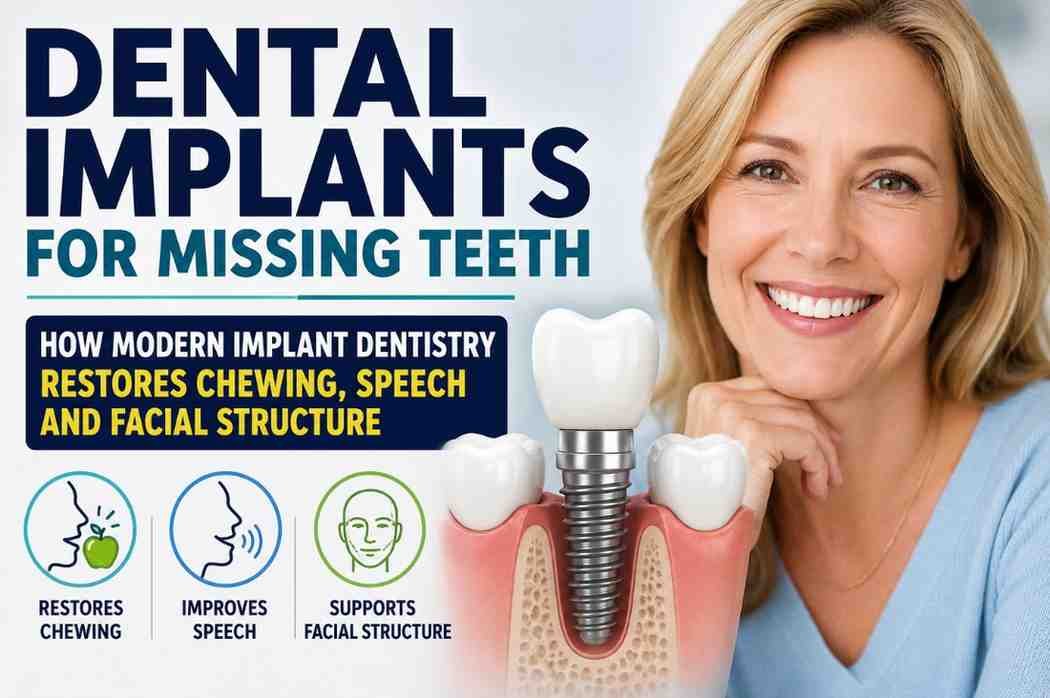
Losing a tooth is often seen as a cosmetic issue, but dentists increasingly emphasize that the consequences extend well beyond a gap in a smile. Missing teeth can affect how people eat, speak, socialize, and even how their faces age over time.
Advances in implant dentistry have transformed treatment options. Today’s dental implants are designed with a broader goal in mind: helping patients regain normal oral function while maintaining facial structure and improving quality of life. In other words, implant dentistry is no longer just about replacing teeth—it is about restoring confidence and overall well-being.
Why Missing Teeth Matter More Than Most People Realize
Teeth play an essential role in everyday life. They help break down food, support clear speech, and maintain the shape of the face. When one or more teeth are lost, the effects can gradually spread throughout the mouth and jaw.
Some people adapt by chewing on one side or avoiding certain foods, but these changes can create additional problems over time.
- Difficulty chewing hard or fibrous foods.
- Changes in speech and pronunciation.
- Shifting of neighboring teeth.
- Loss of jawbone density.
- Premature facial aging.
- Reduced confidence and social discomfort.
These consequences explain why dentists encourage timely replacement of missing teeth whenever possible.
How Tooth Loss Affects Chewing and Nutrition
Chewing is the first step in digestion. Missing teeth can make it harder to eat fruits, vegetables, nuts, and protein-rich foods. Many people unconsciously switch to softer, more processed foods that are easier to chew.
Over time, these dietary changes can affect nutrition and overall health.
Poor chewing efficiency has also been associated with reduced enjoyment of meals and diminished quality of life, particularly among older adults.
The Link Between Missing Teeth and Speech Problems
Teeth are essential for producing certain sounds. Front teeth, in particular, help form words clearly.
When teeth are missing, pronunciation of sounds such as “f,” “v,” “s,” and “th” may become difficult. This can affect communication and self-confidence.
While many people eventually compensate, restoring missing teeth often improves speech clarity and comfort.
Why Facial Changes Occur After Tooth Loss
One of the least understood consequences of missing teeth is bone loss.
The roots of natural teeth stimulate the jawbone during chewing. Once a tooth is lost, that stimulation disappears, causing the bone beneath the missing tooth to gradually shrink.
Over time, this can lead to:
- Sunken cheeks.
- Thinner lips.
- A collapsed appearance around the mouth.
- Changes in facial proportions.
- An older-looking appearance.
These changes explain why untreated tooth loss affects not just oral health, but overall facial aesthetics.
What Are Dental Implants?
Dental implants are artificial tooth roots, usually made from biocompatible materials such as titanium, that are placed into the jawbone. Once integrated with the bone, they support crowns, bridges, or dentures designed to resemble natural teeth.
Unlike removable dentures, implants provide stability and function similar to natural teeth.
Their purpose extends beyond replacing visible teeth—they help preserve the underlying bone and maintain oral health.
Comparison: Dental Implants vs Bridges and Dentures
| Feature | Dental Implants | Bridges | Dentures |
|---|---|---|---|
| Jawbone preservation | Yes | Limited | No |
| Stability while chewing | Excellent | Good | Moderate |
| Speech support | High | Good | Variable |
| Removable | No | No | Yes |
| Impact on neighboring teeth | Minimal | May require alteration | None |
| Long-term durability | Excellent with care | Good | Requires replacement |
Modern Implant Dentistry Focuses on Patient Outcomes
Today’s implant dentistry goes beyond simply filling gaps. Dentists increasingly focus on outcomes that matter most to patients.
- Restoring comfortable chewing.
- Maintaining natural facial contours.
- Improving speech and confidence.
- Supporting emotional well-being.
- Enhancing long-term quality of life.
This patient-centered approach reflects a broader shift in healthcare, where success is measured not only by procedures but by how people feel and function afterward.
The Emotional Impact of Tooth Loss
Missing teeth can affect self-esteem in ways that are often underestimated.
People may avoid smiling, speaking in public, or participating in social situations. Some report embarrassment while eating with others or appearing in photographs.
Restoring missing teeth frequently brings psychological benefits alongside physical improvements.
Confidence, social interactions, and overall well-being often improve when oral function is restored.
An Insight Competitors Often Miss: Tooth Loss Is Part of Whole-Body Health
Discussions about dental implants frequently focus on aesthetics, but oral health is closely linked to overall health.
Being able to chew properly supports balanced nutrition. Better speech improves communication and social engagement. Preserving facial structure contributes to confidence and mental well-being.
In this sense, replacing missing teeth is not merely a cosmetic decision it is an investment in long-term health and quality of life.
The mouth is not separate from the body. What happens inside it affects the entire person.
Who Can Benefit From Dental Implants?
Dental implants may be considered for adults who have lost one or more teeth and have sufficient jawbone support. Individual suitability depends on several factors, including oral health, medical history, and lifestyle habits.
A comprehensive dental evaluation helps determine the most appropriate treatment plan.
Advances in imaging and surgical techniques have expanded implant options for many patients who previously had limited choices.
The Future of Implant Dentistry
Implant dentistry continues to evolve with improvements in digital planning, imaging technologies, and materials.
Greater emphasis is being placed on minimally invasive procedures and personalized treatment approaches.
As populations age and awareness grows, implants are expected to become an increasingly important part of comprehensive oral healthcare.
Conclusion
Missing teeth can interfere with much more than appearance. They affect chewing, speech, facial structure, and emotional well-being. Modern dental implants address these challenges by restoring function, preserving bone, and supporting overall quality of life.
The goal of implant dentistry today is not simply to replace lost teeth but to help people eat comfortably, speak clearly, maintain their facial features, and regain confidence. As dental care becomes more patient-focused, implants are increasingly viewed not as a luxury, but as a powerful tool for restoring health and quality of life.
For breaking news and live news updates, like us on Facebook or follow us on Twitter and Instagram. Read more on Latest Health on thefoxdaily.com.

COMMENTS 0