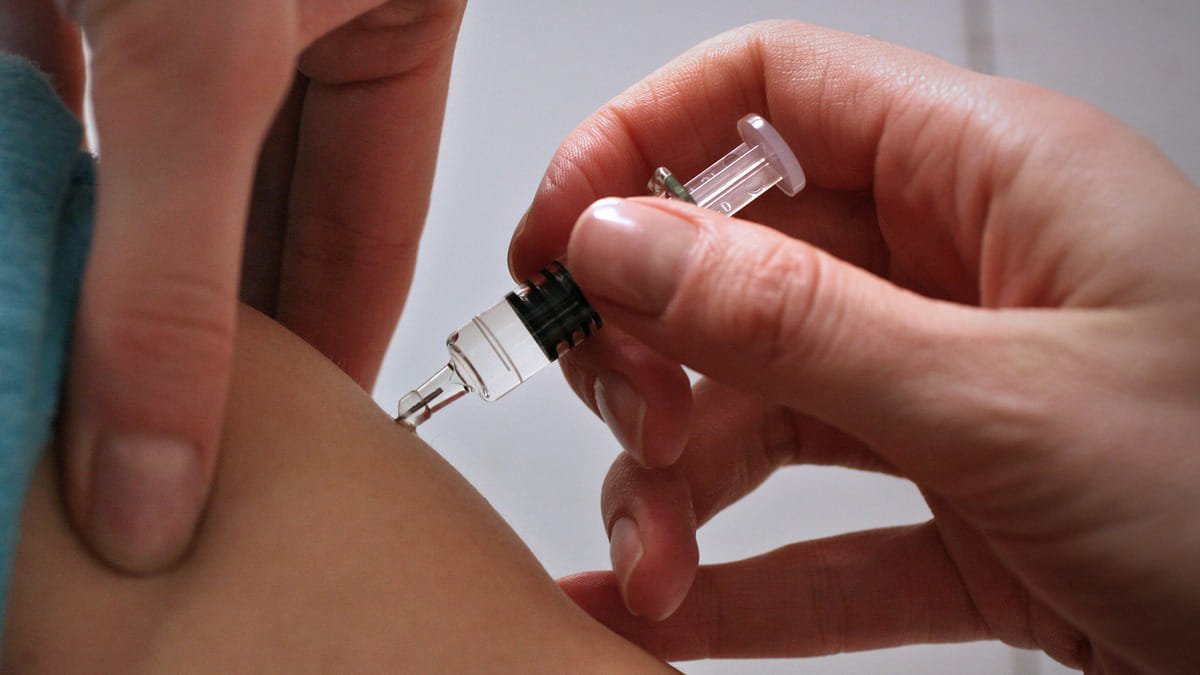
New Delhi: With H1N1 influenza cases rising in Delhi and other parts of India, questions are growing over which Flu Vaccine people should take this season. The Indian Council of Medical Research (ICMR) has clarified that the Northern Hemisphere (NH) influenza vaccine is preferable because its formulation more closely matches the influenza viruses currently being detected in India.
However, people do not necessarily need to wait for the preferred formulation if it is unavailable. ICMR guidance says the Southern Hemisphere (SH) seasonal influenza vaccine can be used in the meantime, providing an important alternative during the current flu activity.
The distinction matters because influenza vaccines are updated regularly. Different formulations are produced for Northern and Southern Hemisphere seasons, based on surveillance of the viruses circulating in different parts of the world. WHO recommends vaccine compositions twice a year, while countries and health authorities assess which formulation best corresponds to local influenza activity. 0
Should You Take the Southern Hemisphere Flu Vaccine?
Yes, if the Northern Hemisphere vaccine is unavailable and vaccination is recommended for you, the Southern Hemisphere vaccine can be considered rather than delaying vaccination indefinitely.
ICMR’s guidance indicates that the Northern Hemisphere formulation is the preferred option because it has a closer antigenic match with the strains currently circulating in India. But the Southern Hemisphere vaccine also contains components that provide protection against influenza viruses circulating in the country.
This means the choice is not simply between a vaccine that works and one that does not. The key difference is the degree to which the vaccine composition matches currently circulating viruses.
Importantly, ICMR has also clarified that reports suggesting seasonal influenza vaccines are completely unavailable in India are misleading. Appropriate influenza vaccines, including the Northern Hemisphere formulation, are available through leading pharmacies, although availability can vary by location and supply. 1
Why Is the Northern Hemisphere Vaccine Preferred in India Right Now?
Influenza viruses constantly change. Because of this, vaccine manufacturers cannot rely on exactly the same formulation year after year.
The WHO reviews global influenza surveillance data and recommends the strains that should be included in seasonal vaccines. For the 2026–27 Northern Hemisphere season, WHO recommended an H1N1 component based on A/Missouri/11/2025 (H1N1)pdm09-like virus, along with updated H3N2 and influenza B components. 2
For the 2026 Southern Hemisphere season, the recommended trivalent vaccine also contains an A/Missouri/11/2025 (H1N1)pdm09-like virus, but uses different H3N2 and influenza B components. 3
This illustrates an important point: the two vaccines are not completely different in terms of influenza protection. They can share important components while differing in others.
What Has ICMR Surveillance Found?
The current recommendation is based on influenza surveillance carried out through India’s laboratory network, including the ICMR-Virus Research and Diagnostic Laboratory network and the WHO National Influenza Centre at the National Institute of Virology, Pune.
According to the recent report on the ICMR guidance, surveillance from 73 sentinel sites found circulating H1N1, H3N2 and influenza B Victoria lineage viruses. Genetic analysis indicated that the circulating viruses broadly matched components recommended for the 2026–27 Northern Hemisphere vaccine. 4
That is why the Northern Hemisphere formulation is considered the more suitable choice at present.
But India’s influenza situation is more complicated than simply choosing a vaccine according to geographical hemisphere. India lies in the Northern Hemisphere, but its tropical and subtropical climate produces different influenza patterns across regions. Earlier Indian clinical guidance has emphasised the importance of local influenza surveillance and seasonality rather than relying only on geographical classification. 5
What Is the Difference Between NH and SH Flu Vaccines?
The names can be confusing because they do not simply refer to where a person lives. They refer to the seasonal vaccine formulations recommended for influenza activity in the Northern and Southern Hemispheres.
WHO issues the Northern Hemisphere recommendation in February and the Southern Hemisphere recommendation in September. The formulations can contain different versions of H1N1, H3N2 and influenza B viruses depending on surveillance findings. 6
For 2026, both formulations include an H1N1pdm09-like component, but their H3N2 and B components differ.
| Feature | Northern Hemisphere Vaccine | Southern Hemisphere Vaccine |
|---|---|---|
| 2026 formulation | WHO recommendation for 2026–27 | WHO recommendation for 2026 |
| H1N1 component | A/Missouri/11/2025-like | A/Missouri/11/2025-like |
| H3N2 component | Updated 2025-derived H3N2 strain | Different H3N2 strain |
| Influenza B component | B/Victoria lineage strain recommended for NH | B/Victoria lineage strain recommended for SH |
| Current relevance in India | Preferred based on current surveillance | Can be used if NH formulation is unavailable |
The precise formulation also depends on whether the vaccine is egg-based, cell-culture based or recombinant. WHO publishes separate compositions for these vaccine technologies. 7
Does the Southern Hemisphere Vaccine Protect Against H1N1?
Yes. The 2026 Southern Hemisphere WHO formulation includes an H1N1pdm09-like component. Therefore, it is not correct to assume that the Southern Hemisphere vaccine provides no H1N1 protection.
The important distinction is that influenza vaccines are designed to protect against multiple influenza viruses, and the overall level of protection depends partly on how well the vaccine strains correspond to viruses circulating at the time.
In the current Indian context, ICMR’s position makes the Northern Hemisphere vaccine the preferred option because of its closer match to the strains being observed. If that vaccine cannot be obtained, however, the Southern Hemisphere vaccine remains an available alternative rather than a vaccine that should automatically be rejected.
Why Is This Important During the H1N1 Surge?
The timing of the recommendation is particularly relevant because India is seeing increased influenza activity, including a rise in H1N1 infections in Delhi and other areas.
Recent reporting has also highlighted pressure on healthcare facilities as influenza cases rise alongside other seasonal illnesses. In Lucknow, for example, authorities have reported shortages of the antiviral drug oseltamivir amid a rapid increase in H1N1 cases. 8
This does not mean that every fever or cough is H1N1. Influenza symptoms can overlap with many other respiratory infections, and laboratory testing may be required when confirmation is clinically important.
It does, however, reinforce the value of prevention, particularly for people at higher risk of developing complications from influenza.
Who Should Be Especially Careful About Flu?
Seasonal influenza can affect anyone, but severe disease is more likely in certain groups. ICMR has highlighted vaccination particularly for people at increased risk, including:
- Older adults
- Pregnant women
- People with underlying medical conditions
- Immunocompromised individuals
Other Indian clinical recommendations have also identified young children, healthcare workers and people with chronic conditions such as asthma, COPD, diabetes and heart disease among groups for whom influenza vaccination can be particularly important. 9
People who are unsure whether they should receive a seasonal flu vaccine should discuss their individual circumstances with a doctor, especially if they have a chronic disease, are pregnant, are elderly or have a weakened immune system.
Should You Wait for the Northern Hemisphere Vaccine?
For someone who is eligible for vaccination and can readily obtain the preferred Northern Hemisphere formulation, that remains the logical choice under the current ICMR guidance.
But if it is genuinely unavailable, waiting indefinitely is not necessarily the better strategy. ICMR’s guidance specifically allows the Southern Hemisphere vaccine to be used until the preferred Northern Hemisphere formulation becomes available.
This is especially relevant during periods of active influenza transmission. The decision should nevertheless take into account a person’s age, health conditions, pregnancy status, previous vaccination and local medical advice.
Flu Vaccine Does Not Guarantee Zero Infection
Another important point is that influenza vaccination does not guarantee that a vaccinated person will never develop flu.
Vaccine effectiveness can vary from season to season because influenza viruses evolve and because the match between vaccine strains and circulating viruses can differ. However, vaccination remains an important tool for reducing influenza-related illness and protecting people at higher risk of severe outcomes.
WHO updates vaccine compositions precisely because influenza viruses are constantly changing. Its 2026 Northern Hemisphere recommendation noted the continued evolution and global spread of influenza viruses, including changes in circulating H3N2 viruses. 10
What Else Can You Do to Reduce H1N1 Risk?
Vaccination is only one part of influenza prevention. During periods of increased respiratory virus activity, basic precautions can also reduce transmission.
- Wash or sanitise your hands regularly.
- Avoid close contact with people who are visibly unwell when possible.
- Stay home when you have fever or significant respiratory symptoms rather than exposing others.
- Improve ventilation in crowded indoor spaces.
- Follow medical advice if symptoms become severe or persistent.
- People at high risk should seek medical advice early if they develop symptoms suggestive of influenza.
Antiviral medicines such as oseltamivir are different from vaccines. They are prescription medicines used in appropriate patients and should not be started simply because someone is worried about H1N1 without medical advice.
What Is the Bottom Line on the Flu Vaccine Shortage?
The current message from ICMR is more nuanced than simply saying that one flu vaccine is safe and the other is not.
The Northern Hemisphere vaccine is preferred in India at present because surveillance indicates that its formulation more closely corresponds to the influenza viruses currently circulating. However, if that formulation is unavailable, the Southern Hemisphere vaccine can be used rather than abandoning seasonal influenza vaccination altogether.
ICMR has also clarified that seasonal influenza vaccines, including the Northern Hemisphere formulation, are available in India, although availability may vary between locations and suppliers. 11
For people at higher risk of severe influenza, the practical decision should therefore not be based on headlines about a “shortage” alone. The most appropriate vaccine and timing depend on availability, local influenza activity and individual health risks.
As H1N1 activity increases, the key message is to rely on current public-health guidance rather than assuming that the Southern Hemisphere vaccine is ineffective or that people must wait for a particular formulation. If you are due for influenza vaccination and the preferred vaccine is unavailable, speak with a healthcare professional about whether the available Southern Hemisphere formulation is appropriate for you.
For breaking news and live news updates, like us on Facebook or follow us on Twitter and Instagram. Read more on Latest Health on thefoxdaily.com.


COMMENTS 0