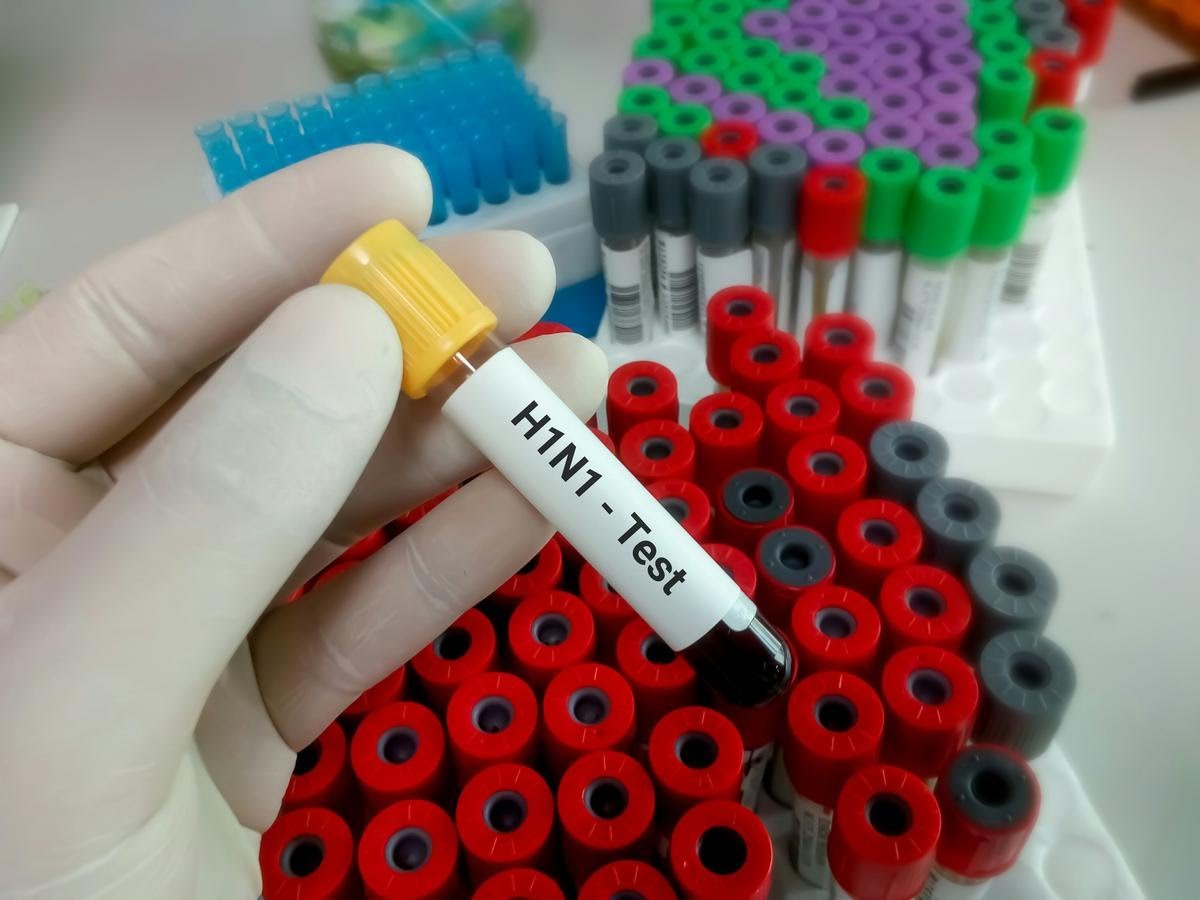
Concerns about a possible new H1N1 strain in India have prompted renewed attention to seasonal influenza, but the Indian Council of Medical Research (ICMR) has clarified that there is no evidence of a newly emerged H1N1 strain currently driving infections in the country. The influenza strains circulating at present are considered well matched with the strains used in existing seasonal flu vaccines.
The clarification is important because the term H1N1 still carries strong memories of the 2009 pandemic. However, today’s H1N1 situation needs to be understood in the context of seasonal influenza. The virus responsible for the 2009 pandemic did not disappear; it subsequently became part of the viruses that circulate seasonally.
ICMR has also stressed an important qualification to its reassurance: although seasonal influenza is generally self-limiting, people with underlying medical conditions are more vulnerable to complications. That means the absence of a new strain should not be confused with an absence of health risks.
Is there a new H1N1 strain in India?
According to ICMR, India has not detected a new H1N1 strain. The viruses currently circulating belong to established seasonal influenza lineages rather than representing a newly emerged virus with completely different characteristics.
This distinction matters because influenza viruses naturally undergo genetic changes over time. Scientists continuously monitor these changes to determine whether a circulating virus is behaving differently, causing unusually severe disease or becoming substantially different from the viruses targeted by available vaccines.
Not every genetic change creates a new public-health threat. Seasonal influenza viruses are expected to evolve, and surveillance systems are designed to detect changes that could have greater implications.
ICMR’s current assessment is reassuring because the circulating viruses remain sufficiently aligned with the strains included in existing seasonal influenza vaccines.
Why the word “new” creates confusion around H1N1
H1N1 is often discussed as though it refers to one permanently fixed virus. In reality, influenza viruses evolve continuously.
The H1N1 virus associated with the 2009 pandemic became established in human populations and subsequently continued circulating as seasonal influenza. As the virus evolves, scientists track its genetic and antigenic characteristics.
Therefore, finding H1N1 in patients today does not mean that the pandemic virus has suddenly returned in its original form or that a second pandemic has begun.
The more important questions are whether the virus is substantially different from previously circulating strains, whether it is causing unexpected levels of severe disease and whether existing vaccines continue to provide appropriate protection.
Based on the current ICMR assessment, there is no indication of a newly emerged H1N1 strain requiring a separate vaccine response.
Are existing flu vaccines still sufficient?
ICMR says the influenza strains currently circulating are well matched with the vaccine strains. This means existing seasonal influenza vaccines remain relevant to the viruses being observed.
This is an important distinction for the public. The detection of H1N1 does not automatically mean that people need to wait for a new vaccine specifically designed for a newly emerged H1N1 strain.
Seasonal influenza vaccines are developed and updated through an ongoing surveillance process. Scientists monitor influenza viruses circulating in different regions and use that information to determine which strains should be represented in vaccines.
A good vaccine match does not mean that vaccination guarantees complete protection against infection. Rather, vaccination remains an important preventive measure, particularly for people who are more vulnerable to severe influenza and its complications.
Why vaccination remains important even when there is no new strain
One misconception surrounding influenza is that vaccination becomes important only when a dangerous new strain appears.
In reality, seasonal influenza itself can cause significant illness. The purpose of seasonal vaccination is to provide protection against influenza viruses expected to circulate during the season, rather than waiting for an entirely new virus to emerge.
ICMR’s statement that current viruses are well matched with vaccine strains therefore provides useful reassurance. It suggests that people do not need to interpret the current H1N1 activity as evidence that existing seasonal vaccines have suddenly become irrelevant.
For individuals who are recommended to receive seasonal influenza vaccination, the more sensible approach is to follow appropriate medical guidance rather than waiting for a hypothetical new vaccine.
Who is most vulnerable to influenza complications?
ICMR has highlighted people with underlying medical conditions as being at greater risk of complications from influenza.
This is one of the most important parts of the current health message. Influenza risk cannot be assessed only by looking at the virus itself. The health of the person infected also plays a major role in determining the potential severity of illness.
A generally healthy person may recover from seasonal influenza without major complications. Someone with an existing medical condition, however, may have a greater risk of developing serious illness.
Older adults, young children and people with certain chronic health conditions can require particular attention during periods of increased influenza circulation.
That is why the two parts of ICMR’s message should be considered together: there is no evidence of a new H1N1 strain, but seasonal influenza can still be serious for vulnerable people.
Seasonal influenza is usually self-limiting
ICMR has described seasonal influenza as self-limiting. In uncomplicated cases, the infection can resolve as the body’s immune system clears the virus.
For many otherwise healthy people, this means influenza does not necessarily require extensive medical treatment. Rest, adequate fluid intake and appropriate symptom management may be sufficient in uncomplicated cases, depending on medical advice.
However, “self-limiting” should not be interpreted as “always harmless”. Influenza can occasionally lead to complications, particularly in people who are medically vulnerable.
This distinction is important because it prevents two opposite mistakes: unnecessary panic among healthy people and excessive reassurance among people who have a higher risk of complications.
Why H1N1 activity can still cause public concern
The name H1N1 remains strongly associated with the 2009 pandemic, which means any increase in H1N1 infections can generate anxiety even when the virus is circulating as part of normal seasonal influenza patterns.
The current situation illustrates why disease names need context.
A virus can be widely detected without being a newly emerged virus. Similarly, an increase in cases does not automatically mean that the virus has become more dangerous.
What matters is how the virus is behaving, how severe the resulting disease is, which populations are being affected and whether existing prevention measures remain appropriate.
ICMR’s assessment addresses one of those key concerns by stating that the currently circulating influenza viruses are well matched with existing vaccine strains.
H1N1 today versus the H1N1 pandemic of 2009
| 2009 H1N1 pandemic | Current seasonal H1N1 situation |
|---|---|
| A new H1N1 virus emerged and spread internationally. | H1N1 is now an established seasonal influenza virus. |
| The virus represented a novel pandemic threat at the time. | ICMR has not identified a new H1N1 strain in the current situation. |
| The emergence required an exceptional global public-health response. | The current situation is being addressed through surveillance, vaccination and attention to vulnerable groups. |
| Existing seasonal influenza vaccines were not designed around the newly emerged pandemic virus. | ICMR says currently circulating strains are well matched with existing vaccine strains. |
This comparison is important because it puts today’s headlines into perspective. H1N1 has not disappeared since 2009 and suddenly returned. It has remained part of seasonal influenza circulation.
Can you identify H1N1 from symptoms alone?
No. Symptoms alone cannot reliably determine whether an influenza infection is caused by H1N1 or another influenza virus.
Influenza can cause symptoms such as fever, cough, sore throat, tiredness, headache and body aches. These symptoms can overlap with other respiratory infections.
As a result, trying to determine the exact influenza subtype simply by judging symptoms can be misleading.
Doctors consider factors such as the patient’s age, medical history, symptoms, duration of illness and progression of the disease. Testing may be used in circumstances where identifying the infection would influence clinical or public-health decisions.
For most people, however, the more important issue is not identifying the subtype at home but recognising whether the illness is improving normally or becoming more severe.
When should influenza symptoms be taken seriously?
Most seasonal influenza infections resolve without serious complications, but certain symptoms should not be ignored.
- Difficulty breathing or worsening shortness of breath
- Persistent or rapidly worsening illness
- Significant chest discomfort
- Unusual confusion or severe drowsiness
- Difficulty maintaining adequate fluid intake
- Symptoms that improve initially and then become significantly worse
People with underlying medical conditions should be especially attentive to worsening symptoms because their risk of complications may be higher.
The bigger insight: risk depends on more than the virus name
The current H1N1 discussion highlights a broader lesson about infectious diseases: the risk posed by an infection depends on both the characteristics of the virus and the vulnerability of the person infected.
Public attention often focuses heavily on whether a virus is “new”. That is understandable because newly emerged viruses can present unfamiliar challenges. But a familiar seasonal virus can still cause serious illness in someone who is vulnerable.
This is why ICMR’s statement about underlying medical conditions is just as important as its reassurance about the absence of a new strain.
The two messages answer different questions. The first asks whether India is facing a newly emerged H1N1 virus. The answer is no. The second asks whether seasonal influenza can still cause complications. The answer is yes, particularly for higher-risk individuals.
What does this mean for the public?
For healthy people, ICMR’s assessment provides a reason to avoid unnecessary alarm over reports describing the current H1N1 activity as a new strain.
For people at higher risk of complications, however, the message should be one of continued caution.
Following appropriate vaccination advice, avoiding close contact with others when sick and maintaining sensible respiratory hygiene can help reduce the spread of influenza.
People should also avoid relying on social-media claims or headlines that describe every change in influenza circulation as a new variant or pandemic threat.
What could happen next?
Influenza surveillance will remain essential because influenza viruses continue to evolve.
The fact that current viruses are well matched with vaccine strains does not mean surveillance can stop. Scientists will continue monitoring genetic changes, circulation patterns, disease severity and vaccine-virus matching.
If meaningful changes emerge in the future, public-health recommendations can be adjusted accordingly.
For now, however, the evidence described by ICMR supports a more measured response: continued surveillance and seasonal influenza prevention rather than panic over a supposedly new H1N1 strain.
Key takeaways
- ICMR says there is no new H1N1 strain circulating in India.
- The current H1N1 viruses are part of established seasonal influenza circulation.
- ICMR says the circulating influenza strains are well matched with existing vaccine strains.
- There is no current indication that a separate new H1N1 vaccine is required because of the present circulation.
- Seasonal influenza is generally self-limiting in many otherwise healthy people.
- People with underlying medical conditions face a greater risk of complications.
- Symptoms alone cannot reliably identify H1N1 infection.
- Worsening or severe symptoms require appropriate medical evaluation.
Conclusion
ICMR’s clarification provides important context amid concerns about a possible new H1N1 strain in India. The current evidence does not indicate the emergence of a new H1N1 virus. Instead, established seasonal influenza viruses are circulating, and ICMR says they remain well matched with existing vaccine strains.
That is reassuring news, but it should not lead to complacency. Seasonal influenza can still cause complications, particularly among people with underlying medical conditions and other vulnerable groups.
The most sensible approach is therefore neither panic nor dismissal. People should understand that H1N1 is an established seasonal influenza virus, follow appropriate vaccination guidance, monitor symptoms and seek medical attention when illness becomes severe or begins to worsen.
The absence of a new H1N1 strain is reassuring. The continued need for sensible influenza prevention is not.
For breaking news and live news updates, like us on Facebook or follow us on Twitter and Instagram. Read more on Latest Health on thefoxdaily.com.



COMMENTS 0