- The Early Years: Building the Mindset That Would Later Save Her
- The Diagnosis That Interrupted Everything
- Why Giuliana Rancic’s Story Changed Conversations About Breast Cancer
- The Double Mastectomy Decision: Why Early Detection Creates Options
- The Psychological Side of Cancer That People Rarely Discuss
- Motherhood After Cancer: A Different Path Forward
- The Rise of Preventive Health Awareness
- The Hidden Cost of “Always-On” Success Culture
- How Her Lifestyle Philosophy Changed After Recovery
- Why Her Story Still Matters Today
- Prediction: The Future of Preventive Healthcare
- The Bigger Lesson Behind Giuliana Rancic’s Journey
- Conclusion: A Story About More Than Survival
What happens when a fast-paced, high-achieving life suddenly collides with a medical reality no one expects?
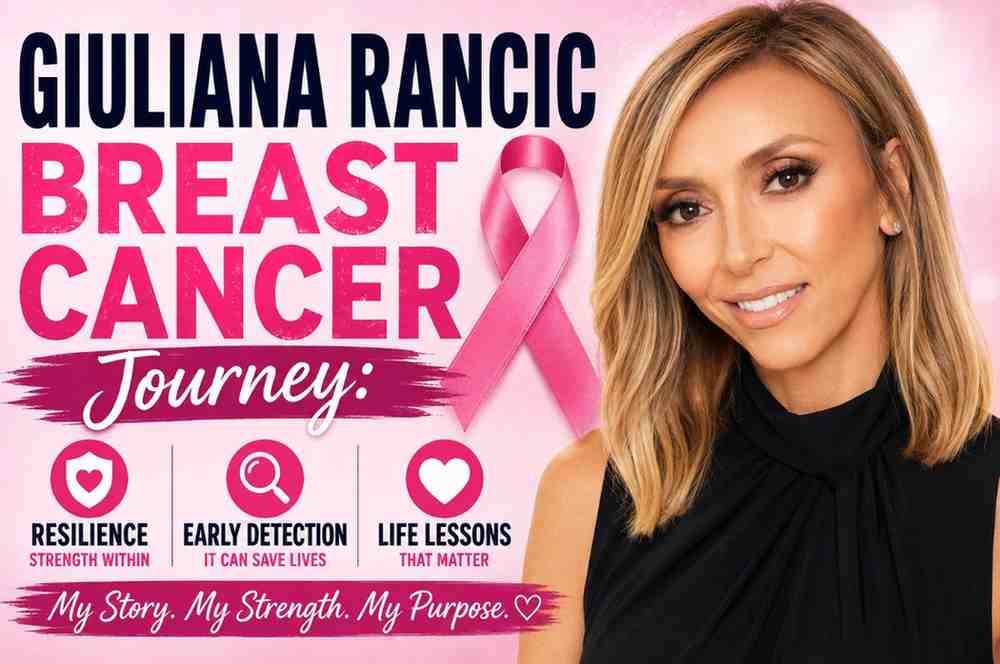
For television host, entrepreneur, and health advocate Giuliana Rancic, that moment came in 2011 when a routine screening revealed early-stage breast cancer at just 36 years old. At the time, she was pursuing fertility treatments and planning for motherhood. Instead, she found herself navigating surgeries, fear, uncertainty, and one of the most public health battles in celebrity culture.
Who: Giuliana Rancic, television personality and entrepreneur.
What: A breast cancer diagnosis that transformed her personal and professional life.
When: Diagnosed in 2011 at age 36.
Where: United States, during fertility treatment.
Why: A routine mammogram detected early-stage cancer.
How: Through early screening, medical intervention, emotional resilience, and lifestyle transformation.
But this story is bigger than celebrity headlines. It reflects a larger shift happening in healthcare today — one where prevention, awareness, emotional health, and sustainable living are becoming just as important as treatment itself.
Her experience also exposes an uncomfortable truth many people ignore: success often comes with hidden physical and emotional costs.
The Early Years: Building the Mindset That Would Later Save Her
Before becoming one of television’s most recognizable entertainment journalists, Giuliana Rancic’s life was shaped by immigration, family sacrifice, and ambition.
Born in Italy and raised in the United States, she grew up watching her family work relentlessly to build stability and opportunity. That environment taught her discipline early. Success wasn’t accidental in her world — it was earned.
Those lessons became central to her rise in media. She entered one of the world’s most competitive industries and built credibility through persistence, adaptability, and relentless work ethic.
But like many ambitious professionals, her lifestyle reflected modern “high-performance living”:
- Constant travel
- Long working hours
- Public pressure
- Emotional exhaustion
- Little recovery time
Ironically, it was during fertility treatments — a deeply personal and hopeful phase — that routine medical testing changed everything.
The Diagnosis That Interrupted Everything
In 2011, doctors discovered early-stage breast cancer during a mammogram connected to fertility procedures.
The emotional impact was immediate and profound.
One moment she was planning for motherhood. The next, she was confronting mortality.
This sudden shift is one reason her story resonated globally. Cancer narratives are often imagined as gradual or symptom-driven, but reality is often very different.
Many early-stage cancers show few or no obvious symptoms.
That makes screening critically important.
Key insight: Early detection does more than improve survival rates — it expands treatment choices, reduces risk, and gives patients greater control over their future.
Without that screening, her diagnosis could have come much later, potentially leading to more aggressive treatment and fewer options.
Why Giuliana Rancic’s Story Changed Conversations About Breast Cancer
For years, breast cancer awareness campaigns focused heavily on older women. Giuliana Rancic’s diagnosis challenged that perception.
At 36, she represented a growing demographic that often receives less attention in public health messaging: younger women facing serious illnesses.
Her case highlighted several important realities:
- Younger women can develop breast cancer
- Symptoms may not always be obvious
- Delayed diagnosis is common in younger patients
- Routine screenings can be life-saving
This shift in awareness became one of the most important public-health outcomes of her journey.
| Breast Cancer Factors | Younger Women | Older Women |
|---|---|---|
| Routine screenings | Less common | More common |
| Awareness levels | Often lower | Generally higher |
| Diagnosis timing | Can be delayed | Often detected earlier |
| Tumor aggressiveness | Potentially higher | Potentially lower |
| Public discussion | Less frequent historically | More established awareness |
The issue was never simply medical capability. The real gap was awareness.
The Double Mastectomy Decision: Why Early Detection Creates Options
Following her diagnosis, Rancic chose to undergo a double mastectomy.
For many people, the decision appeared dramatic. But medically, it reflected a growing trend in preventive and risk-reduction strategies.
One overlooked aspect of cancer care is that early detection creates flexibility.
When disease is identified earlier:
- Treatment options increase
- Long-term risk management improves
- Patients gain more decision-making power
- Recovery outcomes often improve
Instead of reacting to advanced disease progression, patients can make proactive choices.
Modern cancer care is increasingly shifting from reactive treatment to proactive risk management.
This evolution is changing how healthcare professionals think about survivorship itself.
The Psychological Side of Cancer That People Rarely Discuss
Public narratives often portray cancer survivors as endlessly strong and inspirational.
Reality is far more complicated.
Rancic’s journey highlighted the emotional layers of serious illness:
- Fear of uncertainty
- Loss of identity
- Anxiety about the future
- Emotional exhaustion
- Loss of control
This matters because recovery is not purely physical.
Mental health plays a critical role in long-term healing, resilience, and quality of life.
Modern medicine increasingly recognizes that emotional recovery and physical recovery are interconnected.
That shift is reshaping healthcare systems worldwide.
Motherhood After Cancer: A Different Path Forward
In 2012, Giuliana Rancic and her husband welcomed their son through gestational surrogacy.
The moment symbolized something larger than personal happiness.
It reflected how advances in reproductive medicine and supportive healthcare are creating new possibilities for cancer survivors.
Historically, many cancer patients were forced to abandon long-term life plans entirely.
Today, that reality is slowly changing.
Modern survivorship increasingly focuses on:
- Long-term quality of life
- Family planning
- Mental wellness
- Sustainable recovery
- Future life goals
This represents a major evolution in healthcare thinking.
The Rise of Preventive Health Awareness
One of the biggest impacts of Rancic’s journey was her transformation from patient to advocate.
Her story encouraged more conversations around:
- Routine screenings
- Early detection
- Women’s health awareness
- Preventive healthcare
- Younger patient education
This reflects a broader healthcare transition happening globally.
For decades, medical systems largely focused on treating illness after symptoms appeared.
Today, the focus is increasingly moving toward prevention and early intervention.
| Traditional Healthcare Model | Modern Preventive Healthcare Model |
|---|---|
| Treat disease after symptoms | Detect risk earlier |
| Focus on illness | Focus on long-term wellness |
| Short-term intervention | Continuous health monitoring |
| Reactive treatment | Proactive prevention |
Her experience became part of that larger cultural shift.
The Hidden Cost of “Always-On” Success Culture
One unique angle often missing from discussions about Giuliana Rancic’s journey is the relationship between high-performance lifestyles and health neglect.
Modern work culture rewards:
- Constant productivity
- Over-scheduling
- Long working hours
- Continuous digital engagement
- High stress tolerance
But the body doesn’t operate like a machine.
Stress accumulation, poor sleep, emotional exhaustion, and lack of recovery can quietly undermine health over time.
Her story raises an increasingly relevant question:
Are modern lifestyles optimizing productivity at the expense of long-term health?
That question is becoming central in conversations about wellness, burnout, and preventive medicine.
How Her Lifestyle Philosophy Changed After Recovery
Following treatment, Rancic reportedly shifted toward a more intentional lifestyle.
The key difference wasn’t perfection.
It was sustainability.
Nutrition
Balanced nutrition became less about restriction and more about long-term health support. Modern research increasingly connects whole-food-based diets with reduced inflammation and better recovery outcomes.
Exercise
Her approach evolved from intense performance-driven workouts toward more sustainable movement and consistency.
This mirrors a growing fitness trend prioritizing longevity instead of extreme intensity.
Mental Health
Stress management and emotional balance became essential rather than optional.
This reflects growing scientific recognition that chronic stress affects:
- Immune function
- Sleep quality
- Hormonal balance
- Inflammation
- Overall recovery
Modern health science increasingly views recovery as equally important as productivity.
Why Her Story Still Matters Today
More than a decade after her diagnosis, Giuliana Rancic’s story remains relevant because it mirrors several major healthcare trends shaping the future.
- Earlier health screenings
- Growing awareness among younger patients
- Integration of mental and physical health
- Preventive healthcare expansion
- Lifestyle-focused wellness approaches
But perhaps the most important lesson is this:
Health is not a fixed state. It is an ongoing process requiring attention, recovery, and adaptation.
That idea is fundamentally changing how people think about success and well-being.
Prediction: The Future of Preventive Healthcare
Stories like Giuliana Rancic’s point toward a future where healthcare becomes far more proactive and personalized.
In the coming years, experts expect:
- Earlier preventive screenings
- AI-assisted health monitoring
- Greater awareness among younger adults
- More personalized risk assessment
- Stronger integration between mental and physical health care
Technology will likely play a major role in this transformation.
But awareness and behavior remain just as important.
After all, screenings only work if people actually prioritize them.
The Bigger Lesson Behind Giuliana Rancic’s Journey
At its core, Giuliana Rancic’s story is not just about breast cancer.
It’s about perspective.
It’s about recognizing that achievement means little without health, recovery, and emotional balance.
Her journey challenges modern assumptions about:
- Success
- Strength
- Productivity
- Health awareness
- Resilience
And perhaps most importantly, it reminds people that preventive care is not fear-driven — it is empowerment.
Conclusion: A Story About More Than Survival
Giuliana Rancic’s breast cancer journey continues to resonate because it combines vulnerability, resilience, and transformation in a way that feels deeply human.
Her experience demonstrates that early detection can change outcomes, awareness can save lives, and recovery involves far more than physical healing.
Key takeaways:
- Routine screenings can detect illness before symptoms appear
- Younger women should not ignore preventive healthcare
- Mental recovery is as important as physical recovery
- Sustainable health habits matter more than perfection
- Long-term success requires long-term wellness
Ultimately, her story serves as both a warning and a source of hope.
Because sometimes the biggest life transformations begin not with ambition or achievement — but with paying attention to your health before it’s too late.
For breaking news and live news updates, like us on Facebook or follow us on Twitter and Instagram. Read more on Latest Health on thefoxdaily.com.


COMMENTS 0