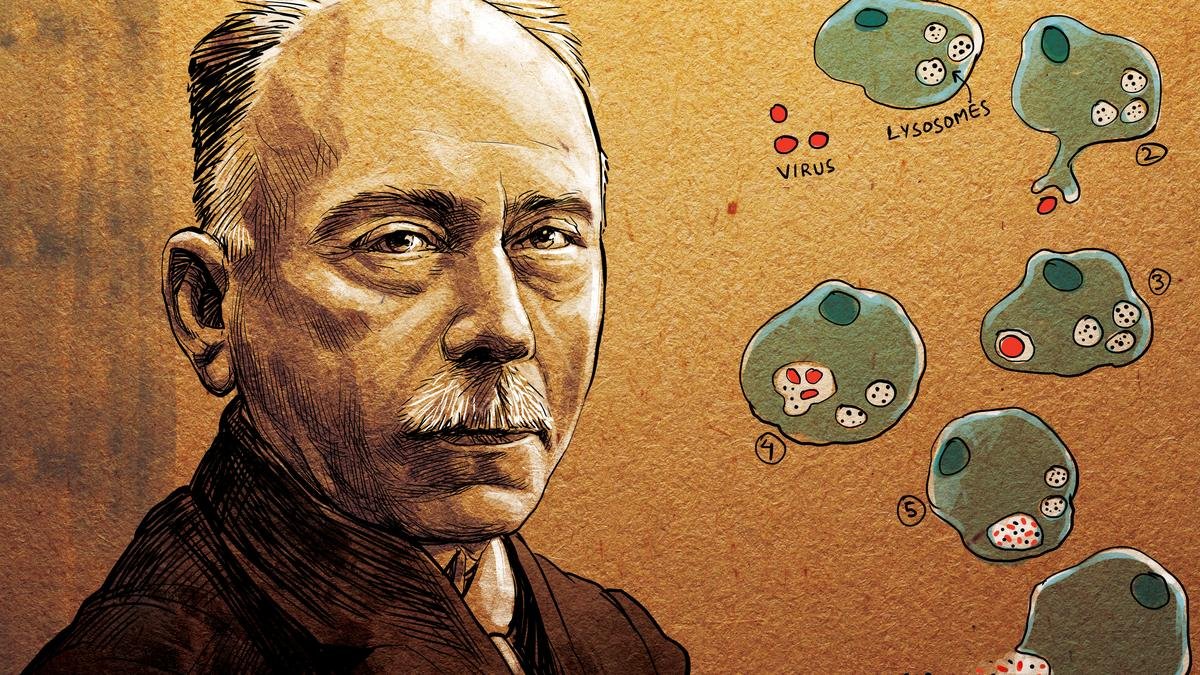
His pioneering work explained that antibodies alone are not enough to eliminate invading bacteria. Instead, they work together with another powerful biological mechanism known as the complement system. This discovery provided the first detailed explanation of how the immune system neutralizes pathogens, laying the scientific foundation for modern immunology, vaccine research, infectious disease diagnosis, and autoimmune disease investigations.
More than 100 years later, Bordet’s research continues to shape medicine. From COVID-19 antibody testing and advanced vaccine development to cancer immunotherapy and precision diagnostics, his discoveries remain deeply embedded in healthcare worldwide.
Who Was Jules Bordet?
Jules Bordet was a Belgian bacteriologist and immunologist whose research revolutionized the study of infectious diseases. During an era when scientists were only beginning to understand how the immune system functioned, Bordet explored the body’s natural defense mechanisms against bacteria.
Instead of focusing solely on disease-causing organisms, he investigated how the body itself fought infections. His experiments ultimately demonstrated that immunity depends on the coordinated action of multiple biological components rather than a single protective substance.
This insight permanently transformed biological science.
Why the 1919 Nobel Prize Was Historically Significant
The Nobel Prize in Physiology or Medicine was not awarded between 1915 and 1918 because World War I severely disrupted scientific research, communication, and international evaluation processes.
When the award resumed in 1919, Jules Bordet became the first recipient after the war, recognized for discoveries that had already begun reshaping microbiology and medicine.
The Nobel Committee honored him for revealing fundamental mechanisms of immunity rather than discovering a single treatment or vaccine. His work represented a new understanding of biology itself.
What Exactly Did Jules Bordet Discover?
Bordet demonstrated that the immune system contains two essential components that work together.
- Antibodies, which specifically recognize invading microbes.
- The complement system, a collection of blood proteins that help destroy those microbes.
Before Bordet’s research, scientists knew antibodies existed but could not explain why they sometimes failed to eliminate infections completely.
His experiments showed that antibodies identify the target, while complement proteins perform much of the destruction. Together, they provide a highly efficient immune response.
This concept became one of the central principles of immunology.
Understanding the Complement System
The complement system is a network of more than 30 proteins circulating in blood and body fluids. These proteins remain inactive until triggered by infection or inflammation.
Once activated, they initiate a chain reaction that strengthens immune defenses.
Main Functions of the Complement System
- Destroys bacteria by damaging their outer membranes.
- Marks microbes for easier recognition by immune cells.
- Attracts white blood cells to infected tissues.
- Removes dead cells and immune complexes.
- Supports inflammation needed to eliminate pathogens.
Bordet’s work proved that immunity involves a coordinated biological system rather than isolated molecules acting independently.
How Antibodies and Complement Work Together
Imagine antibodies as highly trained security officers identifying dangerous intruders. The complement system functions like a specialized response team that arrives after identification and removes the threat.
Without antibodies, the immune system may struggle to recognize specific pathogens quickly.
Without complement, antibodies often cannot eliminate microbes efficiently.
The partnership between these two systems forms one of the body’s strongest defense mechanisms.
| Immune Component | Primary Role | Contribution to Immunity |
|---|---|---|
| Antibodies | Recognize and bind pathogens | Provide highly specific immune targeting |
| Complement Proteins | Destroy or weaken pathogens | Amplify immune response and eliminate microbes |
| White Blood Cells | Remove infected cells and bacteria | Clear infections and support healing |
Why Bordet’s Discovery Changed Medical Science Forever
Prior to Bordet’s research, immunity remained poorly understood. Physicians knew recovery from certain diseases provided future protection, but the underlying biological mechanisms were unclear.
His findings transformed medicine in multiple ways.
1. Created the Scientific Foundation of Immunology
Bordet helped establish immunology as an independent scientific discipline. Future discoveries involving antibodies, vaccines, immune memory, and immune regulation all built upon his principles.
2. Improved Infectious Disease Diagnosis
Many laboratory tests detect antibodies produced after infection.
Modern serological testing—including tests for viral infections, bacterial diseases, and previous immune exposure—depends on concepts first clarified by Bordet.
3. Accelerated Vaccine Development
Vaccines work by training the immune system to produce antibodies before exposure to dangerous pathogens.
Understanding how antibodies cooperate with complement has allowed scientists to design vaccines that generate stronger and longer-lasting immune protection.
4. Advanced Blood Testing
Complement-based laboratory techniques became essential tools in diagnosing numerous infectious and immune-related diseases.
These methods remain widely used across hospitals and research laboratories.
Impact on Modern Vaccine Science
Every successful vaccine relies on stimulating protective immunity.
Bordet’s discoveries helped researchers understand:
- How antibodies neutralize viruses.
- Why some vaccines generate stronger immune memory.
- How immune responses differ between individuals.
- Why booster doses improve protection.
- How immune proteins cooperate after vaccination.
This knowledge has guided vaccine development against diseases ranging from influenza and hepatitis to HPV and COVID-19.
Influence on Modern Laboratory Medicine
Today’s diagnostic laboratories routinely perform antibody testing for numerous diseases.
Examples include:
- HIV antibody testing
- Hepatitis screening
- COVID-19 antibody detection
- Dengue serology
- Autoimmune disease investigations
- Blood compatibility testing
These diagnostic methods depend on immune principles first demonstrated through Bordet’s research.
Connection to Autoimmune Diseases
Bordet’s discoveries also helped scientists understand what happens when the immune system mistakenly attacks healthy tissues.
In autoimmune diseases, antibodies may target the body’s own cells instead of invading microbes.
Complement proteins can amplify this harmful immune response, contributing to tissue damage.
This understanding has enabled researchers to develop therapies that specifically block complement activation in certain autoimmune disorders.
Role in Cancer Immunotherapy
Modern cancer treatments increasingly harness the immune system to recognize and destroy tumor cells.
Many therapeutic antibodies used in oncology rely on complement activation to eliminate cancer cells.
Although cancer immunotherapy emerged decades after Bordet’s work, its biological foundation reflects the same immune mechanisms he first described.
How Bordet’s Work Influences Precision Medicine
Medicine is gradually moving toward treatments tailored to individual patients.
Understanding antibody behavior and complement activity allows physicians to:
- Select targeted biological therapies.
- Predict treatment responses.
- Monitor immune disorders.
- Identify inherited complement deficiencies.
- Personalize immunotherapy strategies.
This represents an extension of principles first uncovered more than a century ago.
Lessons That Continue to Shape Medical Research
Bordet’s work demonstrated several enduring scientific principles.
- Complex biological systems function through cooperation rather than isolated components.
- Basic scientific research often leads to major medical breakthroughs decades later.
- Understanding disease mechanisms is essential before developing effective treatments.
- Laboratory discoveries can transform everyday clinical practice.
These ideas continue to guide biomedical research worldwide.
Timeline of Jules Bordet’s Lasting Legacy
| Year | Milestone | Importance |
|---|---|---|
| Late 1890s | Research on antibodies and complement | Established core principles of immunity |
| 1919 | Awarded Nobel Prize in Physiology or Medicine | Global recognition of immunology research |
| 20th Century | Expansion of vaccine science | Improved prevention of infectious diseases |
| Modern Era | Immunotherapy and precision medicine | Continued application of Bordet’s discoveries |
Why His Discovery Matters More Than Ever Today
The world has witnessed emerging infectious diseases, antibiotic resistance, global pandemics, and rapid advances in biotechnology. In each of these areas, understanding immune responses has become increasingly important.
Scientists developing next-generation vaccines, monoclonal antibodies, immune-modulating drugs, and advanced diagnostic tools continue to rely on the biological framework established by Jules Bordet.
His work reminds us that the most transformative medical breakthroughs often begin with answering fundamental scientific questions rather than searching directly for cures.
Frequently Asked Questions
Why did Jules Bordet receive the Nobel Prize?
He received the 1919 Nobel Prize in Physiology or Medicine for discovering how antibodies and the complement system work together to provide immunity against infectious diseases.
What is the complement system?
The complement system is a group of proteins that strengthens immune defenses by helping destroy microbes, attracting immune cells, and enhancing inflammation.
How did Bordet influence vaccine development?
His discoveries explained important mechanisms of antibody-mediated protection, helping scientists design vaccines that stimulate stronger and more effective immune responses.
Why is Bordet still important today?
Modern diagnostics, vaccine research, autoimmune disease treatment, cancer immunotherapy, and precision medicine all rely on principles established through his groundbreaking research.
Conclusion
Jules Bordet’s Nobel-winning discovery did far more than explain one aspect of immunity—it transformed medical science’s understanding of how the human body protects itself against disease. By revealing the partnership between antibodies and the complement system, he established the scientific framework upon which modern immunology was built.
More than a century later, every antibody test performed, every vaccine developed, and many of today’s most advanced immune-based therapies continue to reflect the enduring impact of his research. His legacy serves as a powerful reminder that fundamental scientific discoveries can reshape medicine for generations, improving diagnosis, prevention, and treatment across countless diseases worldwide.
For breaking news and live news updates, like us on Facebook or follow us on Twitter and Instagram. Read more on Latest Health on thefoxdaily.com.



COMMENTS 0