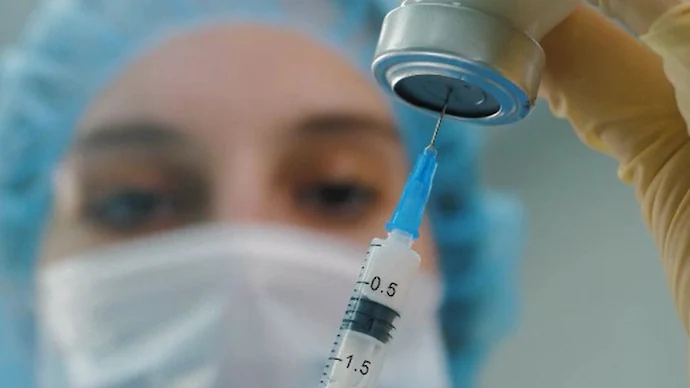
Personalised mRNA Cancer Vaccine Cuts Melanoma Recurrence Risk by 42%
A personalised mRNA cancer vaccine developed by pharmaceutical companies Merck and Moderna has delivered encouraging results in a Phase 3 clinical trial, offering new hope for people with high-risk melanoma. When administered alongside the immunotherapy drug Keytruda, the experimental vaccine significantly reduced the risk of cancer recurrence or death compared with Keytruda alone.
The findings strengthen interest in messenger RNA (mRNA) technology as a potential tool for treating cancer. While mRNA vaccines became widely known during the COVID-19 pandemic, researchers are now investigating how the same technology could help the immune system recognise and attack cancer cells.
The investigational vaccine, called intismeran autogene, also known as V940 or mRNA-4157, is designed around the mutations found in an individual patient’s tumour. The approach aims to direct the immune system towards cancer-specific targets rather than relying on a one-size-fits-all vaccine.
However, the treatment remains investigational. Although the Phase 3 results are promising, it has not yet been established as an approved treatment on the basis of these findings, and researchers do not yet have mature evidence showing whether the combination improves overall survival.
Personalised mRNA Cancer Vaccine: What Did the Phase 3 Trial Find?
The global INTerpath-001 trial evaluated whether adding intismeran autogene to Keytruda could improve outcomes for patients with high-risk melanoma after surgery.
According to the reported findings, the combination reduced the risk of melanoma recurrence or death by 42% compared with Keytruda alone. It also reduced the risk of distant metastasis or death by 38%.
The full results were presented at the European Society for Medical Oncology (ESMO) Congress, and the findings were accepted for publication in The New England Journal of Medicine.
These results build on an earlier announcement that the trial had met its primary endpoint of recurrence-free survival and a key secondary endpoint of distant metastasis-free survival.
The distinction between these outcomes is important. Recurrence-free survival measures how long patients remain alive without their cancer returning, while distant metastasis-free survival focuses on remaining alive without the cancer spreading to distant parts of the body.
Although the reported reductions are encouraging, they describe relative reductions in risk, not a guarantee that an individual patient’s cancer will not return.
How Did Patients Fare After Surgery?
The INTerpath-001 trial enrolled 1,137 people with high-risk stage IIB to IV cutaneous melanoma whose tumours had been completely removed surgically.
Participants received either the personalised vaccine alongside Keytruda or Keytruda alone. This comparison allowed researchers to assess whether the vaccine provided an additional benefit beyond an established immunotherapy.
After a median follow-up of 24.6 months, the reported two-year outcomes favoured the combination treatment.
-
Recurrence-free survival: 82.2% of patients receiving the combination were alive without cancer recurrence at two years, compared with 70% of those receiving Keytruda alone.
-
Distant metastasis-free survival: 88.5% of patients in the combination group remained free of distant metastasis at two years, compared with 80.2% in the Keytruda-only group.
The results suggest that adding a personalised vaccine could help more patients remain cancer-free after surgery. This is particularly significant for people with high-risk melanoma, who may face a risk of recurrence even after the visible tumour has been removed.
Nevertheless, longer follow-up is needed to determine whether the benefits persist and whether the combination ultimately improves overall survival.
What Is a Personalised mRNA Cancer Vaccine?
Unlike a conventional preventive vaccine, which trains the immune system to recognise a pathogen before or after exposure, a therapeutic cancer vaccine is designed to help the body fight an existing cancer or prevent it from returning.
Intismeran autogene uses information about the mutations in a patient’s tumour to create a personalised treatment. These mutations can produce abnormal proteins or protein fragments known as neoantigens, which may help the immune system distinguish cancer cells from healthy cells.
The vaccine uses synthetic mRNA containing instructions for producing up to 34 tumour-specific targets. Once the relevant targets are produced and presented to the immune system, the goal is to stimulate T cells to recognise and attack cancer cells carrying those targets.
Because each patient’s tumour can have a different set of mutations, the vaccine is tailored to the individual’s cancer rather than being identical for every patient.
The approach is particularly relevant after surgery. Even when scans and examinations show no obvious remaining tumour, microscopic cancer cells may still be present and could lead to a recurrence. A personalised vaccine aims to strengthen the immune system’s ability to recognise and eliminate such cells.
However, the effectiveness of this approach depends on several factors, including the tumour’s mutations and the ability of the patient’s immune system to mount an effective response.
Why Is Keytruda Combined With the Vaccine?
The personalised vaccine and Keytruda are intended to work in complementary ways.
The vaccine helps direct the immune response. By presenting tumour-specific targets, it aims to train T cells to recognise cancer cells associated with the patient’s tumour.
Keytruda helps the immune system sustain its attack. Its active ingredient, pembrolizumab, is an immune checkpoint inhibitor that blocks the PD-1 pathway. Some cancers exploit this pathway to suppress immune activity and evade detection. Blocking it can help T cells maintain their ability to attack cancer cells.
Combining the two treatments may therefore offer an advantage over either approach alone: the vaccine helps identify targets, while Keytruda helps counter a mechanism that cancers use to evade immune attack.
The Phase 3 trial provides clinical evidence that this combination can improve recurrence-related outcomes in the studied melanoma population. Further research is needed to establish how durable the benefit is and whether the approach can be used successfully in other cancers.
What About Side Effects and Safety?
The reported results also highlight the importance of evaluating safety alongside treatment benefits.
Treatment-related adverse events were reported in 95.8% of patients receiving the vaccine plus Keytruda, compared with 90% of those receiving Keytruda alone.
More serious treatment-related adverse events, classified as grade 3–5, were reported in 14.2% of patients in the combination group and 13.4% in the Keytruda-only group.
These figures indicate that adverse events were common in both groups, while the reported rates of severe events were relatively similar. They do not, on their own, establish that the combination is risk-free or that every patient will tolerate it equally well.
The type, severity and duration of side effects matter when doctors assess whether a treatment’s benefits outweigh its risks. Patients considering investigational therapies need individualised advice from their oncology team, including information about potential adverse effects and available alternatives.
Researchers will continue to assess the treatment’s safety as follow-up data accumulate.
Why Overall Survival Still Matters
One of the most important limitations of the current findings is that overall survival data remain immature.
A reduction in recurrence or distant spread is clinically meaningful, especially for patients who have undergone surgery for high-risk melanoma. However, these outcomes do not automatically establish that patients will live longer.
Overall survival measures how long patients remain alive, regardless of whether their cancer returns or progresses. Establishing a benefit on this measure generally requires longer follow-up and sufficient events for meaningful analysis.
For now, the trial’s strongest reported evidence concerns recurrence-free survival and distant metastasis-free survival. Whether those improvements translate into longer lives remains an open question.
The findings should therefore be viewed as a significant clinical milestone rather than proof that personalised mRNA cancer vaccines have solved the challenge of melanoma recurrence.
Could Personalised mRNA Vaccines Work Against Other Cancers?
The potential significance of the research extends beyond melanoma. Merck and Moderna are investigating intismeran autogene in a broader clinical programme that includes nine Phase 2 and Phase 3 trials across different cancers and stages of disease.
The programme includes research into non-small cell lung cancer, bladder cancer and renal cell carcinoma, as well as additional melanoma studies. Earlier-stage research is also exploring the approach in pancreatic and gastric cancers.
A personalised vaccine could, in principle, help target cancer-specific mutations even when tumours originate in different organs. This is an important distinction from treatments selected mainly according to a cancer’s location, stage and other clinical characteristics.
However, different cancers vary considerably in their genetic mutations, immune environments and responses to immunotherapy. A strategy that works in melanoma may not produce the same results in lung, pancreatic or other cancers.
Each cancer type will therefore require its own clinical evidence to establish whether the vaccine is effective, which patients are most likely to benefit and how it should be combined with other treatments.
How Is This Different From COVID-19 mRNA Vaccines?
The underlying technology is related, but the purpose is different.
COVID-19 mRNA vaccines provide instructions that help the body produce a target associated with the virus, prompting an immune response that can help protect against infection or severe disease.
A personalised cancer vaccine, by contrast, is designed around selected targets associated with an individual’s tumour. Its aim is to help the immune system recognise and attack cancer cells and potentially reduce the chance of the disease returning.
The melanoma findings demonstrate how an mRNA platform can be investigated beyond infectious diseases. However, success in a cancer trial does not mean that all mRNA-based cancer vaccines will be effective or that they can replace existing cancer treatments.
The clinical value of each vaccine must be established through appropriately designed studies.
What the Findings Mean for the Future of Cancer Treatment
The Phase 3 results add to growing evidence that personalised immunotherapy could become an important part of cancer care. By using information from a patient’s tumour to guide an immune response, researchers are exploring a more individualised approach to treatment.
For patients with high-risk melanoma, the combination of intismeran autogene and Keytruda could offer an additional option for reducing the risk of recurrence if further evidence supports its use and regulatory authorities approve it.
Important questions remain, including how long the benefits last, whether the treatment improves overall survival, how best to select patients and whether comparable benefits can be achieved in other cancers.
The bottom line: The personalised mRNA cancer vaccine has produced encouraging Phase 3 results in high-risk melanoma, reducing the relative risk of recurrence or death by 42% when combined with Keytruda. It is a promising development in Cancer Research, but it remains investigational, and further evidence is needed to establish its long-term benefits and broader role in treatment.
Disclaimer: This article is for informational purposes only and is not a substitute for medical advice. Cancer treatment decisions should be made in consultation with a qualified oncologist.
For breaking news and live news updates, like us on Facebook or follow us on Twitter and Instagram. Read more on Latest Health on thefoxdaily.com.



COMMENTS 0