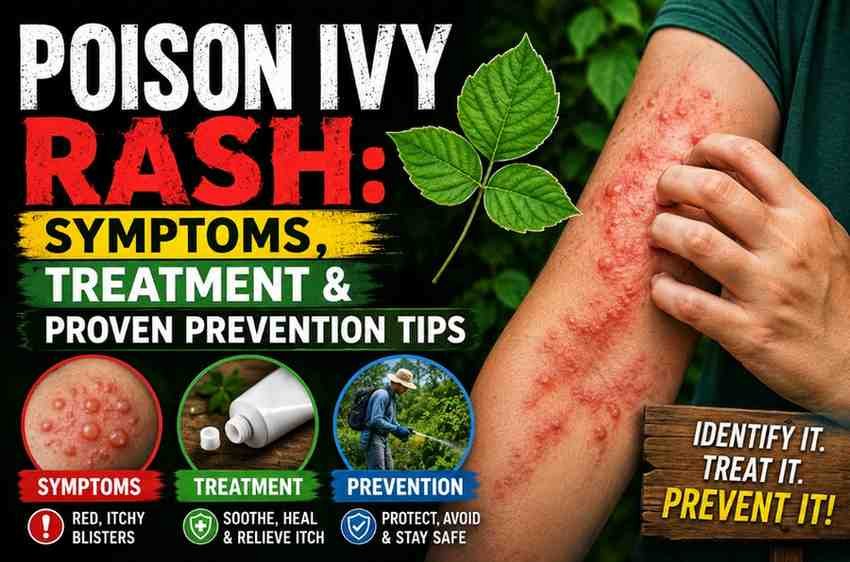
Introduction: What causes a poison ivy rash? Why does it itch so intensely, and how can you treat it quickly? Poison ivy rash is one of the most common skin reactions caused by plants, affecting millions of people each year—especially those who spend time outdoors. Whether you’re hiking, gardening, or simply walking through overgrown areas, accidental contact with poison ivy can lead to days or even weeks of discomfort. This guide explains poison ivy rash symptoms, treatment options, and prevention strategies so you can act fast, reduce irritation, and avoid future exposure.
What Is Poison Ivy and Why Does It Cause a Rash?
Poison ivy is a plant that produces an oily resin called urushiol, which is responsible for triggering allergic skin reactions. Even a tiny amount of this oil can cause inflammation, redness, and severe itching.
Urushiol is highly potent and can spread easily through:
- Direct contact with the plant
- Touching contaminated clothing or tools
- Pet fur that has brushed against the plant
- Smoke from burning poison ivy
Key insight: The rash itself is not contagious—but the oil that causes it can linger on surfaces, leading to repeated exposure if not properly cleaned.
How to Identify Poison Ivy
Recognizing poison ivy is your first line of defense. The plant typically grows as a vine or shrub and is commonly identified by its leaf pattern.
- Clusters of three pointed leaves (“Leaves of three, let it be”)
- Green leaves in summer, turning red or orange in fall
- May produce small white berries
Why this matters: Many people confuse poison ivy with harmless plants, increasing their risk of accidental exposure.
Poison Ivy Rash Symptoms: What to Watch For
Symptoms usually appear within 12 to 48 hours after contact, depending on sensitivity.
Early Symptoms
- Redness and mild swelling
- Itching or burning sensation
- Skin irritation in streaks or patches
Advanced Symptoms
- Blisters filled with fluid
- Severe itching that disrupts sleep
- Crusting as blisters break and heal
Important: Scratching does not spread the rash, but it can break the skin and increase the risk of infection.
Timeline: How a Poison Ivy Rash Progresses
| Stage | Timeframe | What Happens |
|---|---|---|
| Exposure | 0–24 hours | Urushiol penetrates the skin |
| Reaction begins | 12–48 hours | Redness and itching develop |
| Peak symptoms | 2–5 days | Blisters and intense itching |
| Healing phase | 1–3 weeks | Scabbing and gradual recovery |
Effective Poison Ivy Rash Treatment
Quick action can significantly reduce the severity of a poison ivy rash. The goal is to remove the oil, soothe inflammation, and prevent complications.
1. Wash the Area Immediately
If you suspect exposure, wash your skin within 10–15 minutes using soap and cool water. This helps remove urushiol before it binds to the skin.
2. Use Anti-Itch Treatments
- Calamine lotion to soothe irritation
- Hydrocortisone cream to reduce inflammation
- Oatmeal baths for natural relief
3. Apply Cool Compresses
Cool, wet cloths can help reduce swelling and calm itching, especially during peak symptoms.
4. Take Oral Antihistamines
These can help control itching, particularly at night, improving sleep quality.
5. Avoid Scratching
Scratching can delay healing and lead to infection, even though it may provide temporary relief.
When to See a Doctor
- Rash covers a large area or sensitive regions (face, eyes)
- Severe swelling or difficulty breathing
- No improvement after 1–2 weeks
In severe cases, doctors may prescribe oral steroids to control inflammation.
Common Mistakes That Make It Worse
Many people unintentionally worsen their condition due to misinformation.
- Using hot water: Opens pores and allows oil to penetrate deeper
- Delaying washing: Gives urushiol more time to bind to skin
- Not cleaning belongings: Leads to repeated exposure
- Scratching excessively: Increases risk of infection
Insight: Most severe cases are not due to the plant itself—but due to delayed or improper response.
Prevention: How to Avoid Poison Ivy Rash
Preventing exposure is far easier than treating a rash. With a few simple habits, you can significantly reduce your risk.
1. Learn to Recognize the Plant
Awareness is your strongest defense. Avoid areas where poison ivy is common, especially wooded or overgrown regions.
2. Wear Protective Clothing
- Long sleeves and pants
- Gloves when gardening
- Closed shoes during outdoor activities
3. Wash After Outdoor Activities
Shower and change clothes as soon as possible after being outdoors. Wash clothes separately to prevent spreading urushiol.
4. Clean Pets and Gear
Urushiol can stick to pet fur, tools, and shoes. Cleaning them reduces indirect exposure.
5. Use Barrier Creams
Special skin products can create a protective layer that reduces urushiol absorption.
Poison Ivy vs Other Skin Rashes: Key Differences
| Condition | Cause | Key Feature |
|---|---|---|
| Poison Ivy Rash | Plant oil (urushiol) | Linear streaks, intense itching |
| Allergic Rash | Allergens (food, chemicals) | Widespread redness |
| Heat Rash | Sweat blockage | Small red bumps |
Why this comparison matters: Misidentifying the rash can lead to ineffective treatment and prolonged discomfort.
The Science Behind the Itch
The intense itching caused by poison ivy is not random—it’s a result of your immune system reacting to urushiol. When the oil binds to skin proteins, your body identifies it as a threat and releases inflammatory chemicals.
This immune response leads to:
- Swelling and redness
- Nerve stimulation (itching sensation)
- Blister formation
Unique insight: The severity of the rash depends more on your immune sensitivity than the amount of exposure.
Real-World Impact: Why This Rash Disrupts Daily Life
While poison ivy rash is rarely dangerous, it can significantly affect quality of life. Sleep disruption, constant itching, and visible skin irritation can interfere with work, school, and daily routines.
For outdoor workers, farmers, and hikers, repeated exposure can become a recurring problem if preventive measures are not followed.
Future Outlook: Better Awareness, Better Prevention
With increasing outdoor activities and urban expansion into natural areas, poison ivy exposure is becoming more common. However, awareness campaigns and improved skin protection products are helping reduce severe cases.
Prediction: In the future, wearable skin protection and plant-identification apps may play a larger role in preventing exposure, especially for outdoor enthusiasts.
Conclusion: Stay Alert, Act Fast, and Protect Your Skin
Poison ivy rash may be common, but it doesn’t have to ruin your comfort or routine. By understanding its symptoms, acting quickly with proper treatment, and following preventive measures, you can minimize its impact.
Key takeaway: The faster you remove the oil and treat the skin, the milder the reaction will be.
Whether you’re exploring nature or working outdoors, a little awareness goes a long way in keeping your skin safe, itch-free, and healthy.
For breaking news and live news updates, like us on Facebook or follow us on Twitter and Instagram. Read more on Latest Health on thefoxdaily.com.



COMMENTS 0