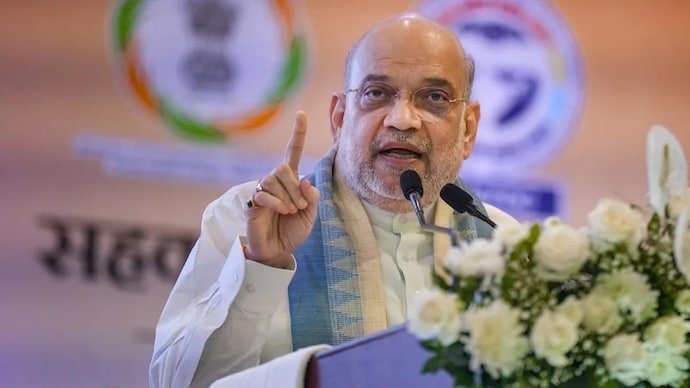
Union Home Minister Amit Shah used Hindi Diwas to make a broader argument about India’s language policy: the growth of Hindi should not come at the expense of the country’s other languages. In his message, Shah described India’s linguistic diversity as a source of strength and said Hindi’s progress becomes meaningful only when other Indian languages receive dignity, promotion and protection.
The message places Hindi within a larger idea of unity in diversity. Rather than presenting linguistic diversity as an obstacle to national integration, Shah said the country’s many languages collectively contribute to its cultural identity, historical memory and social cohesion.
His remarks are significant because language in India is closely connected with regional identity, literature, Education, Politics and cultural traditions. Hindi is one of the country’s most widely understood languages, but India also has a large linguistic landscape encompassing languages with their own literary traditions, histories and communities.
Shah argued that these languages should not be viewed as competing with one another. Instead, he presented Hindi as a language capable of connecting people across linguistic communities while recognising the distinct contribution of other Indian languages.
Hindi Diwas and the history behind September 14
Hindi Diwas is observed every year on September 14 to commemorate the decision taken by the Constituent Assembly on September 14, 1949, regarding Hindi in the Devanagari script as the official language of the Union.
The occasion has since become an annual opportunity to discuss the role of Hindi in public life, administration, education and communication. It also regularly brings renewed attention to India’s broader multilingual character.
That context is important because the constitutional framework does not reduce India’s linguistic identity to a single language. The Constitution recognises Hindi as the official language of the Union while also providing protections and recognition for India’s wider linguistic heritage.
English also continues to have an important role in Union-level official communication under the statutory framework governing official languages. Meanwhile, states have their own language policies, and millions of Indians conduct their daily lives primarily through regional and local languages.
Against this background, Shah’s message focused on balancing the wider use of Hindi with the preservation and development of other Indian languages.
Shah calls linguistic diversity a national strength
Shah rejected the idea that having many languages makes India weaker. Instead, he described linguistic diversity as one of the country’s greatest strengths.
His argument rests on the idea that languages preserve more than words. They carry folk traditions, historical experiences, social customs and distinctive ways of understanding the world.
Every language therefore represents a body of cultural knowledge that cannot easily be separated from the community that speaks it. Songs, stories, proverbs, oral traditions and local expressions often contain knowledge passed between generations.
That is why language loss can have consequences beyond communication. When a language becomes weaker, communities can also lose access to parts of their oral history and cultural memory.
Shah described language as the “memory” and “self-awareness” of a society, placing linguistic preservation within the larger question of cultural continuity.
Hindi as a bridge between different communities
While emphasising the protection of other languages, Shah also highlighted Hindi’s role as a connecting language.
India’s linguistic geography means that people from different states and language communities frequently need a common means of communication. Hindi has become an important link language in many parts of the country, particularly through migration, popular culture, Entertainment, commerce and everyday interaction.
Shah said Hindi has helped connect different sections and communities and described it as a language of dialogue, bonding and coordination.
He also referred to his own linguistic background. Although his mother tongue is Gujarati, he said Hindi enables him to communicate directly with people in different parts of India.
The example illustrates an important feature of multilingual India: people often use more than one language depending on where they live, work or interact. A person can retain a mother tongue while also using Hindi, English or another regional language for education, employment or wider communication.
That layered language use is common across India and makes the relationship between languages more complex than a simple choice between one language and another.
Why the message matters beyond Hindi Diwas
Language debates in India frequently become emotionally charged because languages are tied to identity. A language is not simply a tool for transferring information; it can represent family, community, geography and cultural belonging.
For that reason, efforts to promote Hindi can raise concerns in regions where other languages have deep historical and cultural roots. At the same time, supporters of Hindi often point to its ability to facilitate communication between people from different parts of the country.
Shah’s Hindi Diwas message attempts to position the two objectives as compatible.
The underlying proposition is that promoting Hindi does not require weakening other Indian languages. Instead, Hindi can expand its role as a connecting language while regional and mother tongues continue to develop in literature, education, culture and public life.
That distinction is particularly relevant in a country where linguistic diversity is visible not only between states but also within individual states and communities.
Mother tongue remains central to Shah’s appeal
Shah also directed part of his message toward parents and young people. He encouraged parents to speak to their children in their mother tongue and urged young Indians to learn from the world without abandoning their own languages.
The appeal reflects a broader concern about the transmission of languages between generations.
Children increasingly encounter multiple languages through schools, smartphones, social media, entertainment and professional environments. This can create opportunities for multilingualism, but it can also reduce the everyday use of some languages, particularly when younger generations stop speaking a family language regularly.
Encouraging parents to use their mother tongue at home can help maintain that connection. It also does not necessarily prevent children from learning other languages.
In fact, multilingualism can allow an individual to maintain a family language while acquiring additional languages for education, employment and communication.
India’s linguistic diversity is much broader than Hindi and English
India’s language landscape includes major regional languages such as Bengali, Telugu, Marathi, Tamil, Urdu, Gujarati, Kannada, Malayalam, Odia, Punjabi and Assamese, alongside many other languages and mother tongues.
Each has developed within particular historical and cultural environments. Some have extensive literary traditions stretching back centuries, while others have traditionally been transmitted through oral cultures and local communities.
The constitutional framework also includes the Eighth Schedule, which lists 22 languages. This recognition is an important part of India’s approach to linguistic diversity, although the country’s actual linguistic landscape extends well beyond those scheduled languages.
This distinction matters because protecting linguistic diversity cannot be reduced to protecting only the largest languages. Smaller linguistic communities can face different challenges, including declining numbers of speakers, limited educational materials and reduced use among younger generations.
Education is likely to remain central to the language debate
Schools are one of the most important places where India’s language choices become practical policy.
The language used in early education can influence how easily children understand lessons, develop literacy and maintain a connection with their families and communities. At the same time, knowledge of widely used languages can expand access to higher education, employment and communication beyond a student’s immediate region.
This creates a policy challenge rather than a simple either-or choice.
A multilingual education system can attempt to give children access to their mother tongue or regional language while also teaching additional languages. The exact balance varies by state and educational institution, but the underlying challenge remains the same: how to expand communication without making cultural identity a casualty of educational mobility.
Shah’s appeal to young people to learn from the world while retaining their languages reflects this tension. Globalisation increases the value of learning widely spoken international and Indian languages, but it can also make preserving local languages more difficult.
Hindi’s future may depend on how inclusive its expansion is
The long-term influence of Hindi will depend on many factors, including population movement, urbanisation, entertainment, digital media, education and employment patterns.
Hindi already has a major presence in Indian popular culture and is widely used across state boundaries. Digital platforms have further increased opportunities for Hindi-language content to reach audiences far beyond traditional Hindi-speaking regions.
But the same digital revolution is also creating opportunities for regional languages. Content creators can now reach audiences without depending entirely on traditional publishing, television or film distribution systems.
This means India’s linguistic future does not necessarily have to be a zero-sum competition. Technology can potentially allow Hindi and regional languages to grow simultaneously if users, institutions and platforms continue producing content in multiple languages.
A message about unity without linguistic uniformity
The central idea in Shah’s Hindi Diwas message is that national unity does not require linguistic uniformity.
Hindi can serve as an important link between communities while other languages preserve their own histories, traditions and identities. From that perspective, linguistic diversity becomes part of the Infrastructure of Indian unity rather than a barrier to it.
His emphasis on dignity and protection also shifts the conversation away from simply asking which language should be used more widely. The larger question is how different languages can coexist, develop and remain relevant to future generations.
For India, that is a particularly important question because language policy touches almost every part of public life: schools, government, courts, business, entertainment, technology and family life.
Hindi Diwas therefore offers more than an occasion to celebrate one language. It also provides an opportunity to consider how a multilingual country can strengthen communication without weakening linguistic identity.
Shah’s message makes that balance the central principle: Hindi can advance as a language of connection, but its progress is meaningful only when India’s other languages are respected, protected and given space to flourish.
For breaking news and live news updates, like us on Facebook or follow us on Twitter and Instagram. Read more on Latest India on thefoxdaily.com.





COMMENTS 0