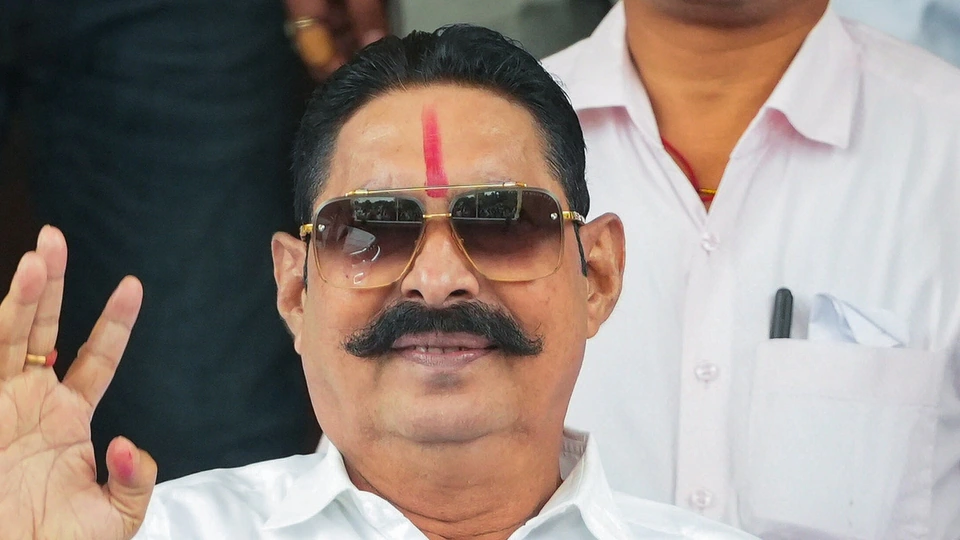
Janata Dal (United) MLA Anant Kumar Singh has sought to clarify his controversial statement claiming that he arranged the murders of nine people to help Nitish Kumar during his political struggles. The Mokama legislator later said the nine men were his associates who had been killed during the tenure of former Bihar chief minister Lalu Prasad Yadav, alleging that their support for Nitish Kumar was linked to the violence.
The remarks triggered a political controversy, prompting the JD(U) leadership to distance itself from the statement and defend Nitish Kumar’s political record. The episode has also highlighted tensions within the party over candidate selection for the upcoming Bihar Legislative Council elections.
Singh made the initial claim while criticising the JD(U)’s decision to field his political rival, Neeraj Kumar, in the upcoming polls. He has vowed to ensure Neeraj Kumar’s defeat and is backing Jan Suraaj Party candidate Anuj Singh instead.
His subsequent explanation presented the deaths as losses suffered by his associates during an earlier period of political conflict. However, the circumstances surrounding the alleged killings and Singh’s claims about responsibility for them have not been independently established by the statements cited.
What Anant Singh Said About the Nine Murders
Singh’s initial remarks drew attention because he appeared to describe the deaths as killings he had arranged to support Nitish Kumar during a difficult phase of the latter’s political career.
According to the Press Trust of India (PTI), Singh referred to his longstanding relationship with Kumar and said he had stood by him when he was struggling politically.
“Nitish Kumar and I go back a long way. To help him, I got nine people murdered. I stood by him in times when he was struggling to find a toehold,” Singh said, according to PTI.
The statement was striking because it appeared to link lethal violence directly to political loyalty. It also raised questions about what Singh meant by saying he had arranged the murders and whether he was describing specific events from Bihar’s past or using provocative language to emphasise his support for Kumar.
Singh’s later comments offered a different account. In his conversation with ANI, he said the nine people were his associates who had been killed during Lalu Prasad Yadav’s government. He alleged that their association with Nitish Kumar had made them targets.
The distinction between the two statements is central to understanding the controversy. In the first, Singh claimed responsibility for arranging the killings. In the second, he described the men as victims of violence allegedly connected to their political alignment. Neither statement, on its own, establishes the full circumstances of the deaths.
‘I Was Shot’: Singh Describes Personal Losses
Speaking to ANI, Singh said the alleged killings occurred during Lalu Prasad Yadav’s tenure as chief minister. He claimed that he was also shot during the same period and described the events as a source of substantial loss for him and his family.
“During the Lalu Yadav government, nine of my associates were killed, and I myself was shot. It was because we aligned ourselves with Nitish Kumar that Lalu Yadav had them killed. We have suffered such immense losses. My father also passed away due to a heart attack,” Singh told ANI.
In this version of events, Singh portrayed himself and his associates as having suffered violence because they supported Nitish Kumar during an earlier phase of Bihar Politics. He also referred to his father’s death from a heart attack as part of the family’s broader experience of loss.
Singh’s allegations against Lalu Prasad Yadav are serious, but they should be understood as claims made by the MLA rather than established findings. The statements provided do not independently verify who was responsible for the deaths or establish that the killings were motivated by political allegiance.
His clarification also leaves an important question unresolved: how does his initial claim that he arranged the murders relate to his later assertion that the nine men were killed by others? The difference in wording changes the apparent meaning of the events he described.
Without additional evidence or a more detailed explanation, it is not possible to determine whether Singh was referring to the same incidents in both statements or precisely what he intended to convey in his initial remarks.
JD(U) Responds to the Controversy
The JD(U) moved to distance itself from Singh’s statement, with national spokesperson Rajiv Ranjan Prasad dismissing the remarks and defending Nitish Kumar’s political record.
In a video statement, Prasad did not name Singh directly. However, he rejected any suggestion that Kumar’s political career was associated with criminal activity or violence.
“Nitish Kumar has stood out for an untainted record, with no blemishes of hobnobbing with criminals and involvement in violence or any type of negativity,” Prasad said.
Prasad also questioned whether the remarks deserved a serious response from the party or the public.
“The type of statement that we have come across deserves no cognisance from the party and is unlikely to be taken seriously by the public,” he added.
The response made clear that the party did not want Singh’s comments to be interpreted as reflecting its position or as evidence about Nitish Kumar’s political associations. Instead of engaging with the details of the allegations, Prasad focused on defending the chief minister’s public image and dismissing the political significance of the statement.
The spokesperson’s comments did not independently establish the circumstances of the nine deaths described by Singh. They addressed the political implications of the controversy rather than providing evidence about the alleged incidents.
The party’s swift response also illustrates the sensitivity of claims involving political violence. Such statements can attract scrutiny beyond the immediate dispute, particularly when they invoke former governments, longstanding rivalries and allegations of criminal activity.
Candidate Selection Dispute at the Centre of the Row
The controversy emerged against the backdrop of a disagreement over the JD(U)’s candidate for the upcoming Bihar Legislative Council elections. Singh has criticised the party’s decision to field Neeraj Kumar, with whom he has a political rivalry, and has pledged to work for his defeat.
Instead, Singh is supporting Anuj Singh, the candidate of the Jan Suraaj Party. His decision puts him at odds with the JD(U)’s choice and adds another layer of tension to the election contest.
The dispute demonstrates how candidate selection can become a source of friction within a political organisation. Local leaders may have their own networks, ambitions and rivalries, and a party’s nomination decision can bring those differences into public view.
Singh has insisted that his support for Anuj Singh should not be interpreted as disloyalty to Nitish Kumar. His comments about their longstanding relationship appear intended to emphasise his past support for the chief minister, even as he challenges the party’s decision over Neeraj Kumar.
That position creates a political distinction between loyalty to an individual leader and support for the party’s organisational choices. Singh appears to be presenting himself as a supporter of Kumar personally while opposing the candidate selected by the JD(U).
Whether that distinction will be accepted by the party leadership or voters remains to be seen. His public vow to defeat Neeraj Kumar could become a test of his local influence and of the extent to which the disagreement affects the JD(U)’s election strategy.
Nitish Kumar’s Law-and-Order Image
The controversy has wider political implications because Nitish Kumar has built much of his public image around improving law and order in Bihar. His tenure, spanning much of the past two decades, has often been associated with a promise to move the state away from the lawlessness that characterised parts of its earlier political landscape.
Against this background, Singh’s remarks about alleged murders and political loyalty are particularly sensitive. His account invokes a period of intense political competition and places allegations of violence at the centre of a current dispute involving the ruling party.
For the JD(U), the challenge is to prevent the controversy from undermining its broader political message. Prasad’s statement sought to reinforce the distinction between Kumar’s public record and Singh’s claims, rejecting any suggestion that the chief minister should be associated with criminal activity.
The episode also highlights the difference between political rhetoric and verifiable evidence. A politician’s account may bring attention to alleged historical incidents, but claims about killings, motives and responsibility require corroboration before they can be treated as established facts.
In this case, the available statements establish that Singh made the allegations and later offered a clarification. They do not independently prove the circumstances of the nine deaths or substantiate his claim that the killings were ordered by Lalu Prasad Yadav because of the victims’ support for Nitish Kumar.
What Is Known and What Remains Unclear
Several elements of the controversy are clear from the reported remarks. Singh initially said he had arranged the murders of nine people to help Nitish Kumar during his political struggles. He later said that nine of his associates had been killed during Lalu Prasad Yadav’s government and claimed that he had also been shot during that period.
It is also clear that the statements emerged amid Singh’s opposition to the JD(U)’s decision to field Neeraj Kumar in the upcoming Legislative Council elections. Singh is backing Anuj Singh of the Jan Suraaj Party and has pledged to work against Neeraj Kumar’s victory.
The JD(U), meanwhile, has sought to distance itself from the remarks. Through spokesperson Rajiv Ranjan Prasad, the party defended Nitish Kumar’s record and dismissed the statement as unworthy of serious consideration.
Several questions remain unanswered. The available accounts do not provide independently verified details about the identities of the nine people, the circumstances of their deaths, or evidence establishing who was responsible. Nor do they fully explain the difference between Singh’s initial claim and his later description of the events.
Further evidence would be needed to establish the details of the alleged killings and assess Singh’s accusations. Until then, his statements should be treated as allegations, not as conclusive findings about the people or political figures he mentioned.
What Happens Next?
The upcoming Legislative Council elections are likely to be the immediate focus of the political fallout. Singh has made clear that he intends to oppose Neeraj Kumar and support Anuj Singh, setting up a contest that could test his influence in Mokama and his relationship with the JD(U) leadership.
The party’s response suggests that it wants to contain the controversy rather than allow it to dominate the election campaign. By dismissing the remarks and defending Nitish Kumar’s record, the JD(U) has sought to make clear that Singh’s comments should not be taken as the party’s position.
It remains uncertain whether the dispute will lead to further confrontation between Singh and the party leadership or affect the wider election campaign. The political consequences will depend partly on how the contest develops and whether Singh continues to publicly challenge the JD(U)’s candidate choice.
For now, the episode combines an internal political dispute with allegations about violence during an earlier period of Bihar politics. Singh’s clarification has changed the way he describes the nine deaths, but it has not independently resolved the questions raised by his initial remark. The election contest and any further statements from the leaders involved may determine how long the controversy remains in the political spotlight.
For breaking news and live news updates, like us on Facebook or follow us on Twitter and Instagram. Read more on Latest India on thefoxdaily.com.


COMMENTS 0