- Why the Contempt Proceedings Matter
- The Background: Delhi Excise Policy Case
- The Recusal Controversy Escalated Tensions
- The Judiciary’s Concern: Social Media Campaigns Against Judges
- The Thin Line Between Criticism and Contempt
- The Political Stakes Are Extremely High
- Why Justice Sharma Transferred the Main Case
- The Case Reflects a Larger Institutional Trend
- The Legal Questions Ahead
- Conclusion: A Clash Between Political Speech and Judicial Authority
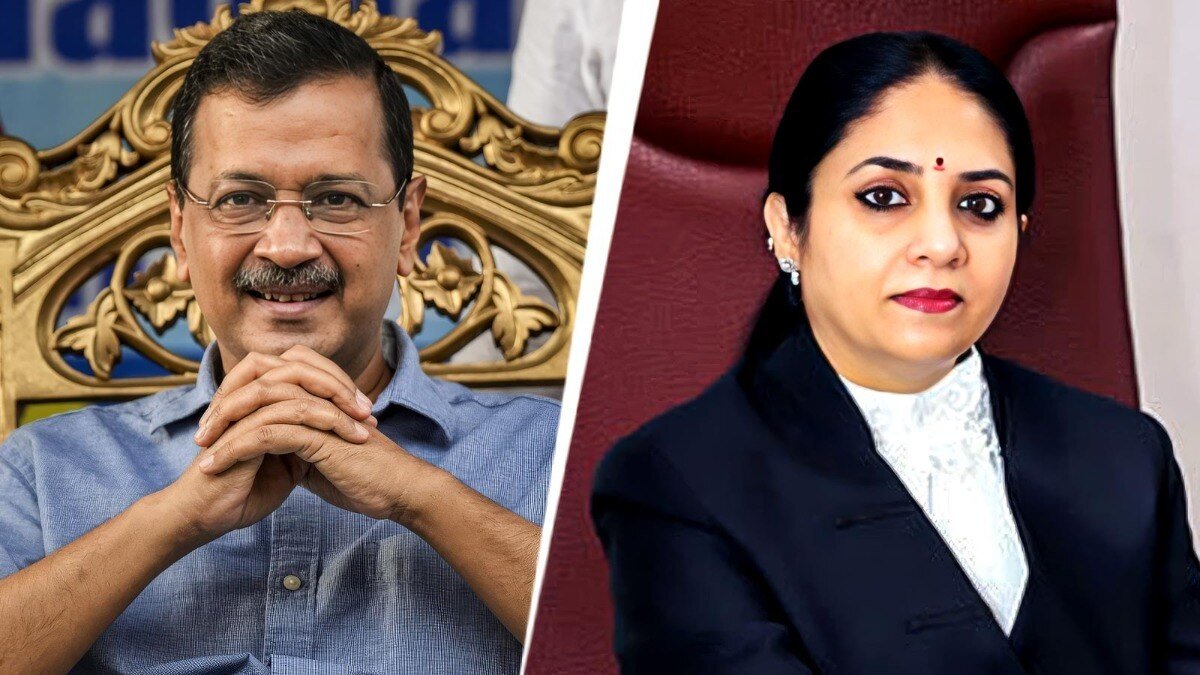
A major constitutional confrontation appears to be unfolding between the judiciary and the Aam Aadmi Party (AAP) after the Delhi High Court initiated criminal contempt proceedings against former Delhi Chief Minister Arvind Kejriwal and several senior party leaders over remarks directed at Justice Swarana Kanta Sharma.
The case marks one of the most politically sensitive judicial confrontations in recent years because it goes beyond the Delhi excise policy investigation itself. At the center now lies a much larger institutional question:
Where does legitimate political criticism end and criminal contempt of court begin?
Justice Sharma made it clear during proceedings that the issue, in her view, was no longer confined to criticism of a judicial order. Instead, she suggested that certain remarks and social media campaigns amounted to attempts to damage public confidence in the judiciary itself.
The court initiated contempt proceedings against:
- Arvind Kejriwal
- Manish Sisodia
- Sanjay Singh
- Saurabh Bharadwaj
- Durgesh Pathak
The developments significantly intensify the already bitter political and legal battle surrounding the Delhi excise policy case.
Why the Contempt Proceedings Matter
The contempt proceedings are important because courts in India generally exercise contempt powers cautiously, especially in politically charged matters.
Criminal contempt broadly involves actions that:
- Lower the authority of courts
- Interfere with judicial proceedings
- Undermine public confidence in the judiciary
- Obstruct the administration of justice
Justice Sharma indicated that the alleged conduct crossed the line from fair criticism into a coordinated attempt to vilify the court.
“When the institution is put on trial, it becomes the duty of the judge to ensure that the court is not governed by such allegations,” she observed during the hearing.
The remarks suggest the court views the Controversy not merely as criticism of an individual judge but as a broader institutional issue affecting judicial credibility.
The Background: Delhi Excise Policy Case
The contempt proceedings emerge from the politically explosive Delhi excise policy case, which has dominated Indian Politics for months.
The case revolves around allegations linked to the now-scrapped Delhi liquor policy introduced by the AAP government.
Central agencies, including the Central Bureau of Investigation (CBI) and the Enforcement Directorate (ED), alleged irregularities in the policy’s formulation and implementation.
The investigation led to high-profile arrests, including:
- Arvind Kejriwal
- Manish Sisodia
- Several businessmen and intermediaries
The case became politically explosive because Kejriwal was arrested during the 2024 lok Sabha election period, allowing AAP to frame the investigation as politically motivated.
However, in February, a trial court discharged all 23 accused in the case and sharply criticized aspects of the CBI investigation.
The CBI subsequently challenged that discharge order before the Delhi High Court, where Justice Sharma was hearing the matter.
The Recusal Controversy Escalated Tensions
The immediate trigger for the contempt proceedings appears linked to attempts by some AAP leaders to seek Justice Sharma’s recusal from the case.
Kejriwal, Sisodia, and Durgesh Pathak had requested that the judge step aside from hearing the matter, citing concerns about impartiality.
Justice Sharma rejected that plea in April.
Her response was unusually strong.
She warned that politicians cannot be allowed to “sow seeds of mistrust” against judicial institutions and suggested that the recusal application effectively placed the judiciary itself under suspicion.
The situation escalated further after social media posts and videos circulated online questioning the judge’s neutrality.
According to Justice Sharma, some videos had been edited and presented misleadingly, including content linked to a speech she delivered at a law college that was allegedly portrayed online as a political event connected to the BJP.
The Judiciary’s Concern: Social Media Campaigns Against Judges
One of the most significant aspects of the case is the judiciary’s growing concern over social media campaigns targeting judges.
Justice Sharma directly addressed this issue during the hearing, warning that judicial restraint should not be mistaken for institutional helplessness.
“A person cannot be allowed to threaten the judiciary just because judges have no way to respond to social media campaigns,” she said.
The comments reflect a wider anxiety within the Indian Judiciary regarding:
- Online vilification campaigns
- Selective video editing
- Political pressure through social media
- Erosion of public trust in courts
As political discourse increasingly shifts online, courts appear more willing to intervene when judges believe campaigns are aimed at delegitimizing judicial institutions.
| Key Issue in the Contempt Case | Why It Matters |
|---|---|
| Remarks against Justice Sharma | Raises questions about judicial criticism limits |
| Social media campaigns | Concerns over online pressure on judiciary |
| Recusal request | Triggered debate over judicial impartiality |
| Excise policy investigation | Major political controversy involving AAP |
| Criminal contempt proceedings | Potential legal and political consequences |
The Thin Line Between Criticism and Contempt
The controversy also revives a longstanding constitutional debate in India:
How far can public criticism of judges go before it becomes contempt of court?
India’s contempt laws have often generated debate because they attempt to balance two competing democratic principles:
- Freedom of speech
- Protection of judicial authority
Supporters of strong contempt powers argue that courts lack political or media machinery to defend themselves against attacks, making legal protections necessary to preserve public confidence.
Critics, however, sometimes argue that broad contempt powers risk discouraging legitimate scrutiny of judicial conduct.
Justice Sharma attempted to address that distinction directly.
She clarified that her order should not be interpreted as opposing fair criticism or freedom of speech, but stressed that a “thin line” separates criticism from vilification and coordinated attacks on judicial credibility.
The Political Stakes Are Extremely High
The case carries major political implications because it involves some of the AAP’s most senior leaders at a time when the party is already locked in legal and political confrontation with central agencies.
For AAP, the excise policy investigation has become central to its political narrative of alleged political targeting by the BJP-led central government.
The contempt proceedings now add another layer of institutional conflict.
If the matter escalates further, it could deepen political polarization around:
- Judicial independence
- Political speech
- Investigative agencies
- Institutional accountability
The optics are particularly sensitive because the proceedings involve criticism directed at a sitting High Court judge.
Why Justice Sharma Transferred the Main Case
In a significant move, Justice Sharma transferred the underlying excise policy matter to another bench.
She stated that the transfer was intended to avoid any perception that the contempt proceedings might influence her handling of the original case.
This is an important institutional detail.
By separating the contempt issue from the excise policy proceedings, the court appears to be attempting to avoid accusations of personal bias or retaliation.
At the same time, Justice Sharma reaffirmed her rejection of the recusal demand itself.
The transfer therefore does not signal acceptance of the allegations against her, but rather an effort to preserve institutional neutrality.
The Case Reflects a Larger Institutional Trend
The controversy reflects a broader trend in modern politics where courts increasingly find themselves drawn into intense public and partisan battles.
In the social media era, judicial proceedings no longer remain confined to courtrooms.
Political parties, supporters, influencers, and online networks rapidly shape public narratives around judges and court decisions.
This creates new pressures on judicial institutions that were not designed for constant public political confrontation.
The Delhi High Court’s response suggests that sections of the judiciary are becoming increasingly concerned about preserving institutional legitimacy in an era of digital political warfare.
The Legal Questions Ahead
The contempt proceedings are still at an early stage, but several key legal questions are likely to emerge:
- Whether the remarks constitute fair criticism or contempt
- Whether social media amplification changes legal interpretation
- How courts balance free speech with institutional protection
- Whether political speech receives wider constitutional protection
The outcome may have wider implications beyond the AAP case itself.
It could shape how future political criticism of judges is treated in India’s increasingly polarized political Environment.
Conclusion: A Clash Between Political Speech and Judicial Authority
The Delhi High Court’s decision to initiate contempt proceedings against Arvind Kejriwal and other senior AAP leaders has transformed an already controversial excise policy case into a much broader constitutional confrontation.
At its core, the dispute is no longer just about the liquor policy investigation.
It is now about the relationship between political criticism, social media campaigns, judicial independence, and institutional authority in modern India.
Justice Swarana Kanta Sharma’s remarks reveal deep judicial concern over attempts to undermine public trust in courts through coordinated online narratives and political attacks.
Meanwhile, the case is likely to intensify political debate over whether contempt laws sufficiently protect judicial institutions or risk limiting democratic criticism.
As the proceedings move forward, the case could become one of the most closely watched legal-political battles involving the judiciary and opposition politics in recent years.
And in an era where politics increasingly plays out online as much as in courtrooms or legislatures, its implications may extend far beyond this single case.
For breaking news and live news updates, like us on Facebook or follow us on Twitter and Instagram. Read more on Latest India on thefoxdaily.com.






COMMENTS 0