- What Makes the Palk Strait So Challenging?
- The Record-Breaking Swim: A Timeline
- Breaking the Previous Record
- A Unique Insight: The Science Behind Young Endurance Athletes
- Why This Achievement Matters Beyond Sports
- The Role of Preparation and Support
- Comparison: Pool Swimming vs Open-Water Swimming
- What’s Next for Ishank Singh?
- Conclusion: A Historic Swim That Redefines Possibility
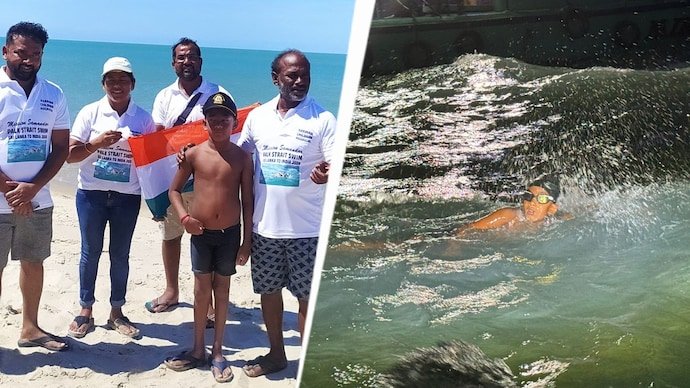
In a remarkable display of endurance and determination, 7-year-old Ishank Singh from Ranchi has become the youngest swimmer to cross the Palk Strait, completing the challenging 29-kilometre stretch between India and Sri Lanka in just under 10 hours. The achievement is not only a personal milestone but also a significant moment in India’s growing culture of open-water swimming.
Starting before sunrise and finishing against the odds, Ishank’s swim across one of South Asia’s most demanding waterways has captured national attention and raised an important question: how is such a young athlete able to conquer a challenge that tests even seasoned professionals?
What Makes the Palk Strait So Challenging?
The Palk Strait, located between India and Sri Lanka, is considered one of the toughest open-water swimming routes in the world. Unlike controlled pool environments, swimmers here face constantly changing natural conditions.
Key challenges include:
- Strong and shifting currents that can push swimmers off course
- Unpredictable weather patterns, especially during early morning hours
- Choppy sea waves that disrupt rhythm and breathing
- Marine conditions that demand constant alertness and support monitoring
Completing this stretch is widely regarded as an elite endurance accomplishment making Ishank’s success at such a young age even more extraordinary.
The Record-Breaking Swim: A Timeline
| Milestone | Details |
|---|---|
| Start Time | 4:00 AM |
| Route | Talaimannar (Sri Lanka) to Dhanushkodi (India) |
| Distance | Approximately 29 km |
| Finish Time | 1:50 PM |
| Total Duration | 9 hours 50 minutes |
Swimming continuously for nearly 10 hours requires not just physical strength but exceptional mental resilience especially for a child.
Breaking the Previous Record
Before Ishank Singh’s achievement, the record for the youngest swimmer to cross the Palk Strait was held by a 10-year-old swimmer WHO completed the journey in over 10 hours.
By finishing faster and at a significantly younger age, Ishank has:
- Set a new benchmark in open-water endurance
- Redefined expectations for young Athletes
- Placed India in the global spotlight for youth sports achievements
A Unique Insight: The Science Behind Young Endurance Athletes
What makes Ishank’s achievement particularly fascinating is the growing evidence that young athletes, when properly trained, can excel in endurance sports.
Key factors include:
- Higher adaptability to physical stress when training begins early
- Strong mental focus developed through structured routines
- Efficient recovery compared to older athletes
However, such achievements also depend heavily on:
- Professional coaching
- Strict safety protocols
- Parental and institutional support
This combination not just RAW talent is what enables record-breaking performances at a young age.
Why This Achievement Matters Beyond Sports
1. Inspiration for Young Athletes
Ishank’s success sends a powerful message: age is not always a limitation when discipline and training align.
2. Growth of Open-Water Swimming in India
India has traditionally focused on Cricket and athletics, but achievements like this highlight the rising interest in endurance sports.
3. National Recognition and Identity
Moments like these create shared pride, especially when young achievers represent emerging regions in sports.
The Role of Preparation and Support
Behind every endurance feat lies extensive preparation.
Though not always visible, such preparation typically includes:
- Long-distance training in varied water conditions
- Nutritional planning for sustained energy
- Safety teams monitoring the swimmer throughout the journey
- Weather and route analysis before the attempt
In open-water swimming, success is rarely accidental it is engineered through planning and discipline.
Comparison: Pool Swimming vs Open-Water Swimming
| Aspect | Pool Swimming | Open-Water Swimming |
|---|---|---|
| Environment | Controlled | Unpredictable |
| Distance | Short, measured laps | Long, continuous stretches |
| Conditions | Stable | Currents, waves, weather |
| Skill Requirement | Technique-focused | Technique + survival + navigation |
This comparison highlights why crossing the Palk Strait is far more demanding than traditional competitive swimming.
What’s Next for Ishank Singh?
With this historic achievement, expectations will naturally rise.
Possible future paths include:
- Attempting other international open-water challenges
- Participating in endurance swimming circuits
- Transitioning into competitive global events over time
However, experts often emphasize the importance of balanced growth ensuring that young athletes continue to develop both physically and mentally.
Conclusion: A Historic Swim That Redefines Possibility
The Palk Strait swim record set by Ishank Singh is more than just a statistic it’s a story of discipline, courage, and breaking perceived limits.
In completing a 29-kilometre open-sea swim in under 10 hours at the age of seven, he has not only etched his name in record books but also expanded the boundaries of what young athletes can achieve.
As India’s sporting landscape continues to evolve, achievements like this serve as powerful reminders: greatness doesn’t always wait for adulthood it can begin remarkably early.
And sometimes, it starts with a single stroke in open water.
For breaking news and live news updates, like us on Facebook or follow us on Twitter and Instagram. Read more on Latest India on thefoxdaily.com.






COMMENTS 0