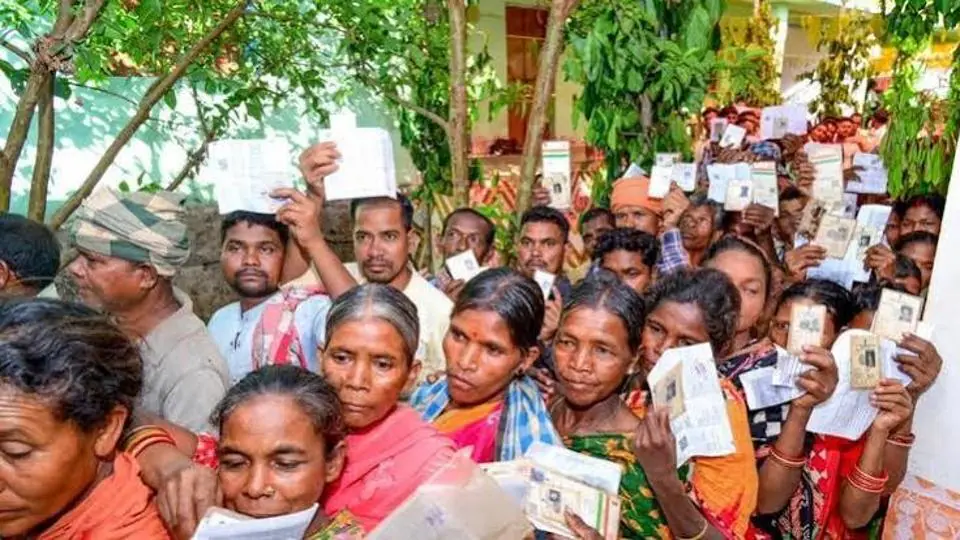
A political dispute has emerged in Odisha over the credibility of the Special Intensive Revision (SIR) of electoral rolls, with the opposition Biju Janata Dal (BJD) alleging that residents of villages along the Odisha-Andhra Pradesh border continue to possess voter identity cards issued by both states.
The controversy centres on Kotia in Koraput district and Jumdang village in Malkangiri district, where BJD leaders have questioned how individuals could remain registered as voters in two states despite the completion of the electoral roll revision exercise.
The party has demanded an explanation from Odisha’s election authorities and called for coordination with Andhra Pradesh to identify and address alleged duplicate registrations. The issue has also drawn attention from the district administration after some residents of Kotia reportedly crossed into Andhra Pradesh to participate in the neighbouring state’s recent panchayat elections.
Koraput Collector Manoj Satyawan Mahajan said around 10% of Kotia voters had voted in Andhra Pradesh. He also rejected a 40% polling figure cited by Andhra Pradesh officials, explaining that the percentage was calculated using turnout at a polling booth serving several villages, including settlements across the state border.
BJD questions effectiveness of Special Intensive Revision
Senior BJD leaders Devi Prasad Mishra and Bijay Nayak raised the issue at a press conference on Wednesday, questioning whether the Special Intensive Revision had successfully removed duplicate voter registrations in the border areas.
The leaders specifically referred to residents of Kotia in Koraput district and Jumdang in Malkangiri district. They alleged that people in these villages continued to hold voter identity cards issued by both Odisha and Andhra Pradesh, raising questions about the accuracy of electoral records maintained by the two states.
The BJD argued that the existence of such registrations would undermine confidence in the revision exercise. The party sought clarification on how alleged duplicate entries could remain in the electoral system after authorities had undertaken the process of reviewing voter lists.
The dispute is particularly sensitive because border villages can have complex administrative and electoral arrangements. Residents may interact with institutions and services across state boundaries, but electoral registration must follow the legal requirements governing voter eligibility.
By raising the matter publicly, the BJD has turned the alleged dual voter ID issue into a broader question about the monitoring and verification of electoral rolls in areas where state boundaries are disputed or closely connected to local communities.
Why dual voter registration is a concern under electoral rules
Indian electoral law does not permit an individual to be registered as a voter in more than one constituency at the same time. A person cannot legally maintain multiple active electoral registrations simply because they have connections with different locations.
The issue is important because electoral rolls form the basis of voter eligibility and the conduct of elections. Duplicate registrations can create difficulties for election authorities when verifying identities, updating records and ensuring that each eligible elector is correctly listed.
However, possessing voter identity cards issued by two states and actually appearing on two active electoral rolls are not necessarily identical situations. Authorities need to verify the underlying electoral records, establish whether duplicate registrations remain active and determine whether any electoral rules have been violated.
This distinction is important in the Odisha-Andhra Pradesh dispute. The BJD has alleged that dual registrations continue to exist, but the allegations require verification by the relevant election authorities before individual cases can be treated as confirmed violations.
BJD demands details from Andhra Pradesh government
Senior BJD leader Devi Prasad Mishra said the law did not allow an individual to remain registered as a voter in two places. He demanded that Odisha’s Chief Electoral Officer seek information from the Andhra Pradesh government about the number of Odisha residents who had voted in elections in the neighbouring state.
Mishra also questioned why Andhra Pradesh had not removed duplicate and allegedly ineligible voters from its electoral rolls despite the concerns raised over the border villages.
The demand places responsibility on election authorities in both states to examine the records and establish whether residents have been registered in more than one location.
Electoral roll management requires coordination when voters move between locations or when duplicate entries are identified. A clear verification process can help authorities determine which registration should remain active and whether further legal action is necessary.
The BJD’s demand also reflects a concern that a revision conducted by one state may not resolve duplication if corresponding records in another state are not examined and updated.
Koraput Collector says around 10% of Kotia voters crossed into Andhra Pradesh
Koraput Collector Manoj Satyawan Mahajan confirmed that some residents of Kotia had crossed into Andhra Pradesh to vote in the neighbouring state’s panchayat elections held last week.
However, he said the number of Kotia voters who participated was around 10%, disputing the 40% polling figure cited by Andhra Pradesh officials.
According to Mahajan, the higher percentage was based on the combined turnout at a polling booth that catered to several villages, including settlements located in Andhra Pradesh. As a result, the overall turnout at that booth could not be attributed exclusively to voters from Kotia.
He said the district administration had information that residents from four to five villages had travelled to Andhra Pradesh to cast their votes. However, the population of those villages was smaller than what the reported turnout percentage might suggest if it were treated as a figure exclusively representing Kotia residents.
The collector’s explanation highlights the difficulty of interpreting polling figures when a single booth serves voters from multiple villages across a state boundary.
While the reported participation of Kotia residents confirms that some voters crossed into Andhra Pradesh, the administration has disputed the suggestion that 40% of Kotia’s voters took part in the neighbouring state’s elections.
Odisha administration says it prevented polling booth inside Kotia
Mahajan said the district administration had two main objectives during the Andhra Pradesh panchayat elections: preventing the neighbouring state from establishing a polling booth inside Kotia and discouraging residents of the Odisha village from participating in elections conducted by Andhra Pradesh.
He said the administration had succeeded in preventing a polling booth from being established inside Kotia. However, a few residents still travelled across the border to vote.
The collector explained that the polling booth in question also served several villages in Andhra Pradesh. This was why the administration rejected the claim that the 40% turnout figure represented Kotia residents alone.
The distinction between preventing a polling booth from being set up inside Odisha and stopping residents from travelling across the border is central to the administration’s explanation.
Although the district authorities said they achieved their objective of preventing polling arrangements on Odisha soil, they acknowledged that some villagers still participated in the neighbouring state’s elections.
The episode illustrates the practical challenges of managing elections in border settlements, where polling arrangements, voter identities and administrative boundaries can become politically sensitive.
Odisha law minister promises action against people with dual voter IDs
Odisha Law Minister Prithiviraj Harichandan said the state government would examine the allegations and take steps to identify people who possess dual voter identity cards.
Harichandan said the Revenue Department needed to identify individuals holding voter IDs from both states and initiate legal action where violations were established.
He also referred to the district administration’s efforts to prevent Andhra Pradesh from setting up polling booths inside Kotia. Despite those efforts, he acknowledged that some residents had crossed into Andhra Pradesh and voted in its panchayat elections.
The minister’s remarks indicate that the state government intends to examine the issue through administrative verification and possible legal action. However, identifying duplicate voter records and establishing individual responsibility will require examination of the relevant electoral documents.
The government will also need to distinguish between possession of multiple identity documents and actual violations involving active voter registrations. Any action would need to follow the applicable electoral and legal procedures.
Why Kotia remains sensitive in the Odisha-Andhra Pradesh border dispute
Kotia, located in Odisha’s Koraput district, has long been associated with administrative and territorial disagreements between Odisha and Andhra Pradesh. The region consists of villages near the interstate boundary, making it an important area in the wider dispute over administrative control and access to government services.
Both states have sought to maintain their presence and influence in the border region. Questions involving public services, development programmes and electoral participation can therefore carry political significance beyond routine administration.
Election-related disputes are particularly sensitive because voting is closely connected to questions of citizenship rights, administrative jurisdiction and the authority of elected institutions.
For Odisha, preventing polling arrangements from being established within Kotia is part of maintaining its administrative position in the area. The reported participation of some residents in Andhra Pradesh’s elections has therefore attracted attention from political leaders and state officials.
The current controversy adds another dimension to the existing border-related tensions. The alleged presence of voter registrations from both states raises questions about how electoral records are maintained and whether the two administrations are sharing sufficient information to prevent duplication.
How duplicate voter IDs could affect electoral roll accuracy
Accurate electoral rolls are essential for conducting credible elections. They help ensure that eligible citizens can exercise their voting rights while preventing problems associated with incorrect, outdated or duplicate entries.
In border areas, maintaining accurate records can be more complicated when residents have connections with communities on both sides of a state boundary. Changes in residence, local administrative arrangements and overlapping documentation can create situations that require careful verification.
There are several important steps election authorities may need to consider when investigating allegations of duplicate registrations:
- Checking electoral records: Authorities need to establish whether the same individuals appear on active voter lists in both states.
- Verifying voter details: Personal information and identity records must be examined to determine whether entries refer to the same individual.
- Coordinating between states: Odisha and Andhra Pradesh authorities may need to exchange relevant information to identify and resolve duplicate registrations.
- Updating electoral rolls: Confirmed duplicate entries should be addressed through the procedures established under electoral law.
- Examining individual cases: Any suspected violation must be assessed on the basis of verified records rather than assumptions about all residents of a village.
These steps are important because the objective should be to maintain accurate electoral records without unfairly affecting the voting rights of eligible residents.
What happens next in the Odisha-Andhra Pradesh voter ID controversy?
The immediate question is whether the allegations raised by the BJD will lead to a formal examination of electoral records in Kotia, Jumdang and other villages along the interstate boundary.
The party has demanded that Odisha’s Chief Electoral Officer obtain information from Andhra Pradesh about Odisha residents who voted in the neighbouring state’s elections. Such information could help authorities establish the extent of the alleged duplication and identify cases requiring further investigation.
The state government has also indicated that the Revenue Department should identify individuals holding dual voter identity cards and consider legal action where appropriate.
Meanwhile, the Koraput district administration has clarified that the reported 40% polling figure should not be interpreted as the turnout among Kotia residents alone. Its estimate that around 10% of Kotia voters crossed into Andhra Pradesh provides a different account of participation in the neighbouring state’s panchayat elections.
The controversy has therefore raised two connected but separate questions: whether residents remain registered as voters in both states and how many Kotia residents actually participated in Andhra Pradesh’s recent elections.
Until election authorities complete the verification process, the allegations of widespread dual registration should be treated as claims requiring investigation. The findings will be important not only for resolving the immediate political dispute but also for ensuring that electoral records in Odisha’s border villages accurately reflect voter eligibility and legal requirements.
For now, the BJD’s challenge has put the effectiveness of the SIR exercise under scrutiny, while the Odisha government faces pressure to clarify the status of alleged duplicate voter IDs and coordinate with Andhra Pradesh to address the issue.
For breaking news and live news updates, like us on Facebook or follow us on Twitter and Instagram. Read more on Latest India on thefoxdaily.com.






COMMENTS 0