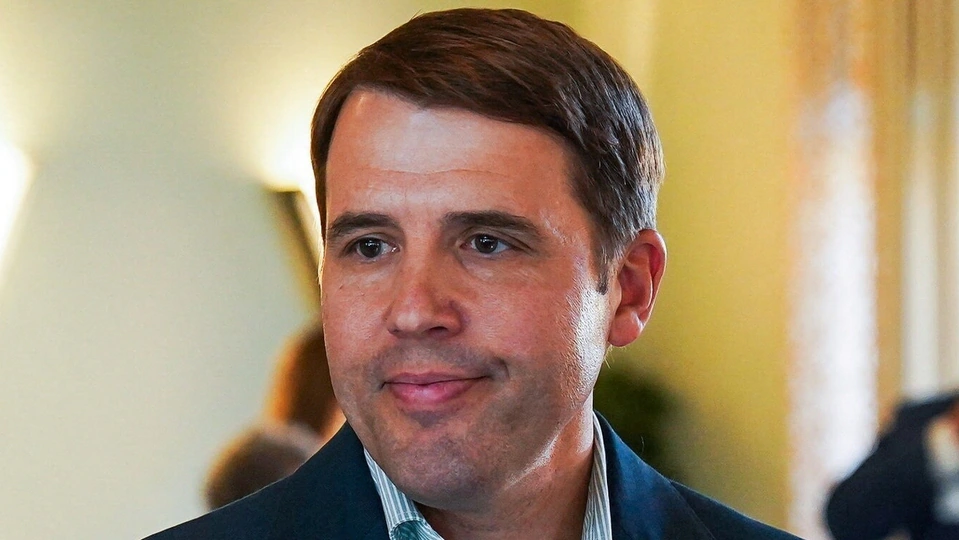
Chris Pappas, a Democratic member of the US House of Representatives, is seeking to move to the Senate in the 2026 midterm elections. His campaign has centred on the cost of living, access to healthcare, energy prices, workers’ economic security and government accountability.
Pappas is competing against Republican candidate John Sununu, a former US senator, and Constitution Party candidate Edmond Laplante. The race follows the retirement of Democratic Senator Jeanne Shaheen, creating an open Senate seat in New Hampshire.
Pappas won the Democratic primary on September 8, defeating medical scientist Karishma Manzur. Since securing the nomination, he has continued to emphasise issues including prescription drug prices, abortion access, LGBTQ+ protections, immigration, trade policy and the cost of energy.
He made history in 2018 when he became New Hampshire’s first openly gay member of Congress. Since then, he has been elected to the House four times, representing the state’s 1st Congressional District.
His Senate campaign builds on his experience in state and federal government, as well as his background in his family’s restaurant business. The election will test whether his emphasis on household expenses, healthcare and economic policy resonates with voters across New Hampshire.
Chris Pappas: Early Life, Education and Family Background
Chris Pappas was born on June 4, 1980, in Manchester, New Hampshire. He is a descendant of Greek immigrants, with his paternal great-grandfather, Arthur Pappas, emigrating from Greece to the United States in the early 20th century.
His family established the Puritan Backroom restaurant in Manchester in 1917. Before entering politics, Pappas worked in the family business, gaining experience in the restaurant industry and the challenges associated with running a local enterprise.
He attended Manchester public schools and graduated from Manchester Central High School in 1998. He subsequently studied government at Harvard University, earning a bachelor’s degree. During his time at Harvard, he also wrote for the university’s student newspaper, The Harvard Crimson.
Pappas lives in Manchester with his husband, Vann Bentley, and their cat, Dorothy. His family background and connection to a long-running local business form part of the personal story behind his political career.
Chris Pappas’ Political Career
Pappas entered elected office in 2003, when he won a seat in the New Hampshire House of Representatives. He served in the state legislature until 2007, beginning a political career that later took him through county and state-level government before he entered Congress.
From 2007 to 2011, he served as Hillsborough County treasurer. He later became a member of the New Hampshire Executive Council, serving from 2013 to 2019.
In 2018, Pappas won election to the US House of Representatives to represent New Hampshire’s 1st Congressional District. His victory made him the state’s first openly gay member of Congress. He was subsequently elected to the House four times.
His experience across different levels of government has given him a platform to discuss federal spending, healthcare, economic policy and the effects of national decisions on New Hampshire residents. His Senate campaign seeks to extend that work to a chamber that plays a central role in legislation, federal appointments and oversight of the executive branch.
Healthcare, Affordability and Economic Security: Pappas’ Main Campaign Priorities
Affordability and healthcare are central to Pappas’ Senate campaign. He has focused on the financial pressure facing households, including rising energy costs, prescription drug expenses and the cost of obtaining medical care.
Pappas supports lowering prescription drug prices and expanding access to affordable healthcare. He has also advocated protecting Social Security and Medicare, two federal programmes that provide financial and healthcare support to older Americans and eligible beneficiaries.
Energy costs are another part of his economic platform. Pappas has proposed suspending the federal gas tax as a way to ease fuel expenses for consumers. He has also raised concerns about the cost of heating, particularly for families facing financial pressure from household energy bills.
These proposals reflect his broader argument that federal policy should reduce the financial burden on working families. However, the practical effects of any tax suspension or spending measure would depend on its design, duration and implementation.
Pappas has also opposed President Donald Trump’s One Big Beautiful Bill Act, which included tax cuts and changes to Medicaid and other federal spending programmes. His vote against the legislation placed him at odds with the administration’s approach to taxation and federal spending.
Healthcare is likely to remain a major point of discussion in the campaign because federal decisions about insurance coverage, public healthcare programmes and prescription drug costs can have direct consequences for household budgets. Pappas’ stated priorities centre on maintaining access to care while addressing the costs borne by patients.
Abortion Rights, IVF and LGBTQ+ Protections
Pappas has supported protecting access to abortion and strengthening legal protections for LGBTQ+ people. These positions form another part of his political record and reflect his support for legislation addressing reproductive healthcare and equal rights.
In Congress, he helped advance the Women’s Health Protection Act, which seeks to protect access to abortion. He has also supported measures to safeguard access to in vitro fertilisation, commonly known as IVF, a fertility treatment used by people seeking to have children.
His record also includes support for the Respect for Marriage Act, which established federal protections for same-sex and interracial marriages. Pappas has backed measures intended to preserve legal recognition and protections for these marriages.
As New Hampshire’s first openly gay member of Congress, Pappas has also advocated for LGBTQ+ rights more broadly. His campaign has highlighted the importance of protecting existing rights and maintaining access to support services for LGBTQ+ people.
These issues distinguish his positions on social policy and healthcare from those of political opponents who may take different approaches to abortion, marriage protections and federal civil rights legislation.
Immigration Policy and Border Security
Pappas supports immigration reforms that provide opportunities to people who follow legal procedures. He has argued that legal immigration benefits the United States, saying that “legal immigration helps make our nation stronger”.
He has criticised the Trump administration’s immigration policies and called for stronger regulation of Immigration and Customs Enforcement, or ICE. His position reflects concerns about how federal immigration enforcement operates and the oversight applied to the agency.
At the same time, Pappas has supported strengthening border security. He has advocated improving border infrastructure and technology, presenting security measures and reforms to legal immigration as issues that can be addressed together.
His position therefore combines support for legal immigration pathways with calls for improved border management and greater oversight of enforcement agencies. Immigration remains a politically contested issue, and the debate involves questions about national security, enforcement practices, legal procedures and the treatment of migrants.
Jobs, Manufacturing and Support for Small Businesses
Economic development is another important part of Pappas’ platform. He has emphasised job creation through support for small businesses, domestic manufacturing and workforce development.
Pappas backed the CHIPS and Science Act, legislation designed to strengthen semiconductor manufacturing in the United States and support research and development. The legislation reflects a broader federal effort to expand domestic capacity in a strategically important industry.
He has also supported apprenticeships and job-training programmes intended to help workers develop skills and access employment opportunities. These initiatives are aimed at connecting people with jobs while helping employers find workers with the necessary training.
Small businesses are particularly relevant to Pappas because of his experience working in his family’s restaurant business. He has advocated tax relief for small businesses and working families, arguing that economic policy should help businesses operate and allow households to manage everyday expenses.
His broader economic agenda links job creation with domestic production, workforce preparation and the financial conditions facing employers and employees. The effectiveness of individual proposals would depend on how they are funded, implemented and received by businesses and workers.
Why Chris Pappas Opposes Trump’s Tariffs
Pappas has strongly opposed President Trump’s tariff policies, arguing that import duties can increase costs for consumers and small businesses. His criticism centres on the possibility that businesses facing higher import costs may pass some of those expenses on to customers.
He introduced the Small Business RELIEF Act, a proposal intended to exempt goods imported by small businesses from the tariffs covered by the measure and refund tariffs already paid. The proposal reflects his position that smaller companies should not face the same financial pressures as larger businesses when dealing with trade-related costs.
Pappas has also called for removing tariffs on food and everyday essentials. He argues that trade policy should protect American businesses without adding to the cost of living for households.
Tariffs are taxes imposed on imported goods, and their economic effects can vary depending on the products affected, the countries involved and how businesses respond. Supporters may argue that tariffs protect domestic industries or strengthen negotiating leverage, while critics point to the possibility of higher prices and increased costs for companies that rely on imported goods.
Pappas’ opposition places him on the critical side of this debate. His proposed exemptions and refunds are intended to reduce the burden on small businesses, although their eventual effects would depend on the legislation’s scope and whether it became law.
Chris Pappas’ Position on the Iran War
Pappas opposed President Trump’s decision to launch military operations against Iran without congressional approval. In March 2026, he voted for a war powers resolution intended to restrict the president’s authority to conduct military operations against the country.
He argued that military action without clear objectives could draw the United States into another prolonged conflict. He also maintained that Congress should have a role in authorising military operations, reflecting the debate over the balance of war-making powers between the executive and legislative branches.
Pappas has connected the conflict to concerns about rising energy prices. Military tensions in the region can create uncertainty in energy markets, although the effect on fuel and household costs depends on broader market conditions as well as developments in the conflict.
His opposition to military action without congressional approval does not mean he has dismissed concerns about Iran’s activities. Pappas has supported efforts to counter Iran’s nuclear programme and terrorism, describing Iran as “a terrorist state that has long fuelled death and destruction across the globe”.
His position combines support for addressing security threats with the argument that decisions to undertake military operations should have clear objectives and appropriate congressional involvement.
Artificial Intelligence, Technology Companies and Data Centres
Pappas has called for stronger regulation of artificial intelligence and major technology companies. He believes Congress should establish clear rules for AI developers and ensure that systems meet appropriate safety standards before being released to the public.
Artificial intelligence has become an increasingly important policy issue as companies deploy automated systems across business, education, communications and other sectors. Debates over regulation include questions about safety, accountability, consumer protection and the responsibilities of technology companies.
Pappas has also raised concerns about the expansion of data centres. These facilities provide the computing infrastructure needed for cloud services and AI applications, but they can require substantial amounts of electricity and place demands on local infrastructure.
He has argued that local communities should have a meaningful role in discussions about proposed data-centre developments and their potential effects on electricity costs. The issue connects national technology policy with local planning, energy infrastructure and household expenses.
His position suggests that technology development should be accompanied by clear standards and consideration of its impact on the communities where supporting infrastructure is built. Questions about electricity demand, grid capacity and development costs are likely to remain relevant as demand for computing power grows.
Controversies Surrounding Chris Pappas
Pappas has faced political criticism over his personal relationship with Vann Bentley, who worked as a lobbyist for Amazon, and over donations associated with the American Israel Public Affairs Committee, commonly known as AIPAC.
The issues have featured in political debate about transparency, campaign finance and the influence of lobbying organisations. The allegations and criticism should be distinguished from any established finding of wrongdoing.
Questions About His Relationship With an Amazon Lobbyist
In 2020, Republican Matt Mowers questioned Pappas about his relationship with Bentley, who was working as an Amazon lobbyist at the time. Mowers argued that Pappas had voted on legislation on which Amazon had lobbied without publicly disclosing the relationship.
Pappas rejected the allegations, calling them “outrageous”. He later confirmed that he was dating Bentley, and the couple married in 2023.
The issue resurfaced during Pappas’ 2026 Senate campaign, when Republicans again questioned whether his relationship with an Amazon lobbyist had influenced his votes. According to the supplied report, PolitiFact assessed the Republican claims as “mostly false”.
The controversy illustrates how a candidate’s personal relationships can become part of campaign scrutiny when they intersect with lobbying and legislative decisions. However, questions raised by political opponents do not, by themselves, establish that a lawmaker acted improperly.
AIPAC Donations and Campaign Finance Questions
Pappas also faced criticism in 2026 over financial support linked to AIPAC, a pro-Israel lobbying group. Reports indicated that he had received AIPAC-related support during his political career.
His Democratic primary opponent, Karishma Manzur, questioned whether accepting such support was consistent with Pappas’ position on reducing the influence of special-interest groups in politics.
Pappas defended his position by saying he opposed efforts by any political action committee to give special-interest groups excessive influence over the political process. The debate centred on the relationship between campaign funding, lobbying and a candidate’s stated commitment to political reform.
The existence of a donation or political expenditure does not, on its own, establish that a lawmaker changed a vote or policy position in response. Assessing such claims requires evidence about the funding, the relevant decisions and any established connection between them.
Chris Pappas’ Net Worth and Family Business
Several US media reports have estimated Pappas’ net worth at approximately $6 million as of 2026. However, the supplied report notes that there is no official confirmation of that figure, so it should be treated as an estimate rather than a verified total.
His reported wealth is associated primarily with his interest in his family’s restaurant business in Manchester, alongside real estate and investments. The Puritan Backroom, established by his family in 1917, has been a longstanding part of his personal and professional background.
Financial estimates for public figures can vary because asset values, investment holdings, liabilities and ownership interests may not be fully reflected in publicly available information. Without a confirmed accounting of those factors, a reported net worth cannot be treated as an exact figure.
Pappas’ experience in the family business also forms part of his political identity. He has used that background to discuss the challenges faced by small businesses, including operating costs, trade policy and the financial pressures affecting employers and customers.
What the 2026 New Hampshire Senate Race Means for Pappas
The 2026 Senate race represents a major step in Pappas’ political career after years in state government and the US House of Representatives. He is seeking to move from representing New Hampshire’s 1st Congressional District to serving the state in the Senate.
His campaign has placed affordability and healthcare at the centre of its message, while also addressing energy prices, reproductive rights, LGBTQ+ protections, immigration, manufacturing, tariffs and technology regulation.
The contest against Republican John Sununu and Constitution Party candidate Edmond Laplante follows Jeanne Shaheen’s retirement and has created an open-seat race. Each candidate brings a different political background and set of positions to the contest.
For Pappas, the challenge is to present his record in Congress and his policy proposals to voters concerned about household costs, access to healthcare, economic opportunity and the role of the federal government.
His record includes support for lowering prescription drug costs, protecting Medicare and Social Security, advancing reproductive healthcare protections and strengthening domestic manufacturing. It also includes opposition to Trump’s tariff policies and military action against Iran without congressional approval.
At the same time, controversies involving lobbying relationships and campaign contributions have raised questions that have featured in political debate. Pappas has defended his record, while critics have challenged aspects of his relationships with political and business interests.
The Senate campaign brings these policy positions, his congressional record and the questions surrounding his political career into a single statewide contest. The outcome will determine whether he advances from the House to the Senate, while the campaign itself highlights the issues he considers central to New Hampshire’s future.
For breaking news and live news updates, like us on Facebook or follow us on Twitter and Instagram. Read more on Latest World on thefoxdaily.com.






COMMENTS 0