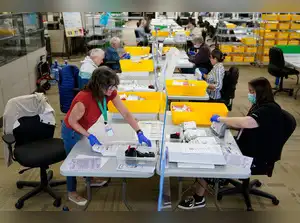
Pre-election voting in the 2026 United States midterm elections has surpassed the total recorded during the previous midterm cycle, with more than 58.5 million ballots cast before Election Day. The milestone indicates substantial participation through Early Voting and mail-in ballot options as Americans prepare to decide the balance of power in Congress.
The available figures cover 47 states and the District of Columbia. They show that the number of ballots cast before Election Day has already exceeded the total recorded during the 2022 midterm elections, marking a notable development in the current electoral cycle.
As Election Day begins, voters across the country can participate through different methods, including casting ballots in person before the official voting day, voting at polling stations on Election Day or using mail-in ballots where permitted. The availability and rules governing these options differ from state to state.
More than one million additional ballots cast compared with 2022
The latest figures show that pre-election voting in 2026 has moved ahead of the corresponding total from the 2022 midterm elections. More than one million additional ballots had been cast before Election Day compared with the previous midterm cycle.
The data was compiled using information from CNN, The Associated Press and Catalist. It covers 47 states and the District of Columbia, although the available figures are not complete for every state.
The reported total is a significant milestone because it shows that early and mail-in voting have already accounted for a substantial share of participation before Election Day. However, the figures remain preliminary and could change as additional state-level information becomes available.
It is also important to distinguish between ballots cast before Election Day and total election turnout. The 58.5 million figure represents votes submitted through early and mail-in options before the main voting day. It does not include all ballots that will be cast by voters who choose to visit polling stations on Election Day.
How can Americans vote in the 2026 midterm elections?
American voters have several ways to participate in the midterm elections. The main options include early in-person voting, voting by mail and casting a ballot at a polling location on Election Day.
However, the availability of these methods and the rules governing them vary across states. The United States does not operate a single nationwide system for early voting and mail-in ballots. Instead, individual states establish their own election procedures, deadlines and eligibility requirements.
1. Early in-person voting
Early in-person voting allows eligible voters to cast their ballots at designated polling locations before Election Day. This option gives people an opportunity to vote without waiting for the official election date.
The dates, operating hours and locations for early voting are determined by state and local election authorities. Some states provide extended early voting periods, while others offer more limited opportunities.
Early voting can help distribute voter participation across several days rather than concentrating the entire process on Election Day. It can also provide greater flexibility for people who have work, family or travel commitments on the official voting date.
2. Voting by mail
Mail-in voting allows eligible voters to receive and return their ballots without visiting a polling station in person. The process is available under different arrangements depending on the state.
Some states allow voters to request a mail ballot, while others operate broader systems in which ballots are automatically sent to eligible registered voters. The requirements for requesting, completing and returning a ballot also differ.
Voters using this option must follow the relevant state instructions, including submission deadlines and any requirements for signatures or ballot envelopes. A ballot that is returned incorrectly or after the applicable deadline may not be counted under the state’s rules.
3. Voting in person on Election Day
Voters who have not already cast a ballot can participate by visiting their designated polling location on Election Day. Polling hours and identification requirements vary depending on state and local regulations.
Election officials oversee the voting process, verify voter eligibility according to applicable rules and ensure that ballots are submitted through the approved system.
Election Day voting remains an important part of the overall process, even in states where large numbers of people have already participated through early voting or mail-in ballots.
Why do early voting rules differ across US states?
Election administration in the United States is decentralised. Federal elections are conducted under a framework that involves federal law, state election laws and local election authorities.
This means that voters in different states may face different procedures for casting their ballots. The length of early voting periods, availability of mail-in voting, ballot-request requirements and return deadlines can vary significantly.
For example, some states provide broad access to mail voting, while others require voters to meet specific conditions or submit a request before receiving a ballot. Similarly, early in-person voting may be available for several weeks in one state but for a shorter period in another.
These differences are important when comparing pre-election voting figures across the country. A higher early-voting total does not necessarily mean that every state has experienced the same increase or that voters have participated in identical ways.
Does higher early voting mean higher voter turnout?
Surpassing the 2022 pre-election ballot total is an important indicator of participation, but it does not by itself establish that overall voter turnout will be higher in 2026.
The final turnout figure will depend on the number of ballots cast before Election Day, the number of people voting on the day itself and the ballots ultimately accepted under state election rules.
Early voting totals also do not reveal which candidates voters supported. They measure participation rather than electoral preference. Even where states report the party registration of voters who have cast ballots, registration information does not establish how those individuals voted.
Consequently, the 58.5 million figure should not be interpreted as evidence that either political party has secured an advantage. The final results will depend on votes cast across all available voting methods and the outcome of the contests in individual states and districts.
Why the 2026 midterm elections matter
The 2026 midterm elections will determine the composition of the US Congress for the remainder of President Donald Trump‘s current term. All 435 seats in the House of Representatives and 35 seats in the Senate are being contested.
The elections are particularly important because control of Congress influences the administration’s ability to advance its legislative agenda. The party holding majorities in the two chambers has significant influence over legislation, federal spending and congressional oversight.
Republicans are seeking to defend their congressional majorities, while Democrats are attempting to gain control of one or both chambers. The results will shape debates over economic policy, taxation, immigration, government spending and other national issues.
Beyond Congress, voters are also participating in gubernatorial and state-level contests across the country. These races will influence political leadership and policy decisions at the state level.
What happens after Election Day voting ends?
Once polling locations close, election officials begin processing and counting ballots according to the procedures established in their respective states. The timing of results can differ because states have different rules for processing early votes, mail-in ballots and ballots cast on Election Day.
Some jurisdictions can begin processing mail ballots before Election Day, while others have restrictions on when that work can start. These differences can affect how quickly initial results become available.
Election officials must also follow procedures for verifying ballots, resolving administrative issues and completing required checks. Close contests may take longer to determine, particularly when the final margins are narrow or when outstanding ballots remain to be processed.
Therefore, early voting figures and initial Election Day results should not be confused with final certified election outcomes.
What does the record pre-election voting figure tell us?
The more than 58.5 million ballots cast before Election Day demonstrate the scale of early participation in the 2026 US midterm elections. By surpassing the 2022 pre-election total, the figures mark a notable development in how Americans are using the voting options available to them.
The milestone also highlights the importance of early in-person voting and mail-in ballots in the modern US electoral process. These methods allow eligible voters to participate before the main voting day, although access and procedures depend on where they live.
However, the available data remains incomplete and does not establish the final turnout or indicate which party is benefiting electorally. The number of ballots cast before Election Day is only one part of the wider voting process.
As voting continues, attention will shift from early participation figures to the final results in congressional, gubernatorial and state-level contests. Those results will determine the political balance in Washington and influence the direction of US policy during the final two years of Trump’s presidency.
For breaking news and live news updates, like us on Facebook or follow us on Twitter and Instagram. Read more on Latest World on thefoxdaily.com.






COMMENTS 0