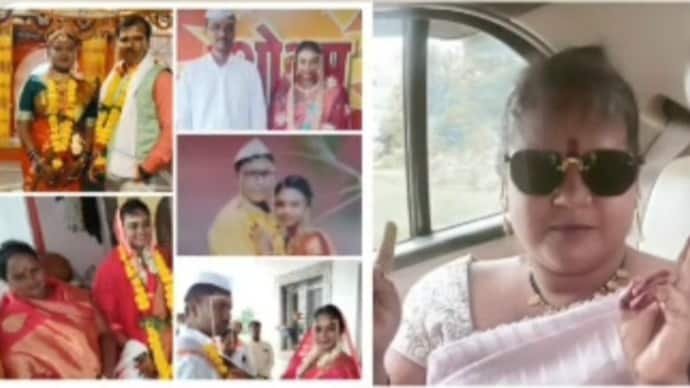
- What Happened: The Beed “Serial Bride” Case
- How the Fake Marriage Racket Works
- Why Rural Bachelors Are Being Targeted
- Psychological Impact on Victims
- Is This an Organized Crime Network?
- Comparison: Traditional Matchmaking vs Fraudulent Setup
- Legal Angle: What Charges Could Apply?
- Unique Insight: Marriage as a “Marketplace Risk”
- Red Flags: How to Identify a Fake Marriage Setup
- Real-World Impact: A Growing Concern
- What Happens Next?
- Conclusion: A Scam That Exploits Trust at Its Core
A shocking case of a “serial bride” scam in Maharashtra has emerged from Beed district, where a woman is accused of marrying multiple men only to disappear with cash and jewellery within days. What initially appeared to be a single case of Fraud is now being investigated as part of a larger fake marriage racket targeting vulnerable rural bachelors.
The case raises urgent questions: How do such scams operate? Why are certain men being targeted? And what does this reveal about deeper social and systemic gaps?
This article goes beyond the incident to uncover the mechanics, motivations, and implications of one of the most disturbing forms of social fraud.
What Happened: The Beed “Serial Bride” Case
The case came to light after a man from Beed district filed a police complaint alleging he was cheated of lakhs of rupees through a fraudulent marriage arrangement.
According to the complaint:
- The victim was introduced to a prospective bride through agents
- He paid substantial money for the arrangement
- The marriage was conducted through customary rituals
- Within days, the bride disappeared along with valuables
During follow-up inquiries, the victim allegedly discovered that the same woman had married multiple men in a similar pattern earning her the label of a “serial bride”.
Police have registered a case and launched an Investigation into what they suspect could be an organized network.
How the Fake Marriage Racket Works
While individual details are still under investigation, such scams typically follow a structured pattern.
Step-by-Step Modus Operandi
- Target Identification: Agents identify unmarried men, often in rural areas where finding a bride is difficult
- Trust Building: The bride is introduced as a suitable match, often with fabricated background details
- Financial Extraction: Money is collected under the pretext of wedding expenses or “arrangement fees”
- Quick Marriage: The ceremony is conducted swiftly to avoid scrutiny
- Disappearance: The bride vanishes within days, taking cash, jewellery, and valuables
This cycle can be repeated multiple times across different districts or states.
Why Rural Bachelors Are Being Targeted
The serial bride scam in Beed highlights a deeper socio-economic issue imbalances in the marriage ecosystem.
Key factors include:
- Gender imbalance: Fewer available brides in certain regions
- Economic vulnerability: Families willing to pay large sums for marriage arrangements
- Social pressure: Strong cultural expectation to marry
- Lack of verification: Minimal background checks in informal matchmaking setups
In such conditions, victims are often emotionally and financially vulnerable, making them easy targets.
Psychological Impact on Victims
Beyond financial loss, victims often suffer severe emotional distress.
In this case, the complainant reportedly expressed:
- Feelings of betrayal and humiliation
- Severe financial stress
- Mental health struggles, including distressing thoughts
Unlike typical fraud cases, marriage scams carry a deep personal and social stigma, making recovery even harder.
Is This an Organized Crime Network?
Police suspect that the case may not involve a single individual but rather a coordinated group.
Indicators of an organized racket include:
- Use of intermediaries or agents
- Repeated pattern across multiple victims
- Cross-district or interstate movement
- Pre-planned financial extraction strategies
If confirmed, this would place the case in the category of systematic social fraud rather than isolated cheating.
Comparison: Traditional Matchmaking vs Fraudulent Setup
| Aspect | Traditional Matchmaking | Fraudulent Marriage Racket |
|---|---|---|
| Verification | Family and community checks | Minimal or fake identities |
| Timeframe | Gradual process | Rushed arrangements |
| Financial Flow | Transparent expenses | Large upfront payments |
| Outcome | Long-term relationship | Short-term deception |
Legal Angle: What Charges Could Apply?
Depending on the findings, several legal provisions may be invoked:
- Cheating and fraud
- Criminal conspiracy
- Impersonation and identity fraud
- Theft or criminal breach of trust
If multiple victims are identified, the case could escalate significantly.
Unique Insight: Marriage as a “Marketplace Risk”
This case reveals an uncomfortable reality marriage, especially in certain contexts, can become a transactional marketplace.
When financial exchanges dominate the process:
- Trust is replaced by urgency
- Verification is overlooked
- Emotional decisions override rational checks
Fraudsters exploit exactly this Environment.
In many ways, the scam is not just about deception it is about systemic vulnerability.
Red Flags: How to Identify a Fake Marriage Setup
Experts suggest being cautious if you notice:
- Pressure to finalize marriage quickly
- Demand for large upfront payments
- Lack of verifiable background information
- Agents refusing in-person family meetings
- Inconsistent personal details
Recognizing these signs early can prevent serious financial and emotional loss.
Real-World Impact: A Growing Concern
The Beed fake marriage racket case is not isolated. Similar incidents have been reported in various parts of India.
Its broader implications include:
- Rising distrust in matchmaking systems
- Increased scrutiny of informal marriage brokers
- Growing need for legal awareness in rural areas
It also highlights the gap between traditional practices and modern risks.
What Happens Next?
Police are currently:
- Tracing the accused individuals
- Investigating possible additional victims
- Examining financial transactions
If the network is larger than initially believed, more cases could surface in the coming weeks.
Conclusion: A Scam That Exploits Trust at Its Core
The “serial bride” scam in Maharashtra is more than just a Crime story it is a reflection of how deeply personal institutions like marriage can be manipulated for financial gain.
It exposes the intersection of social pressure, economic vulnerability, and lack of safeguards.
As investigations continue, one thing is clear:
Trust without verification is no longer enough in today’s world even in matters as personal as marriage.
Preventing such scams will require not just law enforcement action, but also awareness, systemic reform, and a shift toward more transparent matchmaking practices.
For breaking news and live news updates, like us on Facebook or follow us on Twitter and Instagram. Read more on Latest India on thefoxdaily.com.


COMMENTS 0