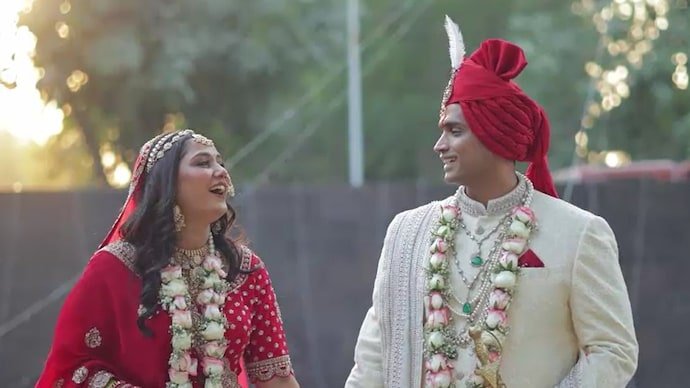
- The Twisha Sharma Wedding Video Changed Public Perception of the Case
- The Dangerous Myth of the “Perfect Marriage”
- The Dowry Death Investigation Has Intensified Public Scrutiny
- The Mental Health Narrative Is Already Becoming Contested
- Why the Case Resonates So Deeply With Young Indians
- Wedding Culture in India Has Become Highly Performative
- The Legal Investigation Will Likely Depend on Evidence, Not Emotion
- The Public Obsession With “Signs” Often Misses Reality
- The Case Reflects a Larger Social Crisis Beyond One Family
- What Makes Cases Like This So Emotionally Powerful
- Conclusion
The internet has a strange way of freezing happiness in time.
One moment, a couple appears in a cinematic wedding teaser smiling beneath warm lights, exchanging playful remarks and promising forever. A few months later, the same footage becomes evidence of contrast replayed repeatedly by strangers trying to understand how a relationship that looked so joyful ended in tragedy.
That is now the reality surrounding the death of Twisha Sharma.
The Noida resident, who married lawyer Samarth Singh in December 2025 after nearly a year of courtship, was found dead at her matrimonial home in Bhopal just months after the wedding. Police are currently investigating the case under allegations linked to dowry death, while her husband reportedly remains absconding.
The resurfaced wedding teaser has added emotional intensity to an already disturbing case. The carefully edited footage filled with laughter, romance, family jokes, and affectionate testimonials now stands in painful contrast to the bitter accusations emerging from both families.
But beyond the viral clips and emotional reactions lies a deeper and more uncomfortable question:
Why do so many modern marriages appear perfect publicly while serious emotional, financial, or psychological tensions remain invisible privately?
The Twisha Sharma Wedding Video Changed Public Perception of the Case
The five-and-a-half-minute wedding teaser quickly spread online not because it revealed Conflict, but because it appeared to reveal the exact opposite.
The footage portrayed:
- A seemingly affectionate relationship
- Emotional comfort between the couple
- Family approval and celebration
- Humour-filled interactions
- Excitement about married life
Unlike traditional wedding recordings, modern cinematic wedding films are designed to tell emotional stories.
Soft portrait lighting, carefully curated music, scripted-style conversations, and cinematic editing create an atmosphere closer to a romantic film than a documentary.
That visual storytelling has now become central to public fascination with the case.
Many viewers are asking how a relationship portrayed so positively could deteriorate so dramatically within just five months.
But experts on domestic abuse and relationship trauma repeatedly warn that outward appearances often reveal very little about private realities.
The Dangerous Myth of the “Perfect Marriage”
One major reason cases like this generate enormous public attention is because they challenge a deeply rooted social assumption:
That visible happiness equals emotional safety.
In reality, many troubled relationships continue to appear socially successful long after emotional breakdown begins privately.
Modern couples often maintain polished public images because of:
- Social pressure
- Family expectations
- Fear of judgment
- Social Media culture
- Professional reputation concerns
- Emotional denial
Wedding videos especially represent highly curated moments.
They capture celebration not conflict resolution, emotional compatibility, financial stress, family interference, or psychological strain.
That distinction matters enormously in emotionally charged investigations.
The Dowry Death Investigation Has Intensified Public Scrutiny
The case has become particularly sensitive because investigators are reportedly examining allegations linked to dowry harassment.
Dowry death cases remain among the most socially explosive criminal investigations in India because they touch multiple fault lines simultaneously:
- Gender inequality
- Family power dynamics
- Financial pressure
- Social prestige
- Marriage expectations
- Emotional abuse allegations
Under Indian law, deaths occurring within a few years of marriage under suspicious circumstances can trigger serious legal scrutiny if allegations of harassment or dowry-related pressure emerge.
Such cases often become legally and emotionally complicated because evidence may involve:
- Private conversations
- Family testimony
- Digital communication
- Financial transactions
- Psychological patterns
- Behavioural allegations
Investigations therefore tend to unfold slowly and attract enormous media attention.
The Mental Health Narrative Is Already Becoming Contested
One especially contentious dimension of the case involves remarks reportedly made regarding Twisha Sharma’s Mental health.
Cases involving suspicious marital deaths frequently become battlegrounds over competing narratives.
One side may frame events around emotional vulnerability or psychological struggles.
The other may allege harassment, coercion, intimidation, or abuse.
This dynamic is not unique to this case.
Across India, many controversial marital death investigations involve intense public disputes over whether emotional distress emerged independently or resulted from environmental pressure inside the marriage.
That is precisely why investigators typically focus heavily on:
- Call records
- Messages
- Witness testimony
- Behavioural patterns
- Financial disputes
- Previous complaints
Public speculation often races ahead of verified evidence, especially once emotionally powerful content like wedding videos begins circulating online.
Why the Case Resonates So Deeply With Young Indians
The Twisha Sharma case has struck a particularly strong emotional chord among younger Indians because it reflects the contradictions of modern urban marriage.
Today’s marriages increasingly combine:
- Dating culture
- Traditional family structures
- Social media visibility
- Professional ambition
- Financial pressure
- Conservative expectations
Couples may appear modern publicly while still navigating deeply traditional expectations privately.
That tension creates emotional pressure many young couples are often unprepared to handle.
In some cases, unresolved family expectations surrounding money, status, control, or gender roles begin surfacing only after marriage.
The honeymoon phase presented publicly may therefore differ sharply from the domestic reality that follows.
Wedding Culture in India Has Become Highly Performative
Another overlooked angle is how Indian weddings themselves have transformed dramatically in the social media era.
Today’s urban weddings increasingly function as:
- Personal branding events
- Social status displays
- Digital content productions
- Public relationship showcases
Professional wedding films now often resemble Netflix-style romantic trailers.
Couples rehearse emotional lines.
Families participate in scripted interviews.
Moments are aesthetically designed for online admiration.
None of this is inherently negative.
But it creates a dangerous illusion that emotional compatibility can be measured through visual chemistry alone.
The Twisha Sharma wedding teaser has become symbolic of that contradiction.
The same visuals once intended to celebrate a love story are now being analyzed frame-by-frame for clues that may never have been visible publicly.
The Legal Investigation Will Likely Depend on Evidence, Not Emotion
Although public opinion surrounding the case continues intensifying, legal outcomes will ultimately depend on evidence rather than online interpretation.
Investigators will likely examine:
- The circumstances surrounding the death
- Communication records
- Witness statements
- Financial transactions
- Medical and forensic reports
- Alleged harassment evidence
Dowry death investigations are among the most sensitive criminal inquiries because they involve both emotional trauma and strong legal presumptions.
At the same time, investigators must separate verified facts from social media amplification.
That process can take significant time.
The Public Obsession With “Signs” Often Misses Reality
One recurring social response after tragedies like this is the search for “hidden signs” in old videos or photographs.
People replay interviews, expressions, and interactions trying to identify warning signals.
But human relationships are rarely that visually transparent.
Abuse, emotional distress, manipulation, or psychological breakdown often remain hidden even from close friends and relatives.
That is why domestic conflict cases frequently shock entire social circles.
The reality is uncomfortable:
Many people suffering emotionally continue smiling publicly because social functioning itself becomes part of survival.
The Case Reflects a Larger Social Crisis Beyond One Family
The Twisha Sharma Investigation is no longer just about one marriage.
It has evolved into a broader reflection of unresolved societal tensions surrounding:
- Dowry culture
- Marriage pressure
- Mental health stigma
- Family interference
- Public image obsession
- Women’s emotional safety
India has modernised rapidly economically and technologically, but social attitudes surrounding marriage often remain deeply transitional.
Many young couples continue struggling between independence and traditional expectations.
That conflict sometimes remains invisible until crisis erupts.
What Makes Cases Like This So Emotionally Powerful
The reason stories like this resonate nationally is because they collapse two opposing emotional realities into one narrative.
On one side:
- A glamorous wedding
- Family celebration
- Romantic optimism
- Public happiness
On the other:
- A sudden death
- Criminal allegations
- Family conflict
- Public grief
The emotional distance between those two realities feels impossible to process.
That is precisely why the wedding video has become such a powerful symbol in the public imagination.
Conclusion
The resurfaced wedding teaser of Twisha Sharma and Samarth Singh has transformed a tragic death investigation into a wider national conversation about marriage, public image, emotional pressure, and hidden realities inside relationships.
While investigators continue examining the circumstances surrounding her death, the case already highlights several uncomfortable truths about modern society.
Public happiness does not guarantee private emotional safety.
Curated wedding films cannot reveal the long-term health of a relationship.
And social expectations surrounding marriage can sometimes conceal deeper tensions until tragedy forces them into public view.
The legal investigation will eventually determine responsibility based on evidence.
But socially, the case has already become something larger a reminder that behind polished Instagram-worthy celebrations, many couples continue navigating emotional pressures far more complicated than the camera ever captures.
In the end, the most haunting part of the video may not be what it reveals.
It is what nobody watching it could see coming.
For breaking news and live news updates, like us on Facebook or follow us on Twitter and Instagram. Read more on Latest India on thefoxdaily.com.






COMMENTS 0