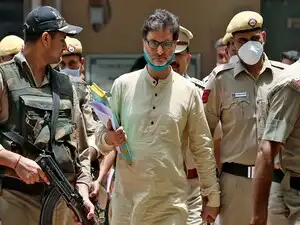
Jailed Jammu and Kashmir Liberation Front (JKLF) chief Yasin Malik has written to the Chief Justice of the Delhi High Court, saying his health condition is critical and that he is not receiving proper medical treatment. In a four-page letter, Malik claimed he was suffering from serious heart, kidney and ear-related ailments that required appropriate medical supervision and care.
The letter raises concerns about the medical treatment available to Malik while he remains in custody. His claims place his health needs and access to specialist care at the centre of renewed attention, although the specific medical findings and details of the treatment he has received would need to be assessed through official medical records and the relevant judicial proceedings.
What Yasin Malik Said in His Letter to the Chief Justice
In the four-page communication, Malik described his health condition as critical and alleged that he was not receiving adequate treatment. He identified cardiac, kidney and ear-related problems as the major ailments affecting him, saying they required proper medical supervision.
His appeal was addressed to the Chief Justice of the Delhi High Court, bringing his medical concerns directly to the attention of the court’s highest judicial office in the national capital. The letter appears to seek attention to the treatment and medical care available to him during his imprisonment.
Malik’s statements are allegations made in his letter. Without an independent medical assessment or an official account from the prison authorities, the severity of the conditions and the adequacy of the treatment cannot be independently established from the communication alone.
Why Medical Care in Custody Is a Legal Concern
Prison authorities are responsible for ensuring that inmates receive necessary medical attention. Imprisonment does not remove a person’s entitlement to essential healthcare, and serious or specialised medical conditions may require examination by qualified doctors, diagnostic tests, medication and continued monitoring.
When a prisoner reports potentially serious illnesses, the question is not limited to whether basic healthcare is available inside a prison. Authorities may also need to assess whether the facility can adequately manage the person’s condition or whether referral to a specialised hospital is necessary.
Cardiac and kidney-related conditions can require ongoing medical supervision, depending on their nature and severity. Ear-related ailments may also need specialist evaluation. The appropriate treatment in any individual case depends on clinical findings, which cannot be determined solely from a patient’s description of symptoms.
Who Is Yasin Malik?
Yasin Malik is the chief of the Jammu and Kashmir Liberation Front, an organisation that has been declared unlawful under Indian law. He has been a prominent and controversial figure in the Kashmir separatist movement and has faced multiple legal proceedings related to militancy and alleged terror-funding activities.
Malik was convicted in a terror-funding case by a special National Investigation Agency court in May 2022. He pleaded guilty to charges, including offences under the Unlawful Activities (Prevention) Act and provisions relating to criminal conspiracy. The court sentenced him to life imprisonment.
His conviction and sentence followed an investigation into allegations that funds were raised and used to support separatist activities and unrest in Jammu and Kashmir. Malik’s case has remained a significant part of the legal proceedings involving separatist networks and terror-funding allegations in the region.
What Happens Next?
Malik’s letter puts the focus on whether his reported medical conditions are being adequately assessed and treated while he is in prison. Any response to his concerns would depend on the examination of his medical records, the prison authorities’ account of the care provided and any directions issued by the court.
If specialist treatment is considered necessary, the relevant authorities may have to determine the appropriate medical facility and arrangements for consultation or treatment. The court may also consider the applicable legal and medical material if the issue is placed before it through appropriate proceedings.
For now, the central issue raised by Malik is his allegation that serious health problems are not receiving adequate medical attention. The contents of his letter communicate his concerns, but the actual condition of his health and the adequacy of the treatment provided will require confirmation through medical and official records.
‘My Health Condition Critical, Not Getting Proper Treatment’: Yasin Malik Writes to Delhi High Court Chief Justice
Jailed Jammu and Kashmir Liberation Front (JKLF) chief Yasin Malik has written a four-page letter to the Chief Justice of the Delhi High Court, alleging that his health is deteriorating and that he is not receiving adequate medical care at Tihar Jail. Malik said he is suffering from serious cardiac, kidney and ear-related ailments that require regular specialist supervision and treatment.
In the letter, Malik also raised questions about the medical attention he has received in custody, claiming that his hospital check-ups and tests at Ram Manohar Lohia Hospital had stopped in July 2023. He further alleged that he had been taken to hospitals outside the jail only four times since then.
The communication brings renewed attention to the medical care available to the separatist leader, who is serving a life sentence in a terror-funding case. It also revisits a long-running dispute over his access to specialist treatment, which has previously been raised before the Delhi High Court.
Yasin Malik Claims Medical Check-ups Have Been Stopped
Malik alleged that his medical examinations and tests at Ram Manohar Lohia Hospital had not taken place since July 2023. He also claimed that his movement outside Tihar Jail for hospital visits had been limited, with only four such visits during the period he referred to in his letter.
According to Malik, his medical condition requires continued monitoring by cardiologists and nephrologists. He said his ailments cannot be managed adequately without appropriate medical supervision and access to necessary treatment.
He specifically referred to his cardiac history, saying he underwent an aortic valve replacement operation at the All India Institute of Medical Sciences (AIIMS), New Delhi, in 1992. He claimed that he has been dependent on life-saving anticoagulant medication since the surgery.
Malik also raised concerns about fluctuations in his Prothrombin Time (PT) and International Normalised Ratio (INR) readings. These measurements are used to monitor how quickly blood clots, and they are particularly important for patients taking anticoagulant medication and those with certain types of artificial heart valves.
In his letter, Malik said his required INR range was between 2.7 and 3, but claimed that his readings had fluctuated sharply, reaching 6 in recent tests. Such readings require interpretation by medical professionals in the context of a patient’s specific condition and prescribed medication.
Letter Also Refers to Ear and Kidney Surgeries
Beyond his cardiac condition, Malik referred to a history of ear-related and kidney problems. He claimed that he had undergone three ear-head surgeries in the United States and five surgical interventions for kidney stones.
He argued that his medical history made regular specialist consultations and monitoring necessary. His concerns also included the alleged interruption of hospital examinations and the difficulty of accessing medical facilities outside the prison.
Malik alleged that repeated requests for appropriate medical attention had not resulted in the care he believed was necessary. He described his condition as critical and said he required proper medical supervision.
These details form part of Malik’s account in the letter. The claims about the frequency of hospital visits, the status of his medical tests and the adequacy of treatment would need to be assessed against prison medical records and any independent medical examination.
Malik Raises Questions Over Restrictions on Movement
The letter also addressed restrictions on Malik’s movement outside Delhi, which he alleged had affected his ability to access medical facilities. He referred to proceedings before the Supreme Court in July 2023 and claimed that subsequent changes to restrictions on his movement had further complicated his access to treatment.
His concerns are connected to the security restrictions governing his custody. Malik has been treated as a high-security prisoner, and his movement outside Tihar Jail is subject to legal and administrative arrangements.
However, security requirements and medical needs raise separate considerations. A prisoner may be subject to strict movement restrictions while still requiring access to specialist examinations, hospital treatment or emergency medical facilities when clinically necessary.
Malik said his purpose in writing to the Chief Justice was to bring the matter to the attention of the appropriate authorities. He also alleged that the situation involved violations of his human and fundamental rights.
Yasin Malik’s Earlier Medical Treatment Dispute Before Delhi High Court
This is not the first time Malik’s access to medical treatment has become a matter before the Delhi High Court. In February 2024, the court considered a plea seeking the production of his medical records and a direction for his referral to AIIMS or another super-speciality hospital for treatment of his cardiac and kidney ailments.
During those proceedings, the court asked the Tihar Jail superintendent to ensure that Malik received appropriate medical treatment. The authorities also raised questions about his willingness to undergo treatment and the arrangements that could be made inside the prison because of his security status.
Later that month, the Centre and prison authorities informed the court that Malik had been examined by doctors at AIIMS and had received necessary medical treatment. The authorities also gave an assurance that he would be provided further treatment whenever required.
His medical concerns resurfaced in November 2024, when his counsel informed the Delhi High Court that Malik had begun a hunger strike inside Tihar Jail. The court sought a medical status report from the jail superintendent and directed the authorities to ensure that necessary treatment was provided in accordance with prison rules.
During subsequent proceedings, the court was informed that Malik had called off his hunger strike. The High Court also emphasised that adequate medical facilities should be made available inside the jail and, if required, outside it.
In November 2025, the Delhi High Court again addressed his request for specialist medical treatment. While it did not direct that he must be treated specifically at AIIMS, it asked the Tihar Jail authorities to provide him with appropriate medical care.
Yasin Malik’s Life Sentence in the Terror-Funding Case
Malik is serving a life sentence following his conviction in a terror-funding case investigated by the National Investigation Agency. A special NIA court sentenced him in May 2022 after he pleaded guilty to charges, including offences under the Unlawful Activities (Prevention) Act.
The case concerned allegations of raising and using funds to support separatist activities and unrest in Jammu and Kashmir. Malik’s conviction and sentence remain central to the legal proceedings involving him.
The NIA has also challenged the life sentence and sought a higher punishment. Malik’s legal proceedings have continued in connection with the agency’s challenge and other cases linked to events in Jammu and Kashmir.
His latest letter to the Delhi High Court Chief Justice, however, focuses on a separate issue: whether he is receiving adequate medical attention while serving his sentence.
What Happens After Malik’s Appeal?
Malik’s letter places his allegations about medical care before the Chief Justice, but the next steps will depend on how the matter is taken up by the court and whether the relevant authorities are asked to respond.
Medical records, hospital visit details, test results and reports from prison doctors would be important in assessing his claims. An independent specialist evaluation could also help establish the nature of his current medical needs and whether the treatment available inside the prison is sufficient.
The central question is whether Malik’s reported conditions require medical supervision or treatment that cannot be adequately provided within the existing prison healthcare arrangements. Any decision on hospital referral or further medical intervention would need to take account of clinical advice, applicable prison procedures and security requirements.
For now, the claims in the four-page letter remain Malik’s account of his medical condition and treatment. His appeal has brought the issue back into focus, with the adequacy of healthcare in custody likely to be central to any further consideration by the authorities or the court.
For breaking news and live news updates, like us on Facebook or follow us on Twitter and Instagram. Read more on Latest India on thefoxdaily.com.






COMMENTS 0