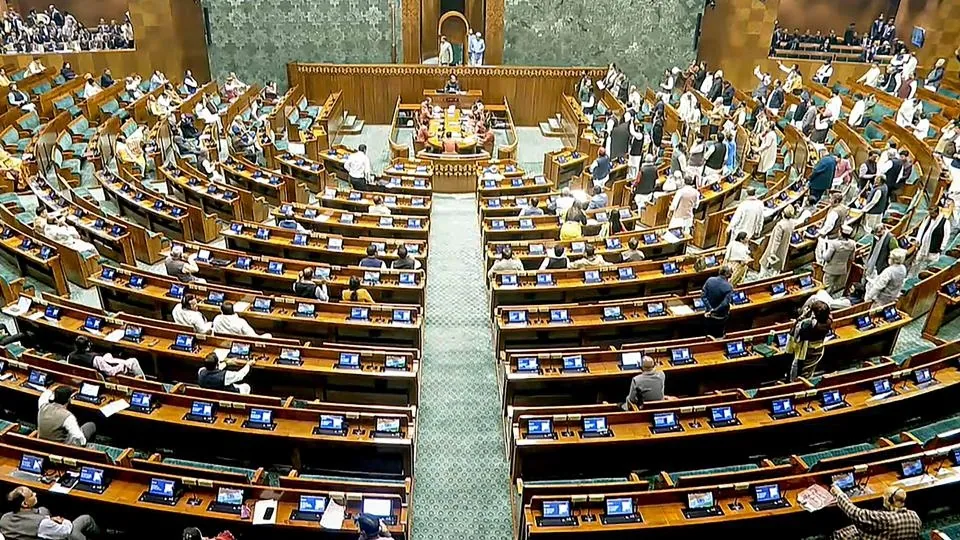
The Union government has claimed that it has the support of 371 Lok Sabha MPs for the proposed delimitation-linked constitutional amendment, giving the legislation a potential path to clear the House with the required two-thirds majority. A senior government functionary said the Bill would increase the number of seats reserved for Scheduled Castes (SCs) and Scheduled Tribes (STs) by 50 per cent alongside the proposed expansion of the Lok Sabha to a maximum of 850 seats.
The proposed legislation is expected to be introduced in the Lok Sabha on Monday, November 30, as part of the government’s effort to implement 33 per cent reservation for women in the 2029 general election. The government has also indicated that women would receive reservation within SC- and ST-reserved constituencies, extending the proposed quota to these categories.
However, the figure of 371 MPs represents the government’s stated estimate of support, not a confirmed list of lawmakers committed to voting for the Bill. The government functionary did not disclose which parties or individual MPs, beyond ruling National Democratic Alliance (NDA) constituents, would support the legislation.
Government Says It Has 371 MPs Behind the Bill
A senior government functionary said the Centre had secured the backing of 371 Lok Sabha MPs for the proposed legislation. The figure is significant because a constitutional amendment requires a special majority in Parliament rather than a simple majority of members present and voting.
Under Article 368 of the Constitution, a constitutional amendment must be passed in each House by a majority of its total membership and by at least two-thirds of the members present and voting. The exact number required therefore depends on attendance and voting, alongside the separate requirement relating to the House’s total membership.
In a 543-member Lok Sabha, two-thirds of the full membership is 362. The government’s claimed support of 371 MPs is nine above that benchmark. However, the final vote count will depend on attendance, party positions and whether the government can maintain the support it has claimed.
The government has not publicly identified all the MPs or political parties included in its estimate. Until individual parties clarify their positions and the vote takes place, the figure should be treated as the Centre’s claim rather than a verified count of committed votes.
SC and ST Reserved Seats to Increase by 50%
One of the key assurances conveyed by the government functionary concerns representation for Scheduled Castes and Scheduled Tribes. According to the account, seats reserved for both categories would also increase by 50 per cent when the delimitation-linked framework comes into force.
The assurance is important because the proposed expansion of the Lok Sabha has raised questions about how reserved constituencies would be adjusted. An increase in the overall number of parliamentary seats would require decisions about the distribution of constituencies and the allocation of seats reserved for historically disadvantaged communities.
The government has indicated that the increase in SC- and ST-reserved seats would accompany the broader expansion. It has also said that the 33 per cent women’s quota would apply within reserved constituencies, meaning women would receive representation among seats set aside for these communities as well.
The precise constituency-wise distribution, however, will depend on the delimitation process and the provisions ultimately enacted. The government’s stated 50 per cent increase does not by itself explain how individual constituencies will be redrawn or how the final allocation will be calculated.
Women’s Reservation Could Be Implemented in 2029
The Centre has presented the proposed Bill as a way to make Women’s Reservation operational in the 2029 Lok Sabha elections. The government functionary argued that passing the legislation now would allow the delimitation process to be completed in time for the next general election.
According to the functionary, delaying the Bill could push implementation of the quota to the 2034 Lok Sabha elections. The government is therefore framing the proposed amendment as a time-sensitive step towards increasing women’s representation in Parliament.
The Constitution (106th Amendment) Act, 2023, commonly known as the Women’s Reservation Act, provides for one-third reservation for women in the Lok Sabha, state legislative assemblies and the Delhi Legislative Assembly. Its implementation is linked to a future Census and the subsequent delimitation exercise.
The new proposal is intended to address the legislative and constituency-related changes required to operationalise the quota. The government’s argument is that completing the process before the next general election would avoid a further delay in bringing the constitutional reservation into effect.
How the Proposed Delimitation Commission Will Be Formed
The proposed legislation sets out a structure for the Delimitation Commission, which will be responsible for redrawing parliamentary and Assembly constituencies. According to the government functionary, the commission will have a chairman who must be a serving or retired Supreme Court judge appointed by the Central government.
The Chief Election Commissioner or an Election Commissioner nominated by the CEC will also be part of the commission. For each state, the State Election Commissioner will serve as a member while the commission carries out the delimitation exercise in that state.
The proposed framework also provides for five Lok Sabha MPs and five state legislators to participate as associate members. Their nominations will reflect the political strength of different parties in the respective legislatures.
The Lok Sabha Speaker will nominate the five MPs based on the strength of political parties representing the state in the House. Similarly, the Speaker of the state Assembly will nominate five MLAs according to the party composition of the state legislature.
The inclusion of elected representatives is intended to provide political and regional participation in the exercise. However, associate membership should not be confused with the commission’s core decision-making structure. The commission’s chairman and designated election officials will form its principal membership.
Government Compares the Proposed Bill With the 1957 Delimitation Act
The government functionary described the proposed Delimitation Bill as being substantially similar to the Delimitation Act of 1957, with women’s reservation being the key additional consideration.
The comparison is intended to present the proposed exercise as an established administrative process with an additional constitutional objective: making the 33 per cent quota for women operational through the redrawing of constituencies.
However, the proposed framework also needs to be examined in the context of the constitutional changes and the specific provisions governing the expansion of parliamentary and Assembly seats. The government has linked the new exercise to a 50 per cent increase in existing seat allocations and a maximum Lok Sabha strength of 850.
The functionary’s description of the Bill as similar to the 1957 law is the government’s characterisation. The final legal framework will be determined by the text passed by Parliament and the constitutional provisions that accompany it.
Will Parliament Have the Power to Modify or Reject the Commission’s Report?
The government functionary said the Delimitation Commission’s report would be placed before Parliament and that the House could modify or reject it. This assurance is significant because the proposed exercise will determine the boundaries of constituencies and the distribution of reserved seats.
Parliamentary involvement could become an important point in the debate over transparency and accountability. Political parties are likely to examine how the commission reaches its decisions, how objections from states and representatives are considered, and what role elected institutions will have in the final process.
The precise legal effect of the commission’s final orders will depend on the provisions enacted in the Delimitation Bill. The procedure for publishing proposals, inviting objections and issuing final decisions will therefore be important in determining how much scope exists for parliamentary intervention.
Why the 371-MP Claim Matters Ahead of the Special Session
The government’s claimed support of 371 MPs has brought the arithmetic of the proposed constitutional amendment into focus just ahead of the special parliamentary session. A constitutional amendment requires a special majority in each House, making support beyond the ruling alliance important for the legislation’s passage.
The proposed expansion of the Lok Sabha, the increase in SC- and ST-reserved seats and the implementation of women’s reservation are closely connected in the government’s legislative plan. At the same time, the proposal raises questions about the future distribution of parliamentary representation, the role of the Delimitation Commission and the safeguards available to states and political parties.
The next major test will be whether the government can translate its claimed support into votes when the Bill is taken up in the Lok Sabha. The identities and positions of MPs outside the NDA will be particularly important in assessing the actual level of backing.
If the legislation clears Parliament, the subsequent delimitation process will determine how the proposed expansion is translated into constituencies and reserved seats. If it fails to secure the required special majority, the government’s proposed timetable for implementing women’s reservation in the 2029 Lok Sabha elections could face a setback.
For now, the Centre is presenting the 371-MP figure as evidence that it has the numbers to move ahead. Whether that support holds during the parliamentary vote will determine the immediate fate of the delimitation-linked women’s reservation proposal.
For breaking news and live news updates, like us on Facebook or follow us on Twitter and Instagram. Read more on Latest India on thefoxdaily.com.



COMMENTS 0