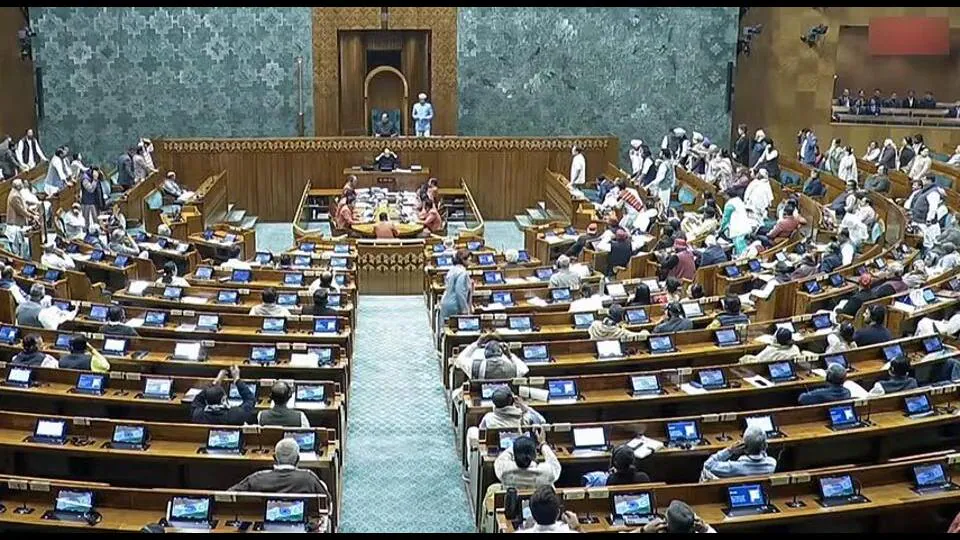
The Jharkhand Mukti Morcha (JMM) has indicated that it could support the proposed Delimitation Bill, provided any expansion of parliamentary and Assembly constituencies is accompanied by a proportional increase in seats reserved for Scheduled Castes (SCs) and Scheduled Tribes (STs). The party’s position highlights the importance of protecting the political representation of tribal and Dalit communities as Parliament prepares to consider legislation linked to delimitation and women’s reservation.
Chief Minister Hemant Soren chaired a meeting with JMM MPs to discuss the proposed legislation and its potential implications for Jharkhand. Following the discussions, a party insider suggested that JMM would not oppose an overall increase in the number of elected representatives, but would insist on safeguards to ensure that historically underrepresented communities do not lose political influence during the redrawing of constituencies.
JMM’s Support Depends on Proportional Representation for SCs and STs
The central condition emerging from the discussions is that reserved constituencies for Scheduled Castes and Scheduled Tribes should increase in proportion to the proposed expansion of legislative seats. JMM believes that increasing the total strength of the Lok Sabha and state Assemblies should not come at the expense of communities whose political representation is protected through constitutional reservation provisions.
A party insider said JMM could vote in favour of the legislation if the number of SC- and ST-reserved seats rises proportionally alongside the total increase in constituencies. The party reportedly has no objection to expanding the number of elected representatives, provided the interests of all sections of society receive adequate protection.
For Jharkhand, the question of tribal representation carries particular political significance. Scheduled Tribes form an important part of the state’s population and political landscape. Their representation in Parliament and the state Assembly is closely connected to the state’s social composition, land-related concerns, development priorities and constitutional protections.
The party’s reported position suggests that its support will depend not simply on the number of additional seats created, but also on how those seats are distributed and which communities benefit from the revised electoral map.
JMM Warns Against Arbitrary Redrawing of Constituencies
Alongside its demand for proportional reservation, JMM has reportedly warned that it will oppose the legislation if the delimitation exercise involves arbitrary changes to constituency boundaries or undermines the interests of Jharkhand’s tribal population.
Delimitation determines the boundaries of electoral constituencies and can influence how communities are represented in elected institutions. Changes to constituency boundaries can alter electoral dynamics even when the total number of seats remains unchanged. The process therefore has implications beyond increasing the size of legislatures.
For tribal communities, the location and composition of constituencies can be especially important. A constituency’s demographic profile helps determine whether it qualifies for reservation and how effectively particular communities can participate in electoral politics. Any major restructuring must therefore account for the constitutional framework governing reserved seats.
The JMM insider warned that the party would strongly oppose the Bill if the redrawing of constituencies adversely affected Jharkhand’s tribal population. This indicates that the party’s eventual position could depend on the details of the proposed delimitation framework, including the criteria used to determine constituency boundaries and reserved seats.
However, the party has not formally confirmed this conditional-support position. JMM general secretary Vinod Pandey told Hindustan Times that no official decision had been taken. He said he could not comment on the personal views of a party insider and would communicate the party’s position after a formal decision.
JMM’s Official Position Remains Unclear
The distinction between internal discussions and an authorised party decision is important as the government prepares to bring the legislation before Parliament. While the reported remarks indicate that JMM may be open to supporting the Bill under specific conditions, they should not be treated as a final commitment by the party.
Vinod Pandey’s statement makes clear that JMM’s formal position is still pending. The party’s leadership may need to examine the proposed constitutional provisions, the distribution of additional seats and the safeguards available for reserved constituencies before deciding how its MPs will vote.
JMM central vice president and Rajya Sabha MP Baijnath Ram has left for New Delhi to participate in the parliamentary proceedings scheduled to begin on November 30. His participation comes as political parties prepare for discussions over the proposed legislation and the wider question of how India’s electoral representation should be restructured.
For the ruling National Democratic Alliance (NDA), securing sufficient parliamentary support will be crucial. For parties such as JMM, the challenge is to assess whether the proposed expansion can be implemented without weakening the representation of communities they consider central to their political responsibilities.
Why the Delimitation Bill Is Politically Significant
The proposed legislation is part of a wider constitutional exercise connecting the expansion of legislative bodies, constituency delimitation and the implementation of women’s reservation. The government introduced the 131st Constitution Amendment Bill and two related pieces of legislation in April to advance this framework.
However, the constitutional amendment did not secure the required majority in the Lok Sabha and was defeated after Opposition parties united against it. The outcome represented a significant parliamentary setback for the government, as it was the first time since 2011 that a Constitution amendment Bill had failed to obtain the necessary support in the Lok Sabha.
The defeat demonstrated that even legislation backed by the government’s parliamentary majority can face serious obstacles when constitutional amendments require a special voting threshold. It also exposed differences between the government and Opposition parties over the proposed relationship between delimitation, population representation and women’s reservation.
Since the April vote, the political situation has reportedly become more fluid. Developments within Opposition parties, including internal disagreements in the Trinamool Congress and Shiv Sena (Uddhav Balasaheb Thackeray), along with indications of a more accommodating approach from the Dravida Munnetra Kazhagam and the Nationalist Congress Party (Sharadchandra Pawar), could influence the numbers in the next parliamentary contest.
These developments may create a more favourable environment for the NDA, although the final outcome will depend on the positions taken by individual parties and the strength of support the government can assemble.
Proposed Expansion Could Increase Lok Sabha Strength to 850
One of the most consequential elements of the proposed constitutional framework is the planned expansion of the Lok Sabha and state legislative Assemblies.
Under the proposed amendment, the maximum strength of the Lok Sabha would increase to 815 members representing states and 35 members representing Union Territories. The existing constitutional limits are 530 seats for states and 20 for Union Territories.
The proposal also envisages increasing the maximum strength of state legislative Assemblies to 650 members. This would create additional representation across the country’s legislative institutions and require a corresponding exercise to determine the boundaries and allocation of constituencies.
The proposed expansion is based on increasing the existing allocation of seats in each state and Union Territory by 50%. The stated approach would preserve the relative share of Lok Sabha seats held by different states and Union Territories rather than redistribute representation according to differences in population growth.
Because seat allocations cannot always be increased by an exact half-number, rounding could affect the final total. The resulting Lok Sabha strength is therefore expected to fall within a range of approximately 816 to 824 seats, depending on how fractional increases are handled.
The distinction between the proposed constitutional maximum and the eventual number of seats is important. A higher maximum would establish the legal capacity for an expanded House, while the actual number of constituencies would depend on the final implementation of the framework.
Why the Reservation Formula Matters for Jharkhand
For JMM, the proposed expansion raises a fundamental question: will reserved representation grow alongside the overall size of legislatures?
If the number of constituencies increases substantially but reserved seats do not rise proportionally, the relative representation of SC and ST communities could change. Even if the total number of elected representatives grows, the distribution of reserved constituencies would determine whether the expansion provides comparable gains for communities protected by constitutional safeguards.
This is particularly relevant in Jharkhand, where tribal political representation is closely connected to the state’s identity and governance. The JMM has built much of its political presence around tribal rights, regional identity and the protection of communities whose interests have historically been linked to land, natural resources and local self-government.
Its demand for proportional growth in reserved seats therefore reflects both a constitutional concern and a political priority. The party is seeking assurances that a larger Parliament will not translate into weaker representation for tribal and Dalit communities.
At the same time, proportional expansion alone may not settle every concern surrounding delimitation. The criteria used to redraw constituency boundaries, the demographic composition of electoral areas and the treatment of existing reserved constituencies will also influence the final outcome.
Delimitation and Women’s Reservation Are Closely Linked
The proposed constitutional changes also form part of the government’s effort to operationalise women’s reservation in elected legislatures. The 131st Constitution Amendment Bill and the associated legislation were introduced as part of a broader plan connecting the expansion of legislative seats with the implementation of the 33% reservation for women.
The relationship between these measures has become a major point of political debate. While women’s reservation has received support across much of the political spectrum, parties have disagreed over the timing and conditions attached to its implementation.
Linking the reservation framework to delimitation means that the eventual electoral map and the size of legislative bodies become central to the implementation process. This creates a complicated political discussion involving women’s representation, federal balance, population-based representation and the protection of SC/ST constituencies.
For parties representing states with substantial tribal and marginalised populations, the details of the delimitation exercise are therefore as important as the broader objective of expanding women’s participation in politics.
What JMM’s Position Could Mean for the Government
JMM’s reported willingness to consider supporting the Bill could be significant for the government’s efforts to build a broader parliamentary consensus. The legislation previously failed to secure the required constitutional majority, making support beyond the NDA particularly important.
However, the party’s position remains conditional and unofficial. Its demand for proportional expansion of SC/ST seats could become a negotiating point during parliamentary discussions, particularly if other regional parties raise similar concerns about the distribution of political representation.
The government’s challenge will be to explain how the proposed expansion will work in practice and how constitutional protections will be maintained during the delimitation process. Parties will also want clarity on the criteria for redrawing boundaries and the implications for states with different demographic and political circumstances.
For JMM, supporting a larger legislature may be acceptable, but only if the expansion strengthens rather than weakens representation for Jharkhand’s tribal and Dalit communities. The party’s final decision will therefore depend on whether the legislation and its implementation framework address those concerns.
JMM’s Final Decision Could Depend on Parliamentary Assurances
As Parliament prepares to take up the proposed legislation from November 30, JMM faces a decision that combines constitutional questions with the political interests of Jharkhand. The party has reportedly signalled that it is open to supporting the Bill, but its insistence on proportional growth in reserved constituencies places clear conditions on that possibility.
The official position is still awaited, and Vinod Pandey’s remarks indicate that the party has not yet converted internal discussions into a formal voting decision. The parliamentary debate and the government’s response to concerns over SC/ST representation could shape the party’s next move.
The larger issue extends beyond the number of additional seats. Any delimitation exercise must determine how political representation is distributed across states and communities while maintaining constitutional safeguards. For JMM, the test of the proposed Bill will be whether a larger Parliament can also ensure fair and meaningful representation for the people it is expected to serve.
For breaking news and live news updates, like us on Facebook or follow us on Twitter and Instagram. Read more on Latest India on thefoxdaily.com.




COMMENTS 0