Introduction
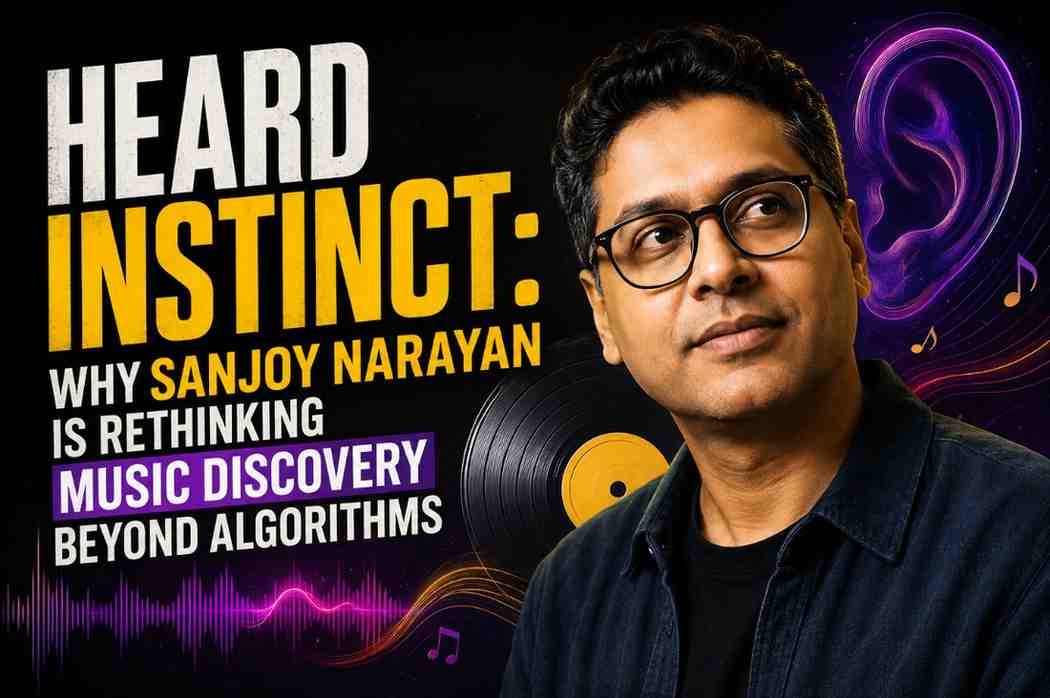
What if the best music you’ll ever hear is something no algorithm will ever recommend to you? That question sits at the heart of “heard instinct” a philosophy increasingly associated with Sanjoy Narayan’s evolving relationship with music. At a time when streaming platforms dominate listening habits, Narayan represents a different kind of listener: one who actively searches, questions, and explores beyond digital suggestions.
Who is Sanjoy Narayan? A seasoned observer of culture and sound. What is he doing? Actively seeking new routes to music beyond conventional discovery systems. When is this happening? Right now—at a time when music consumption is at its most automated. Where? Across global soundscapes, genres, and influences. Why? To rediscover authenticity in listening. How? By trusting instinct over algorithms and embracing unfamiliar sounds.
This shift is not just personal it reflects a broader transformation in how serious listeners engage with music in a hyper digital world.
Understanding “Heard Instinct”: A New Framework for Music Discovery
The term “heard instinct” is more than a clever phrase. It captures a fundamental shift from passive consumption to active exploration. Instead of letting platforms dictate taste, it encourages listeners to trust their curiosity.
In simple terms, heard instinct means:
- Choosing music intentionally rather than passively
- Exploring unfamiliar genres without bias
- Listening deeply instead of scrolling endlessly
- Valuing emotional resonance over popularity metrics
This approach challenges the current system where convenience often replaces curiosity.
Context & Background: From Vinyl to Viral
To understand Narayan’s perspective, it is important to look at how music discovery has evolved over time.
The Pre-Digital Era
Music discovery once required effort. Listeners depended on radio, physical records, and word-of-mouth recommendations. This created a slower, more immersive listening culture.
The Digital Revolution
The rise of MP3s and streaming platforms changed everything. Suddenly, millions of songs became accessible instantly. While this democratized access, it also introduced a new challenge: choice overload.
The Algorithm Age
Today, algorithms curate playlists based on user behavior. While efficient, they often reinforce existing preferences rather than expanding them.
Insight: The easier music becomes to access, the harder it becomes to discover something truly new.
Key Developments: Why Narayan Is Searching for “New Routes”
Sanjoy Narayan’s search for new routes to music reflects dissatisfaction with predictable listening patterns. Instead of relying on trending charts or algorithmic playlists, he explores:
- Cross cultural collaborations
- Independent and underground artists
- Genre defying compositions
- Live and improvisational performances
This shift signals a broader movement toward intentional listening where discovery becomes an active pursuit rather than a passive experience.
Breaking Genre Boundaries: The Rise of Hybrid Sound
One of the most exciting aspects of modern music is its refusal to stay within boundaries. Narayan’s listening journey highlights how genres are increasingly blending into new forms.
Today’s artists are combining:
- Jazz improvisation with electronic production
- Traditional folk elements with global beats
- Classical structures with experimental sound design
This fusion creates a dynamic listening experience that cannot be categorized easily.
| Traditional Music Model | Modern Discovery Model |
|---|---|
| Genre specific | Genre fluid |
| Region based | Global influences |
| Static identity | Evolving sound |
| Label driven | Artist driven |
Deep Analysis: Why Algorithm Driven Listening Falls Short
Streaming platforms are designed to maximize engagement, not necessarily discovery. Their recommendation systems prioritize familiarity, which can lead to repetitive listening habits.
The Algorithm Trap
- Recommends similar tracks repeatedly
- Limits exposure to new genres
- Encourages passive consumption
The Instinct Advantage
- Encourages exploration
- Promotes diversity in listening
- Builds a deeper emotional connection to music
Key Insight: Algorithms optimize for comfort. Instinct optimizes for growth.
The Psychology of Musical Curiosity
There is a scientific dimension to Narayan’s approach. Studies in cognitive psychology suggest that exposure to unfamiliar music can enhance creativity and cognitive flexibility.
When listeners engage with new sounds:
- The brain processes patterns more actively
- Attention levels increase
- Emotional responses become more complex
This makes music discovery not just entertaining, but intellectually enriching.
Real World Impact: Why This Approach Matters for Listeners
Adopting a “heard instinct” mindset can transform how people experience music.
Benefits for Everyday Listeners
- Breaks monotony in playlists
- Introduces global cultural perspectives
- Enhances appreciation for artistry
- Encourages mindful listening habits
In a world where attention spans are shrinking, this approach brings back depth and meaning to listening.
A Unique Angle: Music as Cultural Exploration
One overlooked aspect of Narayan’s philosophy is how music acts as a gateway to understanding the world. Every genre, rhythm, and instrument carries cultural significance.
Exploring music across regions can reveal:
- Historical influences
- Migration patterns
- Social and political narratives
In this sense, music becomes more than entertainment it becomes a tool for cultural literacy.
Comparison: Passive Listening vs Active Discovery
| Passive Listening | Active Discovery |
|---|---|
| Playlist driven | Curiosity driven |
| Background activity | Focused engagement |
| Repetitive experience | Dynamic exploration |
| Algorithm led | Instinct led |
Prediction: The Future of Music Discovery
As artificial intelligence continues to shape music platforms, the role of human intuition may become even more valuable.
Future trends may include:
- Rise of human-curated playlists
- Growth of niche music communities
- Increased demand for live and immersive experiences
- A shift toward deeper, slower listening habits
Prediction: The next generation of music lovers will combine technology with instinct using tools for access but relying on curiosity for discovery.
Lessons for the Modern Listener
You don’t need to be a critic to adopt this approach. Simple changes can make a big difference:
- Listen to one unfamiliar artist every week
- Explore music from different cultures
- Avoid relying solely on recommendations
- Spend time actively listening without distractions
These habits can reshape your relationship with music.
Conclusion: Rediscovering the Joy of Listening
Sanjoy Narayan’s pursuit of new routes to music is not just a personal journey it is a reflection of a larger cultural shift. In a world dominated by algorithms, choosing to explore music instinctively becomes an act of independence.
The idea of “heard instinct” reminds us that music is not just something to consume it is something to experience, question, and discover.
As technology continues to evolve, the challenge will not be access to music, but the ability to find meaning within it.
Final Thought: The most rewarding music experiences often lie outside your comfort zone and finding them begins with one simple decision: to listen differently.
For breaking news and live news updates, like us on Facebook or follow us on Twitter and Instagram. Read more on Latest Lifestyle on thefoxdaily.com.

COMMENTS 0