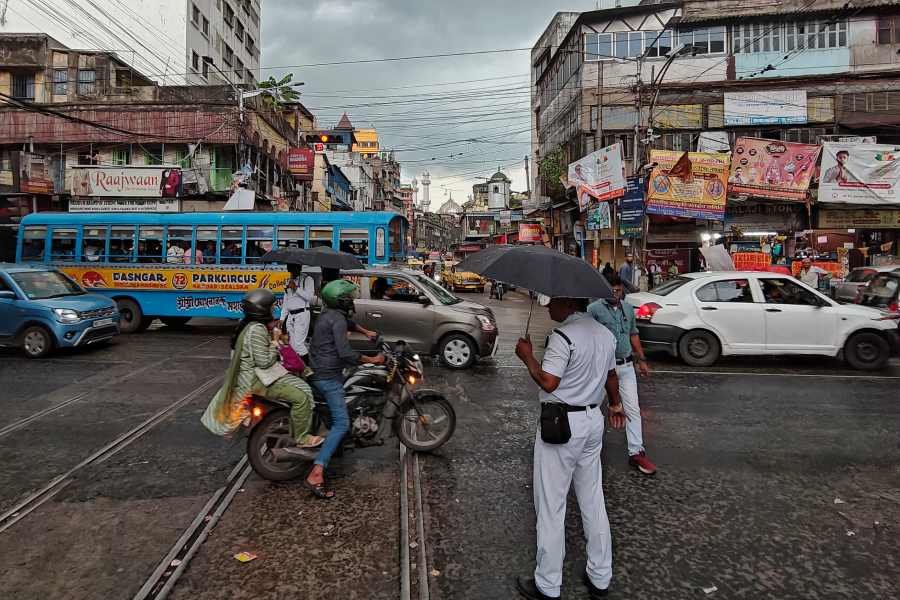
readers want to understand why pedestrian safety matters in Kolkata, what the Supreme Court has said about safe walking, why footpaths remain inaccessible, and what better pedestrian infrastructure could mean for the city’s residents.
Primary keyword: pedestrian safety in Kolkata
Related semantic keywords: Kolkata footpaths, World Pedestrian Day, pedestrian rights in India, safe walking in Kolkata, accessible footpaths, pedestrian infrastructure, road safety Kolkata, walkable cities, street accessibility, pedestrian-friendly Kolkata
Introduction: A fundamental right that can disappear at the kerb
For a pedestrian in Kolkata, a short walk can become an obstacle course long before the destination comes into sight. A footpath may suddenly narrow around a parked vehicle, disappear beneath construction material, become occupied by vendors or force a person into moving traffic because there is simply no usable space left.
That makes pedestrian safety in Kolkata about far more than road etiquette. It is a question of urban design, enforcement, accessibility and, ultimately, whether people can exercise their right to move through the city safely.
World Pedestrian Day provides an opportunity to examine that question. The broader global conversation around pedestrian safety is straightforward: walking is one of the most basic forms of mobility, yet pedestrians remain among the most exposed road users. For a city such as Kolkata, where walking remains an important part of daily transport, the condition of footpaths is therefore not a cosmetic issue.
The Supreme Court’s recognition of the right to safe roads and pedestrian safety adds an important constitutional dimension to the debate. But a right written into law does not automatically become a safe crossing, an unobstructed pavement or an accessible footpath.
That is the central contradiction Kolkata needs to confront: if a person technically has the right to walk safely but cannot find a continuous, usable and accessible path, how meaningful is that right in everyday life?
Why pedestrians are particularly vulnerable
A person walking has little physical protection when compared with someone travelling inside a car or bus. A collision that may result in vehicle damage can cause catastrophic injury to a pedestrian.
But pedestrian safety begins well before a collision. The design of the street determines how much exposure a pedestrian has to traffic in the first place.
A properly designed pedestrian network should allow people to move without repeatedly negotiating with vehicles. It should provide a continuous walking surface, safe crossings, adequate visibility, appropriate lighting and facilities that can be used by people with different mobility needs.
When those features are absent, pedestrians are effectively asked to compensate for infrastructure failures with individual caution.
That is an unfair equation.
The Kolkata footpath problem is bigger than broken pavement
When people talk about Kolkata’s footpaths, the conversation often centres on potholes, damaged slabs or uneven surfaces. Those problems matter, but they represent only one part of the challenge.
The deeper problem is continuity.
A footpath can be beautifully paved for 100 metres and still fail as pedestrian infrastructure if it abruptly ends at a junction. Similarly, a wide pavement has limited value if pedestrians cannot safely cross the road to reach it.
This means pedestrian infrastructure needs to be viewed as a network rather than a collection of isolated construction projects.
Common barriers faced by pedestrians
- Broken or uneven pavement surfaces
- Vehicles parked on walking areas
- Temporary construction materials blocking passage
- Street furniture placed without sufficient pedestrian clearance
- Encroachment that leaves narrow walking corridors
- Open drains or poorly covered utility infrastructure
- Sudden gaps where a footpath ends
- Unsafe road crossings
- Inadequate accessibility for wheelchair users and people with mobility difficulties
- Poor lighting or visibility in some locations
Each obstruction may appear minor in isolation. Together, they can transform an ordinary walk into a high-risk journey.
The legal question: is safe walking a fundamental right?
The Supreme Court’s observations concerning pedestrian safety are significant because they shift the discussion away from the idea that walking is merely a personal choice.
The constitutional framework surrounding the right to life and personal liberty has been interpreted broadly by the judiciary to include conditions necessary for living with dignity. Safe movement on public roads has consequently become part of a wider conversation about citizens’ rights and the responsibilities of public authorities.
This matters because pedestrian infrastructure is often treated as a secondary urban amenity. Roads for vehicles receive substantial attention because they are associated with traffic movement, while footpaths can be treated as leftover space.
A rights-based approach challenges that hierarchy.
If walking is an essential form of mobility, then the infrastructure supporting it cannot reasonably be considered optional.
Why a legal right does not automatically produce a walkable city
There is a significant difference between recognising a right and delivering the conditions required to exercise it.
Consider a pedestrian approaching a busy intersection. A legal declaration does not physically move a parked vehicle blocking the footpath. It does not repair a missing pavement slab. It does not install a kerb ramp or create a safe crossing.
Implementation requires multiple agencies and sustained enforcement.
Urban roads involve municipal authorities, traffic police, public works agencies, utility providers, transport operators and, in some cases, private contractors. If each organisation manages its own piece without considering the pedestrian’s complete journey, the result can be a fragmented street.
This is why Kolkata’s pedestrian challenge cannot be solved simply by laying more pavement.
The biggest missing idea: the continuous pedestrian route
One of the most important ways to rethink Kolkata footpaths is to stop measuring success by how much pavement has been constructed.
Instead, authorities should ask: Can a person walk from Point A to Point B without being forced into traffic?
That single question captures the experience of a pedestrian better than kilometres of newly paved footpath.
A continuous pedestrian route should ideally connect:
- Residential neighbourhoods with markets
- Homes with schools
- Bus stops with surrounding streets
- Railway stations with nearby destinations
- Public institutions with accessible crossings
- Commercial areas with public transport
The test should not be whether an isolated pavement looks good in a photograph. The test should be whether it works from beginning to end.
Accessibility: a footpath that excludes people is not truly public
Pedestrian safety also needs to include people who are often invisible in transport planning.
Wheelchair users, older people, people with visual impairments, parents pushing prams and pedestrians carrying children can experience streets very differently from an able-bodied adult.
A staircase may be manageable for one pedestrian but completely unusable for someone using a wheelchair. A high kerb may be a minor inconvenience to one person and an impassable barrier to another.
This is why accessible footpaths require features such as appropriate kerb ramps, sufficiently wide clear paths, tactile guidance where needed, predictable crossings and surfaces that do not create unnecessary obstacles.
Accessibility is not an additional luxury to be added after construction. It is part of designing a public street for the public.
Why footpaths and public transport cannot be planned separately
Kolkata’s public transport network can move large numbers of people efficiently, but every public transport journey begins and ends with some amount of walking.
A passenger may walk from home to a bus stop, from a footpath to a railway station, or from a station to work. If the last few hundred metres are dangerous or inaccessible, the quality of the entire transport journey is compromised.
This creates a powerful argument for investing in pedestrian infrastructure around transport hubs.
A bus stop with no safe pedestrian approach is not fully accessible. A railway station surrounded by difficult crossings is not genuinely pedestrian-friendly. Transport planning that focuses only on vehicles misses the first and final stages of almost every trip.
The Kolkata paradox: a city where walking is essential but walking space is contested
Kolkata’s urban form makes the pedestrian question particularly important. Dense neighbourhoods, commercial streets, public transport, markets and mixed land uses generate enormous amounts of walking.
Yet the same urban intensity creates competition for limited street space.
Footpaths may be used for vending, parking, construction, loading and other activities. Some of these activities are economically or socially important. That makes the solution more complicated than simply removing everyone who occupies pavement space.
A serious pedestrian policy must recognise this reality while preserving a clear, safe path for walking.
The challenge is therefore not “pedestrians versus vendors” or “pedestrians versus vehicles”. It is a question of how scarce public space is allocated and managed.
Encroachment: enforcement alone is not enough
Footpath encroachment is often discussed as an enforcement problem. Enforcement is certainly important, but repeated encroachment can indicate a planning failure as well.
If vendors have no designated space, deliveries have no loading areas and parking demand is ignored, the pressure will repeatedly return to pedestrian space.
A more durable approach combines enforcement with design and management.
That could mean clearly marking pedestrian zones, providing regulated vending areas where appropriate, creating delivery windows, managing parking and ensuring that construction sites maintain safe temporary pedestrian routes.
The principle should be simple: activities may be organised around the pedestrian path, but the pedestrian path should not be treated as the space available after everything else has been accommodated.
Why crossings may matter as much as footpaths
A continuous footpath is only useful if pedestrians can cross roads safely.
Large intersections can create situations where a pedestrian has a clear pavement on both sides but no comfortable way to move from one side to the other.
Safe crossing design should consider crossing distance, traffic speed, visibility, signal timing and the needs of slower pedestrians.
This is especially important for older adults and people with mobility difficulties. A crossing signal that technically allows pedestrians to cross but gives them insufficient time is not equally usable by everyone.
The speed question: why vehicle speed changes pedestrian risk
Street safety is not determined only by whether drivers follow traffic rules. Vehicle speed also matters.
As speed increases, drivers have less time to respond and collisions can become more severe. This is why pedestrian-friendly urban design often combines enforcement with measures that encourage appropriate speeds in areas with heavy pedestrian activity.
Schools, markets, transport hubs and dense commercial areas are particularly important locations for such measures.
The larger lesson is that pedestrian safety cannot be achieved by asking pedestrians to be more careful while leaving street conditions unchanged.
A comparison: pedestrian-first planning vs vehicle-first planning
| Vehicle-first approach | Pedestrian-first approach |
|---|---|
| Measures road performance mainly through vehicle movement | Measures streets through the safety and accessibility of all users |
| Footpaths may be treated as leftover space | Walking space is planned as essential infrastructure |
| Crossings can be secondary to traffic flow | Safe crossings are integral to the network |
| Focuses heavily on individual road-user behaviour | Uses street design to reduce predictable risks |
| Prioritises isolated road improvements | Prioritises continuous journeys |
What Kolkata could measure instead of simply counting new footpaths
This is where a more meaningful pedestrian policy could emerge.
Instead of celebrating the number of kilometres of pavement built, authorities could publish pedestrian performance indicators.
For example:
- Percentage of major routes with continuous footpaths
- Number of dangerous footpath gaps repaired
- Average unobstructed walking width
- Number of accessible crossings
- Pedestrian signal compliance and crossing time
- Footpath accessibility around schools and hospitals
- Number of recurring encroachment locations resolved
- Pedestrian crash and injury trends
Such measurements would make the quality of walking infrastructure visible.
What residents can do — and what they should not have to do
Pedestrians can take sensible precautions: use designated crossings where available, remain alert around traffic, avoid distracted phone use while crossing and follow traffic signals.
But individual caution has limits.
A pedestrian cannot personally repair a missing footpath. A wheelchair user cannot make a staircase accessible. A parent pushing a stroller cannot widen a pavement blocked by a parked vehicle.
This distinction matters because road safety is sometimes framed almost entirely as a matter of personal responsibility. Safe behaviour is important, but safe infrastructure is a shared public responsibility.
World Pedestrian Day should be more than a symbolic reminder
Days dedicated to pedestrian awareness are useful when they create attention, but awareness alone cannot make streets safer.
The more meaningful question for Kolkata is what happens after the campaign ends.
Will dangerous crossings be redesigned? Will broken footpaths be repaired? Will accessibility be audited? Will pedestrian routes around transport hubs be improved? Will enforcement protect walking space consistently rather than only during special drives?
Those are the measures that turn awareness into policy.
A new way to judge Kolkata’s streets: the 10-minute walking test
One practical idea could make pedestrian planning more accountable: test the city from the perspective of an ordinary person.
Take a 10-minute route around a railway station, school, hospital, market or bus corridor. Walk it as an elderly person would. Walk it as someone using a wheelchair would. Walk it while accompanying a child. Record every moment when the pedestrian must enter traffic, cross unnecessarily, climb an obstacle or negotiate around an obstruction.
This kind of “10-minute walking test” would expose problems that may remain invisible on engineering drawings.
It also changes the central question from “Did we build a footpath?” to “Can people actually use it?”
The future of Kolkata’s pedestrian network
Kolkata does not need to choose between economic activity, public transport, street commerce and pedestrians. The real challenge is designing streets where these uses can coexist without sacrificing basic safety.
That will require coordination rather than isolated projects.
Future pedestrian planning should prioritise continuous routes, accessible design, safer crossings, appropriate vehicle speeds, better maintenance and predictable enforcement. It should also involve pedestrians themselves in identifying the places where infrastructure fails.
The city already has countless people who understand its pedestrian problems because they experience them every day. Their experiences can provide valuable evidence for planners.
Conclusion: The right to walk must exist beyond paper
Pedestrian safety in Kolkata is ultimately a test of what the city considers essential infrastructure.
A footpath is not successful simply because it has been paved. A crossing is not successful simply because paint has been applied. A street is not accessible simply because a pedestrian technically has permission to use it.
True pedestrian infrastructure must allow people to move safely, continuously and independently.
The Supreme Court’s recognition of pedestrian safety as part of the broader right to life gives the issue an important legal and constitutional foundation. But Kolkata’s residents will experience that right not in a courtroom, but on the pavement — while walking to work, school, a market, a bus stop or a railway station.
That is why World Pedestrian Day should be treated not merely as a reminder to pedestrians to be careful, but as a reminder to cities that walking is not an afterthought in urban mobility.
The real measure of a pedestrian-friendly Kolkata will be simple: whether an ordinary person can walk through the city without having to fight for every metre of space.
For breaking news and live news updates, like us on Facebook or follow us on Twitter and Instagram. Read more on Latest Lifestyle on thefoxdaily.com.

COMMENTS 0