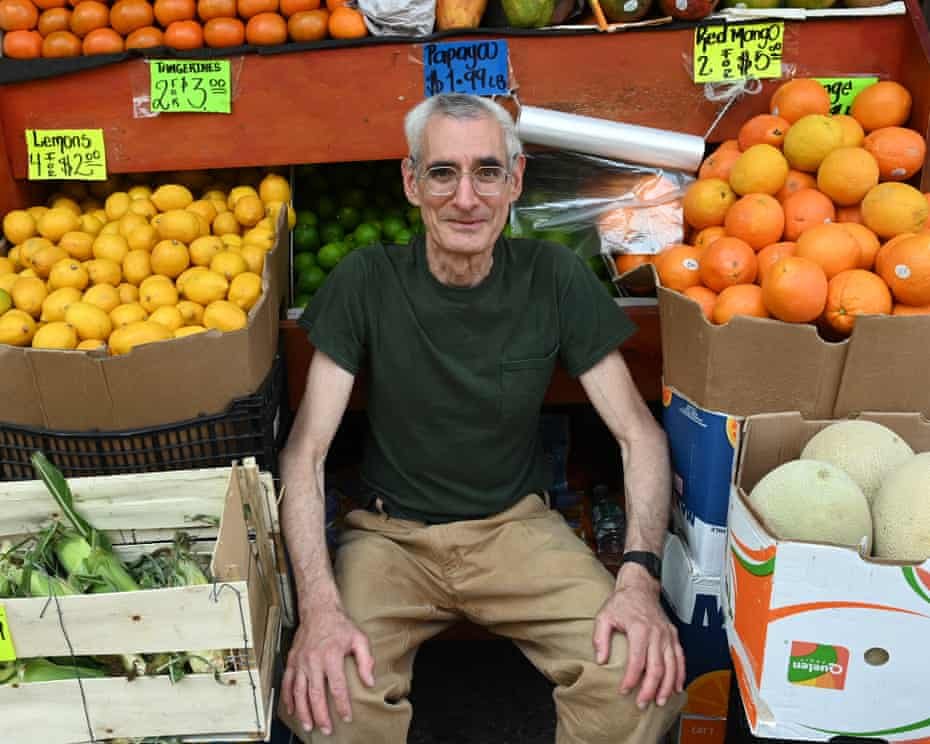
For Solomon, working in produce is about much more than stocking shelves or handling fresh food. It has become a way of reconnecting with skills, memories and lessons that were quietly passed down to him long before he realised their value.
He does not handle poultry as part of the job, but his work with fruits and vegetables has brought back practical knowledge he learned from someone important in his life. The lessons were never formally presented as training. Instead, they came through watching, helping and paying attention.
Now, years later, those seemingly ordinary lessons have become useful in his working life. Knowing how to clean lettuce and recognise a good apple are no longer just memories. They are skills he can draw on every day.
At first, however, the physical demands of shop work were difficult. After a shift, even standing up on the subway ride home could be a struggle. Over time, that experience changed. Solomon says the work now feels easier, his knees hurt less and he feels stronger.
More unexpectedly, the job has also affected his mental state. He describes feeling quieter mentally and says that, despite uncertainty about how long he will be able to continue working, he considers it the best employment he has had.
The Unexpected Lessons Hidden in Everyday Life
Some of the most valuable skills people carry into adulthood are not learned in classrooms or formal workplaces. They are picked up through observation.
For Solomon, produce work has brought those lessons back into focus. Someone in his past knew how to prepare lettuce properly and how to choose a good apple. At the time, these may have seemed like ordinary household skills rather than knowledge worth remembering.
But experience has a way of revealing the importance of seemingly small lessons.
Now, when Solomon works with produce, those memories return. He recognises that the knowledge he uses is connected to someone who taught him without necessarily setting out to become his teacher.
This is an important aspect of informal learning. People often remember major lessons because they were explicitly taught. Yet practical knowledge can also be absorbed simply by watching someone repeatedly perform an everyday task.
“She Knew How to Clean Lettuce”
Solomon’s recollection of cleaning lettuce and selecting apples illustrates how ordinary domestic knowledge can have a surprisingly long life.
Choosing fresh produce requires observation. People learn to notice appearance, texture, freshness and quality. Cleaning vegetables also involves knowing how to handle them carefully and prepare them properly.
These skills may appear insignificant until they become useful in a professional environment.
For Solomon, the connection is especially meaningful because he now understands where his knowledge came from. The person who taught him was not necessarily trying to prepare him for future employment. She was simply doing everyday things, and he was learning by being around her.
That realisation turns a practical skill into something more personal. A routine task at work becomes a reminder of someone and of a different period of life.
Why the Job Was Difficult at First
Although Solomon eventually became comfortable with the work, the transition was not easy.
Produce work can involve long periods of standing, moving goods, bending, lifting and repeatedly using the body throughout a shift. For someone unaccustomed to that level of physical activity, the adjustment can be demanding.
Solomon remembers the subway journey home as particularly difficult in the beginning. By the time he reached the train, standing up again could be hard.
That detail provides an important glimpse into the reality of starting physically demanding employment. A job can appear straightforward from the outside while requiring considerable physical adaptation from the person doing it.
The early discomfort, however, did not remain permanent.
From Physical Strain to Greater Strength
Solomon now describes the work very differently.
“But now it feels fine,” he says, explaining that his knees hurt less and that he feels stronger.
The change suggests that his body has adapted to the demands of the job. Instead of simply exhausting him, the regular movement has become something he can handle more comfortably.
There is an important distinction here between short-term physical strain and longer-term adaptation. Beginning a physically active job can be uncomfortable, particularly when the body is not accustomed to the workload. Over time, however, regular activity can feel more manageable as a person becomes accustomed to the movements and routines involved.
Solomon’s experience also demonstrates that employment can affect how a person feels physically in ways that are not captured by a job title or salary.
The Mental Change May Be Even More Significant
The physical improvement is only part of Solomon’s experience. He also says he feels “quieter mentally.”
That observation gives his story a deeper dimension.
Work is often discussed in terms of income, stability, hours and career progression. Yet employment can also shape a person’s daily mental experience. A job can provide routine, purpose, social interaction and a clear set of tasks that divide the day into manageable pieces.
For Solomon, produce work appears to have brought a combination of physical activity and mental calm.
The rhythm of working with tangible products may also contribute to that experience. Unlike work that is dominated by abstract tasks, produce work involves visible results: food is cleaned, arranged, moved and prepared for customers.
There can be a particular satisfaction in seeing the immediate outcome of physical work.
A Job That Feels Connected to “Good Things”
Solomon describes his employment as “an appreciation of good things.” That phrase captures something deeper than simple job satisfaction.
Fresh produce is associated with everyday nourishment, food preparation and the routines of ordinary life. Working with it can reconnect a person with basic, tangible things that are easy to overlook.
For Solomon, that appreciation is also connected to memory. The fruits and vegetables he handles at work remind him of skills learned earlier in life.
His job therefore occupies two worlds at once. It is a source of employment in the present, but it also carries traces of the past.
Why Informal Skills Can Become Valuable Later
Solomon’s experience highlights a lesson that extends beyond produce work: people often carry useful knowledge without recognising its value.
A person may learn how to cook from a parent, repair something from a relative, organise a household from a grandparent or care for plants simply by watching someone else. Years later, those skills can unexpectedly become useful in a completely different context.
The lesson may not even feel like learning when it happens.
That is what makes Solomon’s recollection particularly powerful. He did not necessarily set out to memorise how to clean lettuce or identify a good apple. The knowledge became part of him naturally.
Only after entering produce work did he recognise the connection.
The Value of Work Is Not Always Measured in Traditional Ways
Solomon says he cannot guarantee how long he will be able to continue working. That uncertainty adds realism to his otherwise positive assessment of the job.
Physical employment can place demands on the body, and nobody can predict exactly how long a particular role will remain sustainable. Solomon is therefore not presenting his job as a perfect or permanent solution.
Instead, he is describing what the work gives him now.
He feels stronger. His knees hurt less. His mind feels quieter. And he has developed an appreciation for the work itself.
Those benefits matter because job satisfaction is not always about conventional markers of success. A position can be valuable because it provides dignity, routine, physical engagement, connection or a sense of purpose.
Why Solomon Calls It the Best Employment He Has Had
Calling a job the “best employment” someone has experienced does not necessarily mean it is the highest-paying or most prestigious position.
For Solomon, the value appears to come from the overall experience.
The work connects him to practical knowledge from his past. It keeps him physically active. He feels stronger than when he began. His knees hurt less, and he describes a sense of mental quiet.
Most importantly, he appears to find meaning in what he does.
That combination can be more significant than a conventional measure of career advancement. A job that fits a person’s current needs and gives them a sense of usefulness can have an impact that is difficult to quantify.
The Deeper Story Behind a Produce Job
On the surface, Solomon’s story is about employment in a shop. Look closer, however, and it becomes a story about memory, resilience and rediscovering the value of skills learned long ago.
The lettuce and apples are more than products. They are reminders.
The physical work is more than labour. It has become a source of strength.
The daily routine is more than employment. It has contributed to a sense of mental calm.
That combination explains why Solomon’s experience feels more significant than a simple account of changing jobs.
What His Experience Says About the Meaning of Work
Solomon’s story challenges the idea that meaningful employment has to follow a conventional career path.
Meaning can come from many places. It can come from doing something well, using skills that feel familiar, working with one’s hands, serving other people or simply feeling physically and mentally better at the end of the day.
For Solomon, those elements appear to have converged in produce work.
There are no guarantees about the future. He openly acknowledges that. Yet uncertainty about tomorrow does not erase the value of what the job is giving him today.
Conclusion: Sometimes the Best Lessons Are the Ones We Did Not Know We Were Learning
Solomon’s experience with produce work is ultimately about much more than apples and lettuce.
It is about how ordinary lessons can remain with us for years and unexpectedly become useful later. The person who taught him how to clean lettuce and choose a good apple may never have intended those actions to become professional skills, yet they stayed with him.
The job was difficult at first. The journey home could be physically exhausting, and even standing on the subway was once a challenge. But with time, Solomon says the work now feels fine. His knees hurt less, he feels stronger and, perhaps most significantly, he feels quieter mentally.
He does not know how long he will be able to continue. But for now, he has found something he values deeply.
Sometimes the best employment is not the job that looks most impressive on paper. It is the work that makes a person feel stronger, calmer and unexpectedly connected to the lessons that shaped them.
For breaking news and live news updates, like us on Facebook or follow us on Twitter and Instagram. Read more on Latest Lifestyle on thefoxdaily.com.




COMMENTS 0