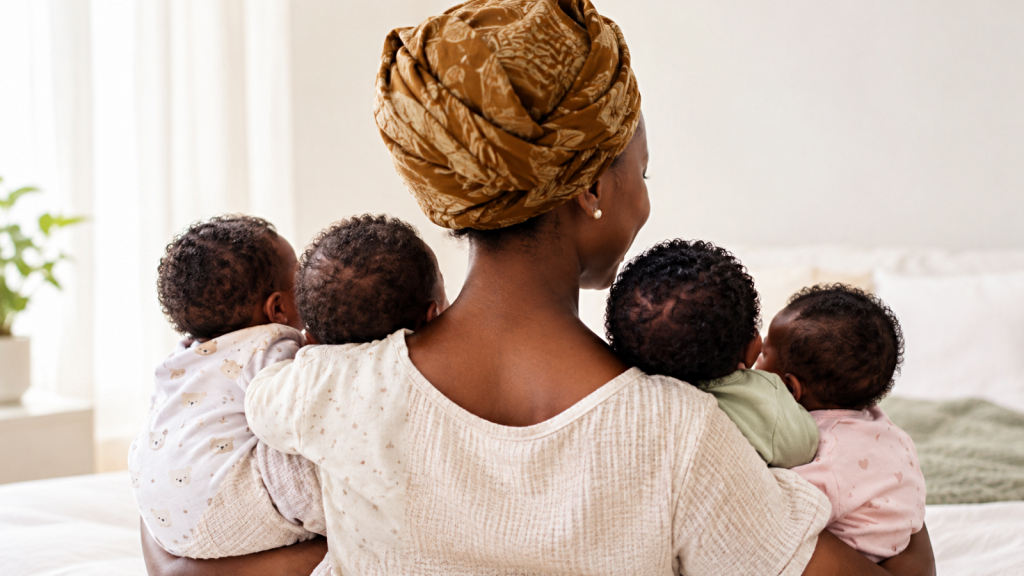
Pregnancy at 50 through IVF: Olusola Olonade’s journey to motherhood has drawn attention to the possibilities of Fertility treatment and the challenges of having a baby at an advanced maternal age. She married at 48 and became a mother to quadruplets at 50 after undergoing in vitro fertilisation (IVF). Her experience highlights how reproductive medicine can help some women conceive later in life, but it also raises important questions about fertility, pregnancy risks and the medical care required when carrying multiple babies.
Olonade’s story came into focus after BBC Africa shared a video of her discussing her journey to motherhood, her faith and her hopes for her children’s future. She said she had not expected to have four babies at once. Her experience has attracted attention because pregnancy at 50 is uncommon, while delivering quadruplets at this age is exceptionally rare.
However, fertility experts caution that an individual success story should not be mistaken for a typical IVF outcome. Pregnancy at an advanced age, particularly a multiple pregnancy, involves considerable medical challenges and requires careful assessment before treatment begins.
To understand the science and risks involved, we spoke to Dr Aswati Nair, Clinical Director and Fertility Specialist at Nova IVF Fertility, Rajouri Garden, Delhi, about pregnancy at 50, the role of IVF and the precautions women should consider.
Married at 48 and a Mother at 50: Olusola Olonade’s IVF Journey
Olusola Olonade married at the age of 48 and became a mother to four babies at 50 following IVF Treatment. Her story has brought renewed attention to later motherhood and the role assisted reproductive technology can play when natural conception becomes difficult.
In the video shared by BBC Africa, Olonade spoke about her faith and her family’s history of fertility. She explained that these factors gave her confidence about becoming a mother, although she also acknowledged that fertility treatment does not always succeed.
She did not expect to welcome four babies at once. Looking towards the future, Olonade expressed hope that she would live long enough to see her children grow up and become parents themselves.
“By the grace of God, I’ll live to be a great-grandmom,” she said.
Her story is an example of what reproductive medicine may make possible in selected circumstances. However, it is important to understand that IVF outcomes depend on several medical and biological factors. Age, egg quality, the use of donor eggs or embryos, uterine health and the woman’s overall medical condition can all influence the chances of pregnancy and its outcome.
How Rare Is It to Have Quadruplets at 50?
Pregnancy at 50 is uncommon, and delivering quadruplets at this age, particularly during a first pregnancy, is an exceptionally rare occurrence. According to Dr Aswati Nair, female fertility declines with age because both the number and quality of eggs decrease over time.
“Pregnancy at 50 is uncommon, and delivering quadruplets at this age, especially during a first pregnancy, is an exceptionally rare occurrence,” Dr Nair tells indianexpress.com.
As women grow older, their ovarian reserve gradually declines. Egg quality also changes, affecting the likelihood of conception and increasing the possibility of chromosomal abnormalities and miscarriage.
By the age of 50, natural conception is extremely unlikely for most women. Many have reached menopause or are approaching it, when ovarian activity and the availability of eggs decline significantly.
IVF may offer a route to pregnancy for some women at this age, often with the help of donor eggs or embryos, depending on their individual circumstances. However, the exact circumstances of Olonade’s treatment are not established by the information available about her story. Without details about the fertility procedure and conception, it is not possible to determine precisely how rare her particular outcome is.
Dr Nair also cautions against interpreting the case as a predictable result of fertility treatment. “While this case demonstrates the possibilities of modern reproductive medicine, it should not be interpreted as a typical or predictable outcome of fertility treatment.”
What Are the Risks of Pregnancy at 50, Especially With Quadruplets?
Pregnancy at an advanced maternal age carries a higher risk of complications. When a woman is carrying four babies, these risks can become more complex because her body must support multiple developing foetuses while managing the additional physical demands of pregnancy.
Dr Nair explains that pregnancy at 50 is associated with an increased risk of several maternal complications.
“A pregnancy at 50 carries increased risks of high blood pressure, pre-eclampsia, gestational diabetes, blood clots and delivery complications,” she says.
These conditions require careful monitoring because they can affect both maternal health and the developing babies. For example, high blood pressure and pre-eclampsia can create serious complications during pregnancy and may require early delivery. Gestational diabetes can also affect pregnancy management and newborn health.
1. Higher Risk of Premature Birth
Carrying four babies increases the likelihood of premature delivery. A pregnancy involving quadruplets is more difficult to carry to full term than a pregnancy involving a single baby.
Babies born prematurely may have underdeveloped lungs and other organs, making specialised medical care necessary. Depending on how early they are born, they may need support with breathing, feeding, temperature regulation and other essential functions.
2. Low Birth Weight and Growth Problems
Multiple pregnancies can increase the risk of low birth weight and differences in foetal growth. When several babies develop in the uterus simultaneously, monitoring their individual growth and wellbeing becomes especially important.
Doctors may use regular ultrasound examinations and other assessments to monitor the babies and identify potential concerns. The timing and frequency of these checks depend on the pregnancy and the mother’s medical condition.
3. Greater Likelihood of Caesarean Delivery
Quadruplet pregnancies often require specialised delivery planning. The position of the babies, gestational age, maternal health and other clinical factors influence how delivery is managed.
A Caesarean section may be recommended depending on the circumstances. The mother may also face a higher risk of complications during and after delivery, requiring close medical supervision.
4. Additional Strain on the Mother’s Body
Carrying multiple babies places additional demands on the mother’s cardiovascular system and other organs. This can make managing blood pressure, blood sugar levels and other health conditions more challenging.
There may also be an increased risk of blood clots and postpartum complications. Recovery after delivery can require additional medical support, particularly when the pregnancy has involved significant complications.
Dr Nair emphasises that such pregnancies need close supervision by a multidisciplinary team. This may include fertility specialists, obstetricians, maternal-fetal medicine experts and neonatologists who can manage potential complications and support the health of both the mother and babies.
How Is Pregnancy at 50 Different From Pregnancy in Your 20s, 30s or 40s?
Age plays an important role in female fertility and pregnancy outcomes. The chances of conception, egg quality and the likelihood of certain complications change over time. While individual health conditions also matter, the general pattern is that fertility declines as women grow older.
Pregnancy in Your 20s and Early 30s
Women in their 20s and early 30s generally have a higher ovarian reserve and better egg quality compared with women in later reproductive years. Natural conception is usually more likely during this period, while the risks of miscarriage and chromosomal abnormalities are generally lower than at advanced maternal ages.
However, younger age does not guarantee an uncomplicated pregnancy. Overall health, medical history and lifestyle factors also influence pregnancy outcomes.
Pregnancy in Your Late 30s and 40s
Fertility gradually declines during the late 30s and becomes more limited through the 40s. The reduction in egg number and quality can make conception more difficult and may increase the time needed to become pregnant.
The likelihood of miscarriage and chromosomal abnormalities also increases with maternal age. Women in this age group may require fertility assessment and additional pregnancy monitoring, depending on their medical history.
Pregnancy at 50
By the age of 50, natural conception is extremely uncommon, particularly for women who have reached menopause. IVF may make pregnancy possible for selected women, often using donor eggs or embryos.
However, pregnancy at this age carries higher risks of gestational diabetes, high blood pressure, pre-eclampsia, blood clots and cardiovascular complications. Multiple pregnancies can further increase the possibility of premature birth and newborn health problems.
Dr Nair says women considering pregnancy at an advanced age should undergo detailed pre-pregnancy counselling, comprehensive health screening and close monitoring by fertility specialists and obstetricians.
Can Women Have a Baby at 50 Through IVF?
Yes, IVF may offer a route to pregnancy for selected women in their 50s. However, the possibility of becoming pregnant depends on individual medical circumstances, and treatment is not suitable for everyone.
In some cases, IVF at an advanced maternal age involves donor eggs or embryos. This is because the number and quality of a woman’s own eggs decline significantly with age. Using donor eggs may help address certain age-related egg-related fertility challenges, but it does not remove the health risks associated with carrying a pregnancy at an older age.
Before starting treatment, fertility specialists assess whether a woman is medically fit to undergo pregnancy. The evaluation may include checking her blood pressure, blood sugar levels, cardiovascular health and uterine condition.
Dr Nair stresses that IVF should not be viewed as a way to eliminate all age-related fertility and pregnancy challenges.
“IVF can help overcome certain fertility challenges, but it cannot eliminate the health risks associated with advanced maternal age,” she says.
She adds that women considering pregnancy at this age should receive detailed counselling about treatment success rates, maternal health risks and possible challenges for their babies.
Does IVF Guarantee Pregnancy at an Advanced Age?
No. IVF does not guarantee pregnancy, regardless of a woman’s age. The chances of success depend on several factors, including egg quality, embryo development, uterine health and the medical circumstances of the individual.
At an advanced maternal age, the use of donor eggs or embryos may be considered because age-related changes in a woman’s own eggs can make conception more difficult. Even then, successful embryo implantation and a healthy pregnancy cannot be guaranteed.
Women should also understand the difference between achieving a pregnancy and carrying it safely to delivery. A positive pregnancy test is only one stage of the process. Maternal health, foetal development and the possibility of complications must be monitored throughout pregnancy.
In multiple pregnancies, doctors may need to provide more frequent assessments and specialised care. The medical team also evaluates the risks associated with carrying more than one baby and discusses the safest approach for the mother and babies.
What Should Women Consider Before Trying IVF at 50?
Women considering pregnancy at an advanced age should not begin fertility treatment without a detailed medical evaluation. A consultation with a qualified fertility specialist can help establish whether IVF is appropriate and explain the potential risks and limitations.
Important considerations include:
- Overall health assessment: Blood pressure, blood sugar levels, heart health and other existing medical conditions should be evaluated before treatment.
- Uterine health: Doctors assess whether the uterus is suitable for carrying a pregnancy and whether any medical concerns need attention.
- Fertility treatment options: Depending on individual circumstances, specialists may discuss IVF using donor eggs or embryos.
- Realistic expectations: Women should understand that IVF success rates vary and that treatment does not guarantee pregnancy or a healthy delivery.
- Pregnancy-related risks: Potential complications, including high blood pressure, pre-eclampsia, gestational diabetes and blood clots, should be discussed before treatment.
- Specialist monitoring: Pregnancy at an advanced age requires appropriate obstetric supervision, with additional expertise when multiple babies are involved.
- Newborn care planning: Women carrying multiple babies should understand the possibility of premature delivery and the need for neonatal intensive care.
Pre-pregnancy counselling also gives women an opportunity to discuss the physical, emotional and practical demands of later motherhood. Fertility treatment decisions should be based on individual health assessments rather than comparisons with another person’s experience.
What Olusola Olonade’s Story Teaches About Later Motherhood
Olusola Olonade’s journey from marriage at 48 to becoming a mother of quadruplets at 50 has drawn attention to the possibilities of reproductive medicine. Her experience is a reminder that fertility treatment can help some women pursue motherhood even when natural conception becomes extremely unlikely.
At the same time, her story should be understood in the context of the medical challenges associated with pregnancy at an advanced age. Carrying four babies involves additional risks for both the mother and newborns, making specialised medical supervision essential.
For women considering IVF in their late 40s or 50s, the most important step is to seek individual medical advice. A fertility specialist can explain available treatment options, assess overall health and discuss realistic expectations before any decision is made.
Ultimately, modern reproductive medicine can expand the possibilities of parenthood, but it cannot remove the biological and medical risks associated with age. Careful planning, informed decisions and close monitoring remain central to supporting the health of both mother and child.
Frequently Asked Questions (FAQs)
1. Can a woman get pregnant at 50 through IVF?
Yes, selected women may become pregnant through IVF at 50, often with the help of donor eggs or embryos. However, suitability depends on overall health, uterine condition and individual medical assessment.
2. Is natural pregnancy possible at the age of 50?
Natural conception at 50 is extremely unlikely because egg number and quality decline with age. Many women have reached menopause or are approaching it by this stage.
3. How rare is it to have quadruplets at 50?
Pregnancy at 50 is uncommon, and delivering quadruplets at this age is exceptionally rare. The exact rarity of an individual case depends on the circumstances of conception and treatment.
4. What are the risks of pregnancy at 50?
Pregnancy at 50 carries increased risks of high blood pressure, pre-eclampsia, gestational diabetes, blood clots and delivery complications. Close medical monitoring is important.
5. What additional risks are associated with carrying quadruplets?
Quadruplet pregnancies increase the likelihood of premature birth, low birth weight, foetal growth problems and prolonged neonatal intensive care. They may also increase maternal complications and the likelihood of Caesarean delivery.
6. Does IVF using donor eggs remove pregnancy risks associated with age?
No. Donor eggs may help address certain age-related egg-quality challenges, but they do not eliminate the maternal health risks associated with carrying a pregnancy at an advanced age.
7. What medical tests are important before IVF at 50?
Doctors may assess blood pressure, blood sugar levels, cardiovascular health, uterine condition and other medical factors. The exact evaluation depends on the woman’s health and medical history.
8. Why does pregnancy at 50 require specialist supervision?
Advanced maternal age and multiple pregnancies increase the possibility of complications for both mother and babies. Care from fertility specialists, obstetricians, maternal-fetal medicine experts and neonatologists can help monitor and manage potential risks.
For breaking news and live news updates, like us on Facebook or follow us on Twitter and Instagram. Read more on Latest Lifestyle on thefoxdaily.com.






COMMENTS 0