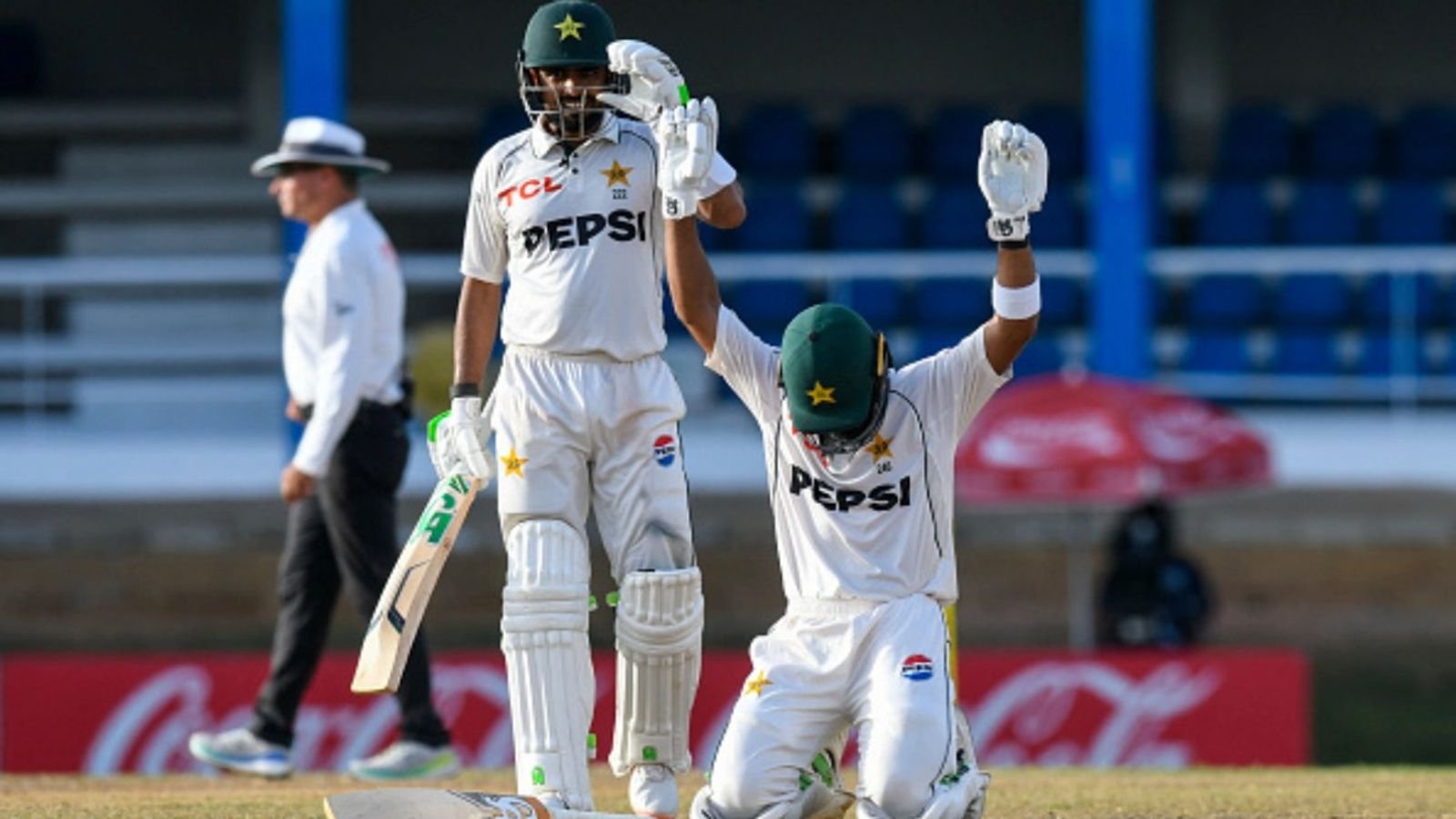
Cricket has a habit of rewarding patience, and few stories illustrate that better than Abdullah Shafique’s unbeaten 160 against West Indies in the second Test at Queen’s Park Oval. Initially overlooked for Pakistan’s Caribbean tour, the elegant right-hander only entered the squad after an injury forced a late change. Within days, he had produced one of Pakistan’s finest overseas Test innings in recent decades.
Shafique’s marathon knock not only helped Pakistan secure a valuable first-innings lead but also ended a remarkable 49-year wait. The opener became the first Pakistan batter since 1977 to score 150 or more in a Test innings on West Indies soil, joining an exclusive list of legendary names who have achieved the feat in the Caribbean.
Beyond the statistics, the innings showcased temperament, resilience and technical excellence—qualities Pakistan will value immensely as they prepare for challenging overseas assignments, including the upcoming Test tour of England.
Abdullah Shafique’s Unexpected Opportunity
Shafique’s presence in the playing XI was far from guaranteed.
When Pakistan announced their original squad for the West Indies series, the right-handed opener was not included. Instead, he continued playing franchise cricket in the Global Super League for Lahore Qalandars. However, an injury to fellow batter Abdullah Fazal opened the door for a late call-up.
Switching almost immediately from the fast-paced demands of T20 cricket to the patience required in Test cricket is rarely straightforward. Yet Shafique adjusted seamlessly, proving once again why selectors continue to regard him as one of Pakistan’s most technically gifted red-ball batters.
A Marathon Innings Built on Patience
Unlike many modern innings dominated by aggressive stroke play, Shafique’s century was constructed through discipline and sound judgment.
He remained unbeaten on 160 from 323 deliveries, striking 15 boundaries and three sixes while carefully navigating changing match situations. As wickets fell around him, Shafique resisted the temptation to accelerate recklessly, instead ensuring Pakistan maximized every possible run.
His innings demonstrated classic Test-match batting principles:
- Excellent shot selection.
- Strong defensive technique.
- Patience against sustained spin bowling.
- Ability to rotate strike consistently.
- Composure while batting with the lower order.
By remaining unbeaten until Pakistan’s innings concluded, Shafique ensured his side established a valuable first-innings advantage.
A Historic Milestone After Nearly Five Decades
The significance of the innings extends well beyond personal milestones.
Shafique became the first Pakistan batter since Majid Khan’s 167 in 1977 to score at least 150 in a Test innings in the West Indies. Batting in Caribbean conditions has traditionally posed unique challenges, making such performances particularly valuable in Pakistan’s Test history.
His achievement places him among an elite group of Pakistan batters who have produced monumental innings on West Indian soil.
| Pakistan Batter | Highest Test Score in West Indies | Year |
|---|---|---|
| Hanif Mohammad | 337 | 1958-59 |
| Wazir Mohammad | 189 | 1959 |
| Majid Khan | 167 | 1977 |
| Abdullah Shafique | 160* | 2026 |
| Saeed Ahmad | 150 | 1958 |
Joining this exclusive list highlights the quality of Shafique’s performance and its place in Pakistan’s cricketing history.
Why Scoring Big in the Caribbean Remains Difficult
Although Caribbean pitches have evolved over the decades, batting in the West Indies continues to demand adaptability.
Variable bounce, disciplined pace bowling and quality spin often combine to test a batter’s technique over long periods. Visiting teams frequently struggle to convert starts into substantial scores, making innings beyond 150 particularly rare.
Shafique’s ability to remain focused across more than 300 deliveries underlined his maturity as a Test batter.
Pakistan’s First-Innings Lead Was Built Around One Man
Pakistan resumed the third day in a commanding position but suffered a middle and lower-order collapse.
From 281/2, the visitors eventually lost eight wickets for just 106 additional runs before being dismissed for 387. While Jomel Warrican’s outstanding six-wicket haul prevented Pakistan from establishing a massive lead, Shafique’s unbeaten century ensured the visitors still finished with a crucial 43-run advantage.
Without his resilience, Pakistan could easily have surrendered control of the match.
From Selection Doubts to England Tour Contender
One outstanding innings can dramatically alter a player’s standing within a national setup.
Having initially been left out of the squad, Shafique has now strengthened his claim for Pakistan’s forthcoming Test assignments, particularly the challenging tour of England where technically sound opening batters become even more valuable.
Selectors often emphasize consistency and temperament in overseas conditions, and this innings provided compelling evidence of both qualities.
Comparison: Opportunity vs Outcome
| Situation Before the Series | Situation After the 160* |
|---|---|
| Not selected in original squad | Produced Pakistan’s biggest innings of the match |
| Called up due to injury replacement | Delivered a historic Test milestone |
| Questions over Test future | Strengthened case for future overseas tours |
| Arrived from T20 competition | Displayed outstanding long-format temperament |
Jomel Warrican Kept West Indies Alive
While Shafique dominated headlines with the bat, West Indies spinner Jomel Warrican produced an equally determined performance with the ball.
The left-arm spinner claimed six wickets, bowling marathon spells that prevented Pakistan from building an even larger first-innings advantage. His effort ensured West Indies remained firmly in the contest despite Shafique’s heroics.
The contrast between Shafique’s patience and Warrican’s persistence produced one of the most compelling individual battles of the match.
Pakistan’s Bowlers Responded Immediately
After taking a narrow first-innings lead, Pakistan’s bowling attack capitalized on scoreboard pressure.
Off-spinner Sajid Khan spearheaded the collapse, claiming four wickets as West Indies slipped to 103 for 6 in their second innings. Pakistan’s disciplined bowling left the hosts under immense pressure despite contributions from several middle-order batters.
The visitors therefore entered the closing stages of the Test with a clear opportunity to secure victory.
What Makes Shafique Effective in Test Cricket?
Unlike naturally aggressive stroke-makers, Shafique’s greatest strength lies in his ability to build innings over long periods.
His game is based on:
- Compact defensive technique.
- Excellent balance at the crease.
- Patience against spin.
- Strong concentration.
- Ability to leave deliveries outside off stump.
- Measured acceleration once settled.
These attributes become especially valuable during overseas Test tours where conditions frequently demand discipline rather than attacking stroke play.
Why This Innings Could Shape Pakistan’s Future Plans
Pakistan have searched for stability at the top of the batting order across different conditions in recent years.
Large overseas centuries provide selectors with confidence that a player possesses both the technical ability and mental strength required for Test cricket. Shafique’s performance therefore carries importance beyond this single match, particularly with demanding tours ahead.
If he continues producing similar performances, he could become one of the foundations of Pakistan’s batting lineup during the current World Test Championship cycle.
The Bigger Picture: Test Cricket Still Rewards Patience
In an era increasingly influenced by T20 cricket, Shafique’s innings served as a reminder that traditional Test-match virtues remain invaluable.
Spending more than 300 deliveries at the crease requires immense concentration, physical endurance and tactical awareness. Those qualities continue to separate successful Test specialists from players who struggle to adapt between formats.
His transition from franchise T20 cricket to a marathon Test innings also demonstrated the importance of strong fundamentals regardless of format.
Conclusion
Abdullah Shafique’s unbeaten 160 was far more than another overseas century. It was a remarkable comeback story, a historic milestone and a timely reminder of the value of perseverance in international cricket. From missing Pakistan’s original squad to becoming the first batter since 1977 to score 150 or more in a Test innings in the West Indies, Shafique transformed an unexpected opportunity into one of the defining performances of his career.
With Pakistan gaining a first-innings lead and strengthening their position in the Test, the elegant opener has not only enhanced his own reputation but also provided selectors with renewed confidence ahead of future overseas assignments. If this innings becomes the foundation for sustained consistency, it may eventually be remembered as the turning point in Abdullah Shafique’s Test career.
For breaking news and live news updates, like us on Facebook or follow us on Twitter and Instagram. Read more on Latest Cricket on thefoxdaily.com.






COMMENTS 0