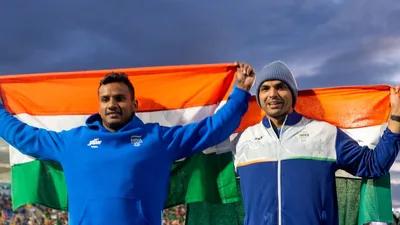
The 2030 Commonwealth Games represent far more than another multi-sport event for India. Hosting the Games in Ahmedabad provides an opportunity to showcase sporting excellence, inspire a new generation of athletes, and strengthen India’s growing reputation as a global sporting nation. Following a successful campaign in Glasgow, where India secured 39 medals, attention has naturally shifted toward the athletes capable of carrying the nation’s hopes into the next edition.
Some competitors will arrive in Ahmedabad as experienced champions chasing another memorable victory, while others will be entering the peak years of their careers. Together, they reflect the remarkable evolution of Indian sport—from traditional strengths such as athletics and boxing to rapidly improving disciplines like judo and badminton.
Why the 2030 Commonwealth Games Matter for Indian Sport
Hosting a major sporting event has historically accelerated investment in infrastructure, grassroots development, sports science, coaching, and athlete welfare. India experienced similar benefits after hosting international competitions in previous decades, and Ahmedabad is expected to build upon those lessons.
Unlike competing overseas, Indian athletes will enjoy several advantages:
- Familiar weather and competition conditions.
- Massive home crowd support.
- Reduced travel fatigue.
- Improved preparation through long-term access to host venues.
- Greater media attention that can inspire future generations.
These factors often translate into improved performances across multiple sports.
India’s Glasgow 2026 Performance Sets a Strong Foundation
India’s 39-medal campaign demonstrated encouraging depth across numerous disciplines instead of relying on only a handful of stars. Athletics, boxing, combat sports, and several emerging events delivered medals, highlighting the country’s expanding talent pool.
More importantly, Glasgow revealed a healthy blend of experienced champions and young medal contenders. By 2030, many of these athletes will reach their competitive peak while several teenagers currently progressing through junior systems could join the national squad.
| Area | Glasgow 2026 | Potential Impact in Ahmedabad 2030 |
|---|---|---|
| Home Advantage | No | Yes |
| Crowd Support | Limited | Maximum |
| Travel Burden | High | Minimal |
| Preparation | Standard | Long-term access to venues |
| Medal Expectations | Competitive | Potentially higher |
Neeraj Chopra Remains India’s Biggest Sporting Icon
Even after years at the highest level, Neeraj Chopra continues to set the benchmark for Indian athletics. His medal-winning performance in Glasgow reinforced his consistency on the international stage.
By 2030, experience could become his greatest strength. Elite javelin throwers often rely as much on technical precision and competition management as physical power. Years of competing against the world’s best provide valuable advantages during major finals.
Beyond medals, Chopra’s influence extends to mentoring younger athletes and attracting unprecedented public interest toward athletics in India.
Satwiksairaj Rankireddy and Chirag Shetty Could Chase One More Commonwealth Crown
The absence of badminton from the Glasgow programme denied India’s celebrated men’s doubles pair another opportunity to compete for Commonwealth glory. However, their international experience and established partnership make them among India’s strongest medal prospects if badminton returns to the Games programme in Ahmedabad.
Doubles badminton depends heavily on chemistry, anticipation, and tactical understanding—qualities that often improve with experience. Few partnerships possess the level of coordination displayed by Satwik and Chirag over the years.
Lakshya Sen Could Enter Ahmedabad in His Prime
India’s men’s singles badminton has grown significantly over the past decade, and Lakshya Sen remains one of its leading faces. Still relatively young by elite badminton standards, he is expected to enter 2030 with valuable international experience.
Playing before a passionate home audience could provide additional motivation, especially in a sport where momentum and confidence frequently influence close matches.
Preeti Pawar Represents India’s Bright Boxing Future
Women’s boxing continues to produce world-class Indian athletes, and Preeti Pawar has emerged among the discipline’s most exciting talents.
Her Glasgow success highlighted excellent movement, tactical awareness, and composure under pressure. Those qualities often distinguish champions capable of sustaining success over multiple Olympic cycles.
At the age expected during Ahmedabad 2030, she could still be improving technically while already possessing significant championship experience.
Sachin Siwach Could Lead India’s Men’s Boxing Challenge
Every successful boxing nation depends upon athletes capable of transitioning smoothly from junior success to elite competition. Sachin Siwach has shown encouraging signs of making that transition.
By 2030, additional international exposure could transform him from an emerging boxer into one of India’s experienced leaders inside the ring.
His development will also reflect India’s improving coaching systems and athlete development programmes.
Gulveer Singh Highlights India’s Distance Running Progress
Distance running has traditionally been one of the toughest global disciplines for Indian athletes. Recent improvements suggest that gap is gradually narrowing.
Gulveer Singh’s performances demonstrated not only endurance but also intelligent race management. Long-distance runners often continue improving well into their thirties, making experience an important competitive advantage.
If his upward trajectory continues, Ahmedabad could provide an ideal stage to convert podium finishes into gold-medal performances.
Asmita Dey Signals a New Era for Indian Judo
Judo has steadily expanded across India through better coaching, increased international exposure, and stronger grassroots participation.
Asmita Dey’s international achievements illustrate how India’s combat sports ecosystem is becoming increasingly diverse beyond boxing and wrestling.
A home Commonwealth Games could further accelerate public interest in judo while inspiring increased investment in talent identification.
Selva Prabhu Thirumaran Brings Promise to Indian Triple Jump
Triple jump demands exceptional speed, rhythm, balance, and technical execution. Young athletes capable of consistently improving these elements often become serious international contenders.
Selva Prabhu Thirumaran has already demonstrated encouraging progress during his transition into senior athletics. Continued technical refinement over the next four years could elevate him into genuine gold-medal contention.
The Bigger Story: India’s Sporting Depth Is Growing
Perhaps the biggest takeaway from Glasgow is not simply the medal tally but the diversity of disciplines contributing to India’s success.
Previous generations often relied on a handful of established sports. Today’s Indian contingent is increasingly competitive across athletics, badminton, boxing, combat sports, and field events.
This broader foundation makes India more resilient during major competitions, reducing dependence on individual superstars.
What India Must Do Before Ahmedabad 2030
Hosting alone does not guarantee success. Sustained preparation over the next four years will remain essential.
- Expand sports science support.
- Increase international competition exposure.
- Develop stronger junior pathways.
- Enhance injury prevention programmes.
- Invest in modern coaching and analytics.
- Strengthen mental conditioning for elite competition.
Countries achieving long-term sporting success typically combine infrastructure with consistent athlete development rather than depending solely on natural talent.
How Home Advantage Could Influence India’s Medal Count
History shows that host nations frequently outperform previous editions of major sporting events. Familiar venues, enthusiastic spectators, and reduced logistical challenges can create measurable competitive advantages.
For India, Ahmedabad represents an opportunity to maximize those advantages while showcasing world-class sporting infrastructure to an international audience.
If preparation continues on its current trajectory, India’s strongest performances may come not only from established stars but also from emerging athletes who benefit from four additional years of development.
Conclusion
The journey from Glasgow 2026 to Ahmedabad 2030 is about much more than defending medals. It represents the next phase in India’s sporting evolution.
Veterans such as Neeraj Chopra could continue inspiring millions with their consistency, while younger names including Preeti Pawar, Sachin Siwach, Gulveer Singh, Asmita Dey, Selva Prabhu Thirumaran, Lakshya Sen, and the celebrated badminton duo of Satwiksairaj Rankireddy and Chirag Shetty have the potential to shape a memorable home Games.
Ultimately, Ahmedabad 2030 will not simply test India’s athletes—it will measure how successfully the nation has transformed sporting ambition into sustained excellence. If the momentum created after Glasgow continues, the next Commonwealth Games could become one of the most significant milestones in the history of Indian sport.
For breaking news and live news updates, like us on Facebook or follow us on Twitter and Instagram. Read more on Latest Sports on thefoxdaily.com.






COMMENTS 0