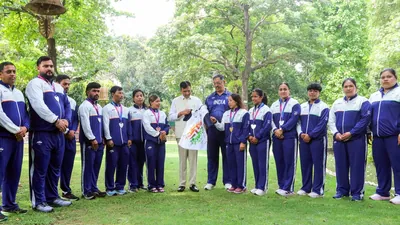
The Commonwealth Games 2026 concluded in Glasgow with India producing a campaign that exceeded expectations. Finishing fourth in the overall medal standings with 39 medals, the Indian contingent demonstrated remarkable resilience despite the exclusion of traditional medal-rich sports such as shooting and wrestling. Instead of relying on its historical strengths, India discovered new champions in boxing, judo, para sports, and athletics while also exposing areas that require urgent improvement before the next edition in Ahmedabad in 2030.
The Glasgow Games became much more than a medal count. They reflected the changing landscape of Indian sport, where investment in multiple disciplines is beginning to create broader international success. While there were unforgettable victories, there were also disappointing performances and administrative challenges that highlighted the work still needed to transform India into a consistently elite multi-sport nation.
Commonwealth Games 2026: India’s Campaign at a Glance
| Category | Performance |
|---|---|
| Overall Position | 4th |
| Total Medals | 39 |
| Major Success | Boxing, Athletics, Judo, Para Sports |
| Historic Achievement | India’s first Commonwealth Games judo gold medals |
| Biggest Challenge | Reduced sports programme excluding shooting and wrestling |
| Next Commonwealth Games | Ahmedabad 2030 |
Why India’s Fourth-Place Finish Matters More Than the Medal Count
On paper, finishing fourth with fewer medal opportunities may appear similar to previous campaigns. However, context tells a different story.
The removal of sports that traditionally contributed significantly to India’s medal tally forced athletes from other disciplines to shoulder greater responsibility. Instead of collapsing under pressure, several emerging sports stepped forward and delivered career-defining performances.
This indicates an important shift in India’s sporting ecosystem. Rather than depending on only a handful of events, the country’s competitive depth is steadily expanding.
Boxing Emerged as India’s Biggest Strength
No sport symbolized India’s dominance better than boxing.
The Indian boxing contingent produced an extraordinary campaign by winning seven gold medals and three silver medals, making it one of the greatest boxing performances in Commonwealth Games history.
The women’s team became the driving force behind this success. Their technical discipline, aggressive ring management, tactical awareness, and consistency throughout the tournament demonstrated the growing strength of India’s women’s boxing programme.
This achievement also reflects years of grassroots development, better coaching structures, sports science integration, and increased international exposure.
Why Boxing Continues to Grow in India
- Improved junior development programmes
- Better international competition exposure
- Expansion of women’s boxing pathways
- Scientific fitness and recovery methods
- Greater financial support for elite athletes
Historic Judo Golds Open a New Chapter
For decades, judo remained a sport where India struggled to compete consistently at the Commonwealth level. Glasgow completely changed that narrative.
Winning the country’s first-ever Commonwealth Games judo gold medals represents more than individual success. It signals that Indian combat sports are evolving beyond traditional disciplines.
Success in judo requires technical precision, tactical awareness, explosive strength, and years of specialized training. Breaking this barrier could inspire increased investment in coaching infrastructure and youth participation across the country.
Para Sports Continue India’s Inspirational Rise
Perhaps the most inspiring story from Glasgow was India’s outstanding para-sports campaign.
The contingent matched the nation’s combined medal tally from previous Commonwealth Games editions, proving that Indian para athletes are no longer occasional medal contenders—they are becoming consistent international performers.
The performances demonstrated exceptional determination while highlighting the importance of greater institutional support, accessibility, and long-term athlete development.
With continued investment, para sports could become one of India’s strongest medal-producing categories at future global competitions.
Neeraj Chopra and the Emergence of India’s Next Javelin Star
Neeraj Chopra once again proved why he remains one of India’s greatest athletes.
Returning after an injury-affected season, Chopra secured a silver medal while showcasing remarkable consistency. However, one of Glasgow’s biggest stories was the emergence of another Indian javelin thrower on the podium.
The double podium finish demonstrated that India is beginning to build genuine depth in athletics rather than relying on a single superstar.
This is particularly important because sustained international success depends on producing multiple world-class athletes capable of competing simultaneously.
Tejaswin Shankar Delivered One of India’s Greatest Multi-Event Performances
Competing in the decathlon demands excellence across ten completely different events over two demanding days.
Despite managing a patellar tendon injury, Tejaswin Shankar produced a historic bronze medal performance that showcased remarkable resilience, versatility, and mental toughness.
His achievement carries significance beyond athletics. It reflects the growing sophistication of Indian training programmes, where athletes are now capable of competing successfully in highly technical multi-event competitions.
Champions are remembered for winning medals, but sporting history often celebrates those who expand the limits of what their country believes is possible.
The Biggest Disappointments of India’s Campaign
Lawn Bowls Failed to Repeat Birmingham Success
Following the memorable success in Birmingham, expectations were naturally high.
However, the transition to indoor competition presented technical challenges that India struggled to overcome. Early eliminations highlighted the importance of preparing athletes for varying international conditions rather than relying solely on familiar formats.
Swimming Still Faces an International Gap
India’s swimmers demonstrated determination but found themselves competing against some of the strongest swimming nations in the Commonwealth.
Although reaching semifinals and finals remains encouraging, converting those appearances into medals requires deeper athlete pipelines, improved facilities, and greater international competition exposure.
Athlete Management Remains an Area for Improvement
Injuries affecting key competitors raised important questions regarding athlete workload management, recovery planning, and competition scheduling.
Modern elite sport increasingly depends on sports science, physiotherapy, nutrition, biomechanics, and injury prevention as much as talent itself.
The Administrative Lessons India Cannot Ignore
One of the most unfortunate stories of Glasgow involved qualified para swimmers who were unable to compete due to classification-related administrative complications.
When athletes spend years preparing for a global event, administrative shortcomings can be as damaging as injuries.
This serves as an important reminder that international sporting success depends not only on athletes but also on efficient governance, planning, and coordination.
How Glasgow 2026 Changes India’s Sporting Future
The biggest takeaway from Glasgow is that India’s sporting identity is changing.
Success is no longer concentrated in only a few disciplines. Boxing, athletics, judo, para sports, and several emerging events demonstrated that India possesses growing competitive depth.
This diversification reduces dependence on traditional medal sports and creates a stronger foundation for future multi-sport competitions.
Comparison: Glasgow 2026 vs Traditional Commonwealth Campaigns
| Previous Trend | Glasgow 2026 |
|---|---|
| Heavy dependence on shooting and wrestling | Success driven by boxing, athletics, judo and para sports |
| Limited medal diversity | Broader spread across multiple disciplines |
| Individual stars dominated | Greater squad depth emerging |
| Few breakthrough sports | Multiple historic firsts achieved |
Looking Ahead to Ahmedabad Commonwealth Games 2030
Hosting the Commonwealth Games presents India with an opportunity unlike any before.
Home advantage traditionally improves athlete performance through familiar conditions, crowd support, and greater preparation opportunities. If current momentum continues, India could realistically challenge for one of its strongest-ever Commonwealth Games campaigns.
However, achieving that ambition will require sustained investment in grassroots development, coaching, sports medicine, athlete welfare, infrastructure, and transparent administration.
Expert Insight: Why Medal Tables Don’t Tell the Full Story
Elite sporting nations are measured not only by medals but also by their ability to consistently produce world-class athletes across different sports.
India’s Glasgow campaign suggests that the country’s sporting ecosystem is becoming more balanced. Historic firsts in judo, outstanding boxing performances, growing athletics depth, and improved para-sports results point toward a healthier high-performance system.
If these trends continue over the next Olympic cycle, India could become significantly more competitive across major international competitions beyond the Commonwealth Games.
Conclusion
The Commonwealth Games 2026 will be remembered as a tournament where India proved its sporting future extends well beyond traditional medal-winning disciplines. A fourth-place finish with 39 medals, achieved despite a reduced programme, reflects remarkable adaptability, resilience, and emerging excellence.
Historic breakthroughs in boxing, judo, para sports, and athletics have created optimism for the years ahead, while the setbacks in swimming, lawn bowls, and administrative management provide valuable lessons for policymakers and sporting authorities.
As the Commonwealth Games journey now moves toward Ahmedabad in 2030, India possesses a unique opportunity to build on Glasgow’s success and establish itself as one of the leading multi-sport nations in the Commonwealth. The challenge is no longer discovering talent—it is creating an ecosystem capable of turning that talent into sustained international excellence.
For breaking news and live news updates, like us on Facebook or follow us on Twitter and Instagram. Read more on Latest Sports on thefoxdaily.com.






COMMENTS 0