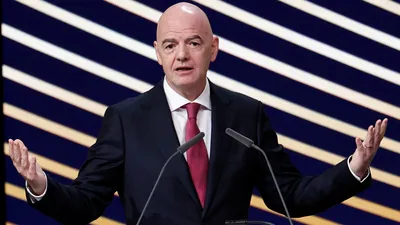
The race for the FIFA presidency has taken an unexpected turn after the Football Association of Wales (FAW) officially withdrew its support for Gianni Infantino ahead of the 2027 FIFA presidential election. The decision follows the collapse of FIFA’s ambitious commercial investment proposal, a project that has sparked intense criticism over governance, transparency and leadership.
For years, Infantino’s re-election looked almost guaranteed. Having won previous elections without opposition, the FIFA president appeared firmly in control of world football’s governing body. However, recent events have exposed growing divisions within global football, with regional confederations and national associations openly questioning the direction of FIFA under his leadership.
This development is significant not only because Wales has become the first national football association to publicly withdraw its backing, but also because it highlights broader concerns about governance, stakeholder engagement and the future commercial strategy of world football.
Why the Football Association of Wales Withdrew Support
The FAW stated that it had lost confidence in Gianni Infantino due to what it described as failures in governance, leadership, communication, stakeholder management and decision-making.
According to the association, football’s long-term interests must always come before commercial ambitions. It argued that recent developments demonstrated a failure to protect those interests, making it impossible to continue supporting Infantino’s candidacy for another four-year term.
“Failing to put the best interests of football first is a failure we cannot accept.”
The statement represents one of the strongest public criticisms of a sitting FIFA president by a national football federation in recent years.
The World Cup Investment Proposal That Changed Everything
The controversy centers around FIFA’s now-abandoned proposal to sell approximately 20 percent of the commercial rights linked to several of its premier competitions, including the FIFA World Cup.
The governing body hoped the transaction could generate around $4.2 billion through private investment by creating a separate commercial entity responsible for managing broadcasting, sponsorship and related commercial rights.
Supporters viewed the proposal as an opportunity to unlock additional revenue that could eventually benefit football development worldwide.
Critics, however, argued that selling a stake in football’s most valuable commercial assets could reduce FIFA’s long-term financial independence while introducing external commercial pressures into decisions traditionally controlled by football administrators.
Following widespread opposition from football stakeholders, FIFA ultimately abandoned the proposal, triggering one of the biggest governance debates during Infantino’s presidency.
Understanding Why the Proposal Was So Controversial
Major sporting organizations rely heavily on commercial rights to fund tournaments, grassroots development, infrastructure programs and financial assistance for member associations.
Selling part of these rights may provide immediate financial gains but can also reduce future flexibility. Once private investors become involved, expectations for financial returns often increase, potentially influencing long-term commercial decisions.
This debate extends far beyond FIFA. Sports organizations across the world continue to balance the need for investment with maintaining independence over competitions that hold enormous cultural and sporting significance.
Timeline of Key Developments
| Event | Development |
|---|---|
| 2016 | Gianni Infantino becomes FIFA President. |
| 2019 | Re-elected without opposition. |
| 2023 | Wins another uncontested presidential term. |
| 2026 | FIFA proposes selling part of its commercial rights through a new investment structure. |
| Proposal Collapses | Strong opposition forces FIFA to abandon the investment plan. |
| After Collapse | UEFA and CONCACAF publicly express concerns over FIFA’s leadership. |
| Latest Development | Football Association of Wales withdraws support for Infantino’s 2027 re-election bid. |
| March 2027 | FIFA Congress in Morocco scheduled to elect the next FIFA president. |
UEFA and CONCACAF Increase Pressure
The Welsh decision did not emerge in isolation.
UEFA and CONCACAF had already expressed a loss of confidence in FIFA’s handling of the commercial proposal. UEFA played a central role in opposing the investment structure and later welcomed FIFA’s decision to abandon the plan.
The European governing body also requested preservation of relevant documents, including emails and internal communications, indicating that further scrutiny of FIFA’s decision-making process could continue.
Although no legal action has been confirmed, the document preservation request demonstrates the seriousness with which European football authorities are treating the issue.
Why This Matters Beyond One Election
Leadership disputes inside FIFA affect much more than executive positions.
FIFA oversees international tournaments, football development funding, regulatory frameworks and strategic planning across more than 200 member associations.
Confidence in FIFA’s leadership directly influences cooperation between national associations, continental confederations and commercial partners.
If divisions continue to widen, future policy decisions could face increased resistance, slowing reforms and making consensus more difficult to achieve.
Could Other National Associations Follow Wales?
One of the biggest questions now is whether Wales will remain an isolated voice or become the first domino in a wider movement.
Historically, FIFA elections have often been characterized by strong institutional support for incumbents. However, public criticism from influential football organizations can reshape political dynamics by encouraging previously silent members to express their own concerns.
Whether additional national associations withdraw support will likely determine how competitive the 2027 presidential election becomes.
Gianni Infantino’s Presidency So Far
Since assuming office in 2016, Gianni Infantino has overseen several major initiatives aimed at expanding football globally.
- Expansion of international competitions.
- Increased investment in football development programs.
- Growth of FIFA’s commercial activities.
- Broader international participation in global tournaments.
- Efforts to modernize FIFA’s governance structure following previous corruption scandals.
Supporters argue these initiatives have strengthened football’s global reach and financial position.
Critics, however, contend that recent controversies have raised fresh questions regarding governance, transparency and consultation with stakeholders.
How FIFA Elections Usually Work
The FIFA president is elected by member associations during the FIFA Congress.
Each member association receives one vote regardless of footballing size or commercial influence. This system is designed to ensure equal representation across global football.
As a result, political support from national associations remains essential for any presidential candidate, making Wales’ withdrawal symbolically important despite representing only one vote.
The Bigger Governance Debate in World Football
The current controversy reflects broader governance questions facing international sports organizations.
- How transparent should major commercial decisions be?
- What role should private investment play in global sports?
- How much consultation is necessary before structural reforms?
- Should commercial growth ever outweigh sporting priorities?
These questions are increasingly relevant not only to football but also to other international sporting bodies navigating rapidly evolving commercial landscapes.
A Comparison With Previous FIFA Leadership Challenges
FIFA has experienced governance crises before, particularly during previous leadership transitions.
Unlike earlier controversies that largely centered on ethics investigations and corruption allegations, the present debate is focused on strategic governance and commercial decision-making.
This distinction matters because it reflects changing expectations among football stakeholders. Modern governance is increasingly judged not only by legal compliance but also by transparency, consultation and long-term strategic planning.
Unique Insight: The Real Issue Is Trust, Not Just the Investment Deal
While the failed investment proposal triggered the current controversy, the deeper issue appears to be institutional trust.
Large organizations can survive unpopular decisions if stakeholders believe leadership has acted transparently and consulted widely. When confidence weakens, even commercially rational proposals become politically difficult to sustain.
The reaction from Wales, UEFA and CONCACAF suggests concerns extend beyond one financial proposal and touch upon broader questions about how FIFA engages with its members before introducing transformational reforms.
What Happens Next?
Gianni Infantino has not indicated any intention to withdraw from the presidential race.
Attention will now shift toward whether additional football associations publicly declare their positions before the FIFA Congress in Morocco in March 2027.
If support remains largely intact, Infantino could still secure another term. However, if more federations join Wales in withdrawing their backing, the election could become the most competitive FIFA presidential contest in over a decade.
Equally important will be FIFA’s response to the governance concerns raised by member associations. Restoring confidence may prove just as critical as securing votes.
Conclusion
The Football Association of Wales’ decision marks a significant moment in modern FIFA politics. While one federation alone cannot determine the outcome of a presidential election, it has opened the door to broader conversations about governance, transparency and accountability within world football.
The collapse of the World Cup commercial investment proposal has transformed what once appeared to be a routine re-election campaign into a genuine test of leadership. With UEFA, CONCACAF and now Wales expressing serious concerns, Gianni Infantino faces his most challenging political environment since becoming FIFA president in 2016.
As preparations continue for the 2027 FIFA Congress, the coming months will reveal whether this represents a temporary political setback or the beginning of a larger shift in global football governance. Whatever the outcome, the debate has already highlighted that modern football leadership is judged not only by financial growth and tournament expansion but also by transparency, trust and the confidence of the global football community.
For breaking news and live news updates, like us on Facebook or follow us on Twitter and Instagram. Read more on Latest Sports on thefoxdaily.com.





COMMENTS 0