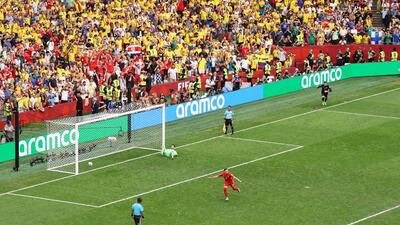
Few moments in Football generate as much tension as a penalty kick. One player, one goalkeeper, one shot, and often the fate of an entire nation hanging in the balance.
For decades, penalties have been viewed as football’s simplest scoring opportunity. Yet the 2026 FIFA World Cup is telling a very different story. Across the tournament, elite players have repeatedly failed from the spot, turning what should be routine goals into some of the competition’s biggest talking points.
From Lionel Messi’s crucial miss against Egypt to several failed shootout attempts in knockout matches, penalties have become one of the defining narratives of the tournament. The trend has prompted analysts, coaches, and former players to ask an important question: are modern footballers actually getting worse at penalties, or are goalkeepers finally catching up?
The answer reveals a fascinating evolution in football tactics, psychology, data analysis, and player behavior.
Why Penalties Have Become a Major Story at the 2026 World Cup
The discussion intensified after Argentina captain Lionel Messi missed a penalty during his team’s dramatic Round of 16 victory over Egypt.
The miss was historically significant because it made Messi the first player in World Cup history to miss multiple non-shootout penalties in a single tournament.
However, Messi was far from alone.
Several established international stars have failed from the spot during the competition, creating a pattern that extends beyond individual mistakes.
What makes the trend particularly striking is that these misses are occurring at the highest level of football, where players dedicate countless hours to perfecting their technique.
When world-class footballers consistently struggle from 12 yards, deeper factors are usually involved.
The Numbers Behind the Concern
Statistics suggest the concerns surrounding penalties are not simply driven by emotion or memorable misses.
The tournament’s overall penalty conversion rate has fallen below levels typically associated with modern football.
While penalties remain more likely to result in goals than misses, the margin has narrowed significantly compared to expectations.
Historically, professional football penalties are converted at rates between 75% and 80%.
The 2026 World Cup has produced numbers that sit noticeably below those standards, creating one of the least efficient penalty tournaments in recent history.
The trend becomes even more noticeable when examining the growing number of high-profile players who have failed during crucial moments.
A Comparison of Recent World Cup Penalty Trends
| World Cup | General Penalty Conversion Trend | Key Observation |
|---|---|---|
| 2010 | Relatively Low | Players adapted to new match ball |
| 2014 | Very High | One of the most efficient tournaments |
| 2018 | Strong | VAR increased penalty opportunities |
| 2022 | Stable | Close to historical averages |
| 2026 | Below Average | Multiple high-profile misses |
The decline has generated renewed interest in how players approach penalties in the modern era.
The Rise of the Stutter-Step Penalty
One of the most significant developments in penalty-taking over the past decade has been the widespread adoption of the stutter-step technique.
This approach involves slowing down, hesitating, or briefly pausing during the run-up before striking the ball.
The objective is simple: force the goalkeeper to commit early and then place the ball in the opposite direction.
Many of football’s biggest stars have embraced variations of this strategy.
The technique became popular because it initially provided attackers with a psychological advantage.
Goalkeepers frequently guessed early, allowing penalty takers to react accordingly.
For a period, it seemed almost unstoppable.
How Goalkeepers Learned to Fight Back
Football rarely remains static.
Whenever attackers gain an advantage, defenders eventually develop countermeasures.
The same principle applies to penalties.
Modern goalkeepers now spend enormous amounts of time studying opponent tendencies through advanced video analysis and performance data.
Rather than diving early, many goalkeepers have adopted a different strategy:
- Stay central for longer.
- Delay movement until the final moment.
- Read body positioning rather than run-up rhythm.
- Study preferred shooting zones.
- Use data-driven preparation before matches.
This evolution has significantly reduced the effectiveness of certain stutter-step techniques.
As a result, penalty takers who rely heavily on deception sometimes find themselves trapped when goalkeepers refuse to react.
The Messi Example: A Growing Tactical Challenge
Lionel Messi’s penalties during the tournament perfectly illustrate the changing dynamic.
His signature approach often involves a measured run-up and a delayed decision-making process designed to exploit goalkeeper movement.
Against Egypt, goalkeeper Mostafa Shobeir refused to commit early.
Instead of guessing, he waited.
The patience paid off.
Similarly, other goalkeepers throughout the tournament have demonstrated increasing comfort against delayed penalty techniques.
The broader lesson is clear: strategies that once provided attackers with an advantage are becoming easier for goalkeepers to anticipate.
Psychology: The Hidden Battle From 12 Yards
Although tactics matter, penalties remain primarily psychological events.
The mental pressure involved is extraordinary.
Players understand that one mistake can dominate headlines, influence careers, and potentially determine tournament outcomes.
Several psychological factors affect performance:
- Fear of failure.
- Crowd pressure.
- Tournament significance.
- Previous penalty history.
- Goalkeeper mind games.
As knockout rounds progress, these pressures become even more intense.
The difference between scoring and missing is often measured in confidence rather than technical ability.
Why Penalty Shootouts Are a Different Sport
One important distinction often overlooked in discussions about penalties is the difference between in-game penalties and shootouts.
Although both involve shots from 12 yards, the psychological environments are dramatically different.
During open play, players remain focused on the broader match.
In a shootout, the entire stadium concentrates on a single action.
The isolation creates immense stress.
That explains why even elite footballers occasionally struggle during shootouts despite maintaining excellent scoring records during regular matches.
The pressure transforms a technical exercise into a mental test.
Data Analytics Is Changing Everything
One of the biggest reasons penalties are becoming more competitive is the rise of football analytics.
Today, goalkeepers and coaching staffs have access to unprecedented amounts of information.
Before major matches, analysts often prepare detailed reports covering:
- Preferred shooting directions.
- Run-up patterns.
- Body positioning cues.
- Historical conversion trends.
- Performance under pressure.
In previous generations, much of this information relied on memory and observation.
Now it is available instantly through sophisticated databases and video platforms.
This knowledge has narrowed the gap between penalty takers and goalkeepers.
Has Football Become Too Predictable From the Spot?
A surprising insight emerging from recent tournaments is that many supposedly unpredictable penalty takers are actually more predictable than their reputations suggest.
Players often vary their run-ups, body language, or striking technique while repeatedly targeting similar areas of the goal.
Advanced tracking systems make these patterns easier to identify.
As a result, goalkeepers enter matches with increasingly precise expectations regarding where shots are likely to be placed.
In essence, football’s data revolution may be making penalties more difficult because secrets no longer remain hidden for long.
What Makes the Best Penalty Takers Different?
The most successful penalty specialists often share several characteristics.
- Consistency rather than creativity.
- Confidence under pressure.
- Clear decision-making.
- Power combined with placement.
- Minimal hesitation.
Interestingly, some of football’s best penalty takers rely on relatively simple techniques.
Rather than constantly changing approach, they focus on executing the same strategy with precision.
This consistency can be more effective than excessive unpredictability.
Could Rule Changes Influence Future Trends?
The ongoing debate surrounding penalties may eventually lead to discussions about rules and officiating.
Football authorities have previously adjusted regulations regarding feints and run-up behavior.
Any future changes would likely focus on maintaining balance between attackers and goalkeepers.
However, most experts believe the current decline is less about rules and more about tactical adaptation.
Goalkeepers are simply becoming smarter, better prepared, and more confident than ever before.
What This Means for the Rest of the World Cup
As the tournament enters its decisive stages, penalties could become even more important.
Knockout matches are often separated by fine margins.
Extra time and shootouts become increasingly common as teams adopt more cautious approaches.
Consequently, success from the penalty spot may determine who lifts the World Cup trophy.
Coaches are likely to devote significant preparation time to penalties over the coming weeks, recognizing that one successful kick could be worth more than ninety minutes of tactical planning.
The Bigger Picture: Evolution Rather Than Decline
Despite concerns about declining conversion rates, it may be inaccurate to conclude that players are simply becoming worse at penalties.
A more convincing explanation is that goalkeepers have improved dramatically.
Modern football continues to evolve.
Advanced analytics, enhanced training methods, and greater tactical sophistication have created a more balanced contest between penalty takers and goalkeepers.
What appears to be a decline in finishing quality may actually represent a rise in defensive excellence.
Conclusion
The 2026 FIFA World Cup has placed penalties under an intense spotlight, with several high-profile misses highlighting a broader trend of reduced conversion rates. From Lionel Messi’s historic miss against Egypt to multiple shootout failures throughout the tournament, penalties have become one of football’s most fascinating storylines.
However, the evidence suggests the issue is not simply poor finishing. Modern goalkeepers are better prepared, more analytical, and increasingly capable of neutralizing techniques that once provided attackers with a decisive advantage. The rise of data-driven preparation and evolving goalkeeping strategies has fundamentally changed the penalty landscape.
As the World Cup progresses, penalties may continue deciding the biggest matches. And if recent trends are any indication, the battle from 12 yards has never been more complex—or more captivating.
For breaking news and live news updates, like us on Facebook or follow us on Twitter and Instagram. Read more on Latest Sports on thefoxdaily.com.






COMMENTS 0